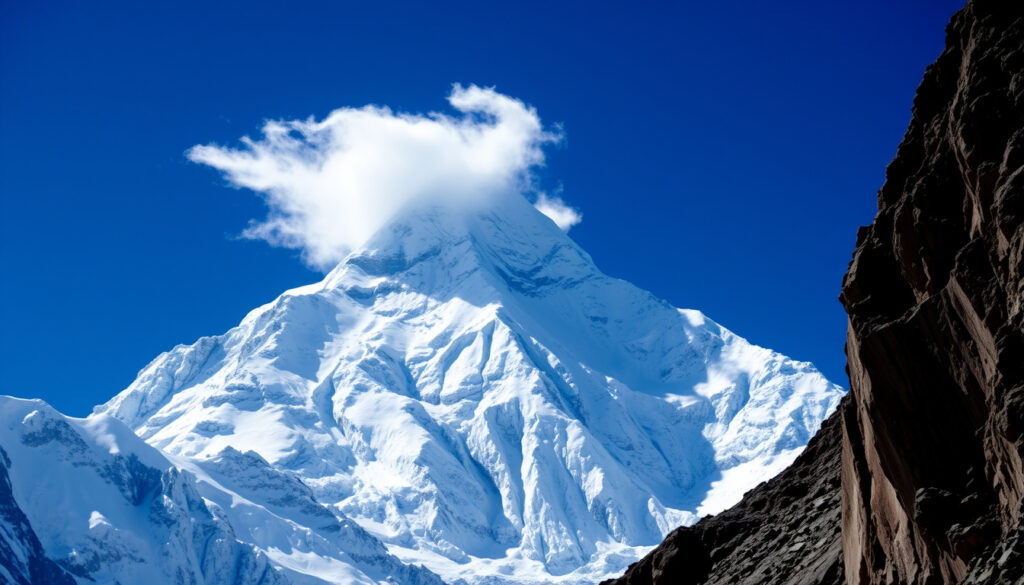
Mount Everest Guide: Location, Deaths, Facts, and FAQs
There’s something about the world’s highest peak that captures our imagination, a pull that goes far beyond the summit flag. We read the headlines about summit pushes and Sherpa heroics, but the story of Everest is also a story of human limits, of split-second decisions, and of the mountain’s permanent residents who never came home. This is a look at the human cost and the enduring mysteries of Mount Everest, breaking down the hard facts, the famous (and infamous) names, and the questions that keep the legend alive.
Key Facts About Mount Everest
- Youngest Climber: Jordan Romero (13) in 2010
- First Woman: Junko Tabei (1975)
- Famous Body: “Green Boots” (Tsewang Paljor)
Which Country is Mount Everest In?
Standing on the border between Nepal and the Tibet Autonomous Region of China, Everest is not the property of a single nation. The mountain’s summit sits exactly on the border, making it a shared geographical icon. Interestingly, the “official” height was re-announced by Nepal and China in 2020, but the view from either side is equally stunning.
Location on the Nepal–China border
Mount Everest lies in the Mahalangur Himal sub-range of the Himalayas, with its summit at 27°59′17″N 86°55′31″E. The mountain is shared under a 1963 treaty between Nepal and China, which historically affects which routes are open and how rescues are handled. This transboundary status means that climbers on the south side enter through Nepal, while those on the north side approach from Tibet.
How Many Climbers Died on Mount Everest?
Over 300 climbers have died on Everest since the first attempts, with more than 330 deaths reported by 2024. The deadliest single event remains the 1996 disaster, when eight climbers perished in a single storm, a tragedy that shook the climbing world and redefined risk management on the peak.
Total fatality count and common causes
The leading causes of death on Everest include acute mountain sickness, falls, exhaustion, and cold exposure. A 2026 season summary reported five deaths on the Nepal side between 3 and 22 May, including an 11 May incident at about 7,000 meters on the Lhotse Face below Camp 3. These numbers reflect the inherent dangers of high-altitude climbing, where the “death zone” above 8,000 meters leaves little room for error.
How Long Does it Take to Climb Mount Everest?
The average expedition to Everest takes 6–9 weeks from base camp to summit and back. This extended timeline is necessary for acclimatization, as climbers must gradually adjust to the thinning air before making their final push.
Summit day and the final push
The summit day alone is a 12–18 hour round-trip from Camp 4, the last camp before the top. Climbers typically depart in the middle of the night to reach the summit by sunrise, timing their descent to avoid the afternoon storms that frequently roll in. The total distance climbed during the expedition is relatively short—only about 6.4 kilometers of vertical gain—but the altitude makes every step a monumental effort.
The average climb is 6-9 weeks, but the summit day alone is a 12-18 hour round-trip from Camp 4, proving that geographic distance is less important than altitude gain. The real challenge lies in the body’s ability to function with only 30% of the oxygen available at sea level, making every decision a matter of life and death.
What are 5 Facts About Mount Everest?
Beyond the summit, the awe-inspiring numbers, and the sad statistics, there are strange facts that define the human experience there. From political disputes over measurement to the bodies that serve as grim landmarks, these facts paint a more complete picture of the mountain.
Height and measurements
The official height of Everest is 8,849 meters (29,032 feet), but this figure was only agreed upon in 2020 after decades of dispute between Nepal and China. Nepal measured the snow height at 8,848 meters, while China insisted on the rock height of 8,844.43 meters. The final compromise of 8,849 meters reflects both measurements and ended a political standoff that had divided the international community.
Location and names
Everest is known as Sagarmatha in Nepal and Chomolungma in Tibet, both names meaning “Goddess Mother” or “Holy Mother” in their respective languages. The mountain is part of the Mahalangur Himal range, with its summit lying exactly on the border between Nepal and China. The coordinates 27°59′17″N 86°55′31″E mark the precise point where the two countries meet.
First ascent
The first confirmed summit was on May 29, 1953, by New Zealand mountaineer Sir Edmund Hillary and Nepali Sherpa Tenzing Norgay. Their achievement was the culmination of years of British expeditions, and it set the stage for the era of commercial climbing that would follow. By 2024, over 6,000 climbers had reached the summit, with more than 90% of them doing so since the 1990s.
Climbing statistics
More than 330 deaths have been reported by 2024, with the fatality rate holding steady at around 1% of attempts. The number of bodies still on the mountain is estimated at over 200, with many serving as grim landmarks for climbers. The “Green Boots” (Tsewang Paljor) and “Sleeping Beauty” (Francys Arsentiev) are the most famous, their mummified remains marking the Northeast and North routes respectively.
Environmental challenges
The “Two Heights” dispute: China insisted on “rock height” (8,844.43m) while Nepal used “snow height” (8,848m), finally agreeing on 8,849m in 2020, a difference that changes the “official” record. The plane that hit Everest: A 1966 plane crash near the summit remains a mystery, but planes don’t fly there by design—more on that later. Bodies are the “landmarks”: The mummified body known as “Green Boots” (likely Tsewang Paljor) was a famous waypoint on the Northeast route. A child’s dream came true: Jordan Romero was 13 when he summited in 2010, making him the youngest, but he only survived due to reducing “death zone” exposure.
Why Do Planes Not Fly Over Everest?
Planes rarely fly over Everest because the risk simply outweighs the reward. The mountain’s height—8,849 meters—exceeds the service ceiling of most commercial aircraft, which typically cruise at 10,000–12,000 meters. But the real issue is not altitude; it’s the lack of emergency options.
The science of turbulence and terrain
The jet stream over the Himalayas can reach speeds of 300–400 km/h, causing severe turbulence that threatens aircraft control. If an engine fails at that altitude, the pilots have no time to descend to safer air before impact. The terrain is also incredibly unforgiving, with no flat ground for an emergency landing—only jagged peaks and deep valleys that would destroy any aircraft on contact.
Legal and operational constraints
While there is no law forbidding flights over Everest, aviation authorities require flight plans to route around major peaks for safety. The U.S. Federal Aviation Administration (FAA) designates the region as “mountainous terrain” and advises pilots to maintain a 2,000-foot clearance above obstacles. For commercial airlines, the extra fuel required to circumnavigate the range and the lack of diversion airports make the overflight route both costly and risky.
Who Was Left for Dead in 2006 and Survived?
In 2006, Australian climber Lincoln Hall was left for dead on Everest’s northeast ridge after he collapsed from high-altitude cerebral edema during his descent from the summit. His climbing team, believing him dead, radioed base camp to report the loss and continued their descent. Hall was later pronounced dead by his expedition leader and left on the mountain.
The man found alive: Lincoln Hall
Surprisingly, the next morning, a team of climbers en route to the summit found him alive, shivering but conscious, and famously the only person known to survive a night at that altitude without oxygen. Hall had spent more than 12 hours in the “death zone” above 8,000 meters, where the lack of oxygen causes severe cognitive impairment and hallucinations. His survival was a medical miracle, but it also highlighted a darker truth about Everest’s logistics: the “commercialization” of the climb, where saving one’s own summit bid often trumps rescue. Hall’s rescuers had to choose between their summit dreams and the ethical duty to save a life, a dilemma that has become all too common on the mountain.
The story of Lincoln Hall is a double-edged sword. On one hand, it’s a testament to human resilience; on the other, it exposes the harsh reality of “summit fever” where climbers pass by dying individuals without offering help. The 1996 disaster had established a “rule” that climbers must look out for themselves first, and Hall’s case showed how deep that rule had been internalized.
The 2006 Deaths and the “Green Boots” and “Sleeping Beauty”
The 2006 season was one of the deadliest in Everest’s history, with 14 climbers losing their lives. Among the most famous were the bodies of Tsewang Paljor (“Green Boots”) and Francys Arsentiev (“Sleeping Beauty”), both of which became grim landmarks for years. The spotlight also fell on the decaying body of Francys Arsentiev, who died in 1998 after being left by her husband and climbing partner, who were forced to abandon her due to the extreme conditions.
The famous frozen body: Green Boots
The body known as “Green Boots” was discovered at the entrance to a cave on the Northeast ridge, where it became a mandatory stop for climbers navigating the route. Tsewang Paljor, an Indian climber, died in 1996 during a blizzard that trapped him and his team. His body, with its distinctive green boots, remained in the cave for decades, serving as a macabre waypoint. In 2014, scientists speculated that a mild fall and shifting ice might have moved the body, leading to speculation that Paljor was finally “brought home” by the mountain.
The girl without legs: Arunima Sinha
Arunima Sinha, a former national-level volleyball player from India, became the first female amputee to climb Everest in 2013. She lost her leg in a train accident that forced her to choose between losing her leg and her life. Her achievement is not just about reaching the summit—it’s about redefining possibilities. Her story is a counterpoint to the grim statistics, showing that the mountain also rewards those who refuse to be limited by their bodies.
globalsummitguide.com, en.wikipedia.org, australiannewsdesk.com, en.wikipedia.org, discoveryworldtrekking.com, boldhimalaya.com, nnmga.org, en.wikipedia.org
Frequently Asked Questions
What is the success rate of climbing Everest?
Since the 1990s, more than 90% of climbers on the Nepali side have summited, but the fatality rate is about 1% of attempts. The high success rate is partially due to the use of supplemental oxygen, which allows climbers to function in the “death zone” for longer periods. However, the perceived “ease” of commercial expeditions masks the fact that the mountain’s dangers—avalanches, falls, and altitude sickness—remain as deadly as ever.
How much does it cost to climb Everest?
A permit from Nepal costs $11,000 per climber, but a full expedition with a commercial operator can cost anywhere from $35,000 to $100,000. The price includes logistics, Sherpa support, bottled oxygen, and expedition staffing. For foreign climbers, the total cost often exceeds $50,000, with additional expenses for equipment, insurance, and travel. The price does not cover rescue or recovery costs, which can add another $10,000–$50,000 if needed.
Why do so many bodies stay on Everest?
Due to extreme conditions and high cost, recovering a body from the Death Zone is nearly impossible. At altitudes above 8,000 meters, the risk to rescuers is too high, and the logistics of moving a body across steep ice and rock are prohibitive. The cost of a body recovery operation can exceed $70,000, and many families cannot afford the price. Additionally, the bodies often become part of the climb—grim landmarks that serve as both warnings and memorials for those who follow.
Who was the man found alive on Everest?
Australian climber Lincoln Hall was found alive in 2006 after being left for dead overnight. He was discovered by a team on their way to the summit and survived his harrowing ordeal, becoming the only person known to have survived a night in the “death zone” without supplemental oxygen. Hall’s case became famous not for his survival but for the ethical questions it raised about climbing culture and the decision to prioritize one’s own summit bid over the life of another.
Who is the famous body frozen on Everest?
The most famous body is “Green Boots,” widely believed to be Tsewang Paljor, an Indian climber who died in 1996. His body, with its distinctive green boots, was a landmark on the Northeast ridge for years. Another famous body is “Sleeping Beauty,” Francys Arsentiev, who died in 1998 and was only buried in 2007 after her body was moved to a less visible spot. Both serve as somber reminders of the mountain’s deadly nature.
Who is the girl without legs on Mount Everest?
The girl without legs refers to Arunima Sinha, who became the first female amputee to climb Everest in 2013. Sinha lost her leg in a train accident and was told she would never walk again, let alone climb a mountain. Her achievement shattered stereotypes and proved that physical disability does not define a person’s potential. Her story is one of determination and courage, providing a message of hope for people with disabilities worldwide.
Will you see bodies on a typical climb?
For climbers on the standard North and South Col routes, seeing dead bodies is a distinct possibility. More than 200 bodies remain on the mountain, and many are visible from the designated climbing paths. The “bodies as landmarks” phenomenon has created a grim reality: what was once a few isolated corpses has become a line of traffic, making the mountain not only a physical challenge but also a psychological one.
More related posts
 Sean Combs 2025: Legal Case, Pardon Rumors & Updates
 Oliver Tree Death Hoax Debunked: Is He Really Alive in 2026
 Mon Mothma: Andor, Rogue One, and Star Wars Timeline
 Keith Haring: Life, Art, Death Cause & Legacy (Full Guide)
 250 USD to AUD: Convert $250 to Australian Dollars Today
 Nikki Rodriguez Age, Relationship, and Family Facts Verified
 Fred Hollows: Biography, Eye Disease Work, and Legacy
 Alexander Zverev: Ranking, Daughter, Health and Controversies
