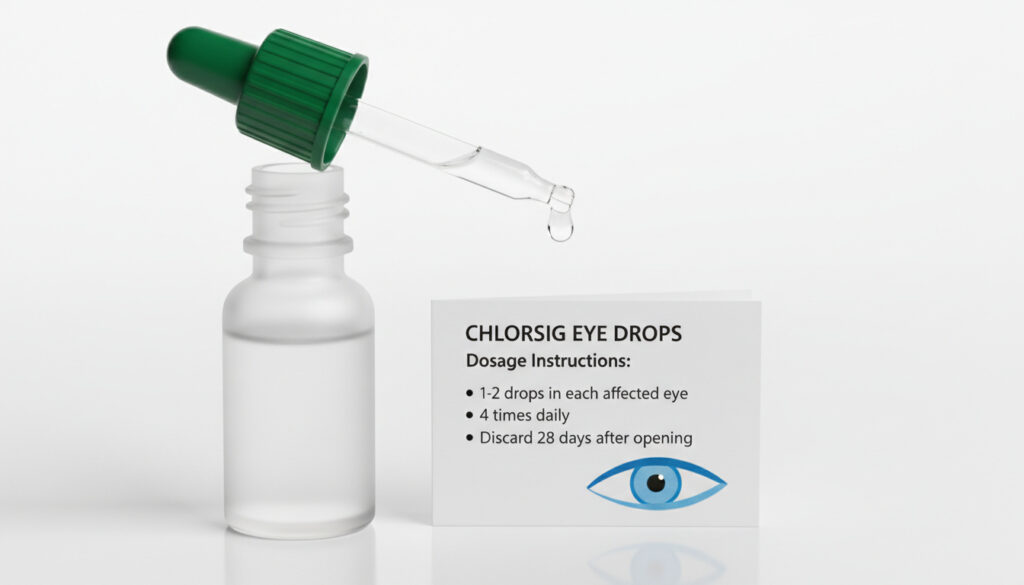
Chlorsig Eye Drops – Uses Dosage Side Effects Guide
Chlorsig eye drops contain chloramphenicol 0.5%, a broad-spectrum antibiotic formulated specifically for bacterial ophthalmic infections. The medication targets pathogenic organisms while maintaining inactivity against viral and fungal agents, requiring professional diagnosis to ensure appropriate administration.
Available throughout Australian and New Zealand pharmacies, this ophthalmic solution treats bacterial conjunctivitis and styes with demonstrated efficacy against tetracycline-resistant organisms. The Eye Practice notes that the formulation differs distinctly from general eye irritants, offering no therapeutic benefit for allergic reactions, dry eye syndrome, or inflammatory conditions such as uveitis.
Proper utilization demands adherence to specific dosage intervals, contamination prevention protocols, and recognition of contraindications across pediatric and adult populations. Understanding the complete safety profile, including rare but serious systemic risks, enables informed decision-making when selecting this antibiotic treatment.
What Are Chlorsig Eye Drops Used For?
Common bacterial eye infections treated
Chlorsig primarily targets acute bacterial conjunctivitis, commonly presenting with purulent discharge and eyelid crusting. DrugBank confirms its efficacy against a range of Gram-positive and Gram-negative organisms, including those resistant to tetracycline antibiotics. The medication also effectively treats styes (hordeola), localized infections of the eyelash follicles.
Clinical guidelines explicitly exclude viral infections, fungal keratitis, non-infectious inflammation, and allergic conjunctivitis from treatment indications. Most eye irritations stem from non-bacterial origins; antibiotic administration provides no therapeutic value for these conditions and contributes to unnecessary medication exposure.
Chloramphenicol 0.5% solution
Bacterial conjunctivitis and styes
Sterile eye drops (5mL) and ointment
Pharmacist-supervised dispensing (AU/NZ)
- Demonstrates activity against tetracycline-resistant bacterial strains
- Provides no efficacy against viral pathogens or allergic responses
- Dual formulation allows daytime drops with nighttime ointment application
- Requires continuation for 48 hours post-symptom resolution
- Contraindicated without medical supervision in children under 24 months
- Not approved for ophthalmic use in the United States
- Container sterility expires one month after initial opening
| Therapeutic Attribute | Clinical Specification |
|---|---|
| Drug Classification | Broad-spectrum bacteriostatic antibiotic |
| Mechanism | Protein synthesis inhibition in susceptible bacteria |
| Primary Indication | Acute bacterial conjunctivitis |
| Secondary Application | Hordeolum (stye) management |
| Resistance Profile | Active against tetracycline-resistant organisms |
| Pediatric Eligibility | Children 2+ years (adult-equivalent dosage) |
| Absolute Contraindication | Hypersensitivity to chloramphenicol |
| Regulatory Status | Available via pharmacist consultation (AU/NZ) |
How Do You Use Chlorsig Eye Drops?
Step-by-step application
Hand hygiene precedes all applications. Tilt the head backward, gently pull the lower eyelid downward to form a pouch, and instil one to two drops into the conjunctival sac without allowing the dropper tip to contact the ocular surface or surrounding skin. NPS MedicineWise emphasizes that dropper contamination compromises sterility and may introduce secondary infections.
Close the eye gently post-instillation. Apply firm pressure to the inner corner of the eye (the nasolacrimal duct) for approximately one minute to minimize systemic absorption through the tear drainage system. When combining formulations, reserve ointment application for nighttime due to transient visual blurring.
Applying gentle pressure to the tear duct for approximately one minute immediately after instillation significantly reduces systemic absorption. Clinical guidelines recommend this practice to minimize the amount of chloramphenicol entering the bloodstream through the nasolacrimal drainage pathway.
Dosage for adults and children
Adults and children aged two years and over should administer one or two drops every two to six hours for the initial two to three days, subsequently increasing the interval between applications as symptoms improve. Medsafe documentation confirms that children two and above receive the same dosage as adults. Do not exceed five days of treatment without medical reassessment.
For the ointment formulation, apply a 1.5 centimetre ribbon every three hours for up to five days. Treatment must continue for at least 48 hours after the eye appears clinically normal to ensure complete bacterial eradication. Missing doses or premature cessation risks recurrent infection and potential antibiotic resistance development.
What Are the Side Effects of Chlorsig Eye Drops?
Common versus serious side effects
Transient stinging or burning sensations commonly occur immediately following instillation, typically resolving within minutes. Mayo Clinic data indicates that blurred vision frequently follows ointment application, necessitating caution regarding hazardous activities until visual clarity returns. Localized itching, redness, or dermatitis may indicate developing sensitivity.
NHS UK guidelines identify rare but serious systemic effects occurring in fewer than one in 1,000 users. Pale skin, sore throat with fever, unusual bleeding or bruising, and unusual fatigue may signal aplastic anaemia, a potentially fatal bone marrow suppression requiring immediate medical intervention. Additional serious reactions include angioneurotic oedema, anaphylaxis, and urticaria.
Seek emergency medical attention immediately if you develop pale skin, fever with sore throat, unexplained bruising or bleeding, or profound fatigue during or after treatment. These symptoms potentially indicate aplastic anaemia, a rare condition where bone marrow fails to produce adequate blood cells.
Precautions for use
While oral and injectable chloramphenicol carry documented risks of aplastic anaemia at high doses, epidemiological data demonstrates no increased incidence of this condition in countries where topical Chlorsig is widely used compared with the United States, where it is not prescribed. At least five million bottles are dispensed annually without corresponding increases in bone marrow suppression cases, likely due to the highly dilute ophthalmic concentration.
Contraindications include hypersensitivity to chloramphenicol or formulation components. Do not use without medical supervision if experiencing photophobia, severe ocular pain, vision loss, restricted eye movement, corneal clouding, or copious yellow-green discharge. These symptoms suggest conditions requiring alternative therapeutic approaches.
Can You Buy Chlorsig Eye Drops Over the Counter?
Availability in Australia and New Zealand
Chlorsig is available through Australian and New Zealand pharmacies following consultation with a pharmacist, optometrist, or medical practitioner. Professional assessment ensures appropriate differentiation between bacterial infections warranting antibiotic therapy and viral or allergic conditions where Chlorsig provides no benefit. Children under two years require explicit medical authorization before use.
Chlorsig is not indicated for children under two years of age except under direct medical supervision. For children aged two years and older, the dosage mirrors adult recommendations, though consultation with a healthcare provider remains essential before administration.
Regulatory differences in the United States
Chlorsig is not prescribed in the United States due to concerns regarding systemic toxicity potential, despite evidence that topical ophthalmic application carries minimal risk compared to high-dose systemic administration. This regulatory divergence reflects differing risk-benefit assessments rather than demonstrated safety failures in approved markets.
What Is the Standard Treatment Timeline?
- Days 1–3: Apply 1–2 drops every 2–6 hours to reduce initial bacterial load and control active infection
- Days 4–5: Gradually increase intervals between applications as inflammation and discharge diminish
- Post-symptomatic period: Continue treatment for minimum 48 hours after the eye appears clinically normal to prevent recurrence
- Maximum duration: Do not exceed 5 days total without medical reassessment and alternative diagnosis
- Product integrity: Discard remaining solution exactly one month after opening, regardless of remaining volume
What Is Established and Uncertain About Chlorsig?
- Efficacy against bacterial conjunctivitis and styes
- Dosage protocols for adults and children 2+
- Five-day maximum without medical supervision
- Transient stinging as common side effect
- One-month expiry post-opening
- Ineffectiveness against viral and fungal pathogens
- Safety data during pregnancy (no specific studies available)
- Safety profile during breastfeeding (insufficient data)
- Long-term effects beyond five days continuous use
- Efficacy in monotherapy versus combination therapy
- Interaction with specific contact lens materials
How Does Chlorsig Fit Into Ophthalmic Care?
Chloramphenicol represents a first-generation broad-spectrum antibiotic whose ophthalmic formulation addresses specific bacterial pathogens while minimizing systemic exposure through low-concentration topical delivery. Clinical standards require maintaining container sterility through tight closure and avoiding surface contact with the applicator tip.
The regulatory landscape surrounding this medication illustrates divergent international approaches to risk assessment, with Australian and New Zealand health authorities maintaining availability through pharmacist supervision while American regulators have withdrawn approval entirely. These decisions occur against a backdrop of evolving healthcare regulations, including recent legislative adjustments such as the Australian Drivers License Changes – 2026 Rules and Timelines, reflecting broader governmental oversight of public health standards.
Economic accessibility factors, including pharmaceutical pricing and consultation costs, intersect with socioeconomic conditions outlined in resources like the Minimum Wage Australia – 2025 Rates and Eligibility Guide, potentially influencing patient access to appropriate bacterial infection treatment.
What Do Medical Authorities Say?
To minimize contamination, do not allow the dropper to contact the surface of the eye. Discard eye drop solution within one month of opening the container.
NPS MedicineWise, Consumer Medicine Information
If stinging or burning occurs, do not rub your eye as this can worsen symptoms; instead, wet a flannel with cool water and hold it over your eye for a few minutes.
NHS UK, Side Effects Guidance
There is no difference in the incidence of aplastic anaemia between countries where Chlorsig is widely used (Australia, UK) and the USA, where it is not prescribed.
The Eye Practice, Clinical Review
When Should You Seek Professional Guidance?
Consult a physician, optometrist, or pharmacist before initiating treatment if symptoms suggest non-bacterial origins, if the patient is under two years of age, or if serious side effects develop during administration. Complete the full prescribed course even if symptoms resolve earlier, as premature discontinuation risks recurrence and resistance. For persistent symptoms beyond five days, alternative diagnoses and treatments require professional evaluation.
Frequently Asked Questions
Can Chlorsig be used to treat styes?
Yes, Chlorsig effectively treats styes (hordeola), which are bacterial infections of the eyelash follicles. The antibiotic properties target the causative organisms similarly to bacterial conjunctivitis treatment.
What should I do if I miss a dose?
Apply the missed dose as soon as you remember, unless it is nearly time for the next scheduled application. Do not double up to compensate for missed doses, as this increases the risk of side effects without improving efficacy.
Is Chlorsig safe during pregnancy or breastfeeding?
Specific safety data regarding Chlorsig use during pregnancy or breastfeeding is not available in the clinical literature. Consultation with a healthcare provider is necessary to assess individual risk factors before use in these circumstances.
Are there alternatives to Chlorsig eye drops?
Alternative antibiotic eye drops include those containing fusidic acid or tobramycin, though availability varies by region and specific bacterial sensitivity. A healthcare provider can determine the most appropriate alternative based on culture results and patient history.
Can I wear contact lenses while using Chlorsig?
Contact lens wear is generally not recommended during active eye infections. Additionally, the preservative in eye drops may bind to certain lens materials. Consult your optometrist regarding when it is safe to resume contact lens use after completing treatment.
More related posts
 2025 BMW M5 Competition: Price, Specs, Top Speed, and Comparisons
 Rupert Everett: Partner, Madonna Friendship, Colin Firth Feud
 Noah Cyrus: Biography, Family, Music, and Personal Life
 John Ritter Death: Cause, Last Words, and Legacy Explained
 How to Set Up Voicemail on Android (Samsung, Pixel, Motorola)
 Benjamin Franklin: Biography, Inventions, and Legacy
 Simon Cohen: Australia’s Top Buyer’s Agent
 Patrick Carrigan: Biography, Salary Stats & Facts
