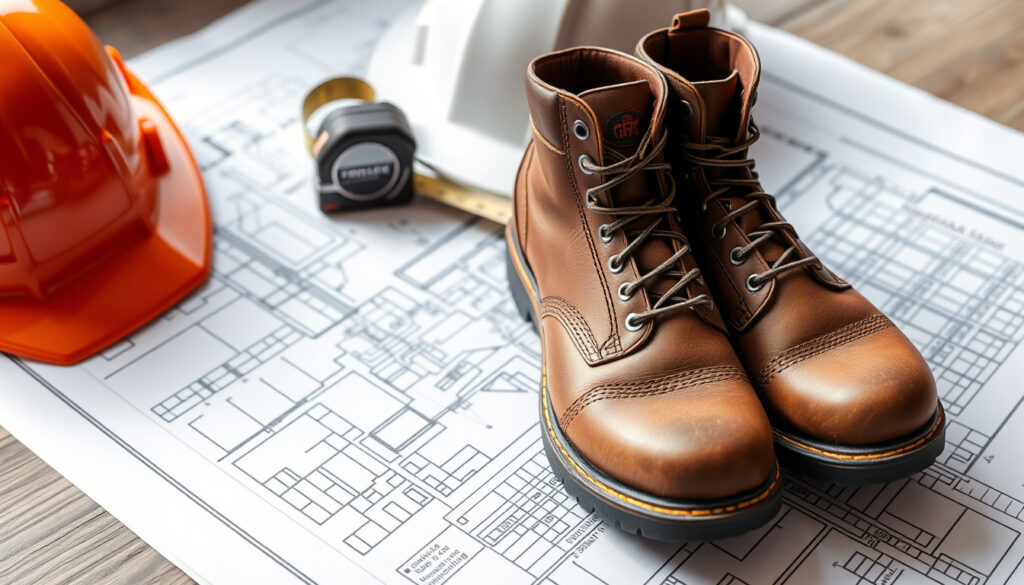
Steel Cap Boots Ireland: Legal Guide, Sizing & Top Brands
Anyone who’s laced up a pair of steel cap boots knows the weight they carry — not just on the foot, but in the promise of protection. For workers across Irish construction sites and farms, getting the right pair means balancing safety compliance with comfort and durability.
Workers in EU required to wear safety footwear: Over 10 million ·
Steel toe cap protects against: Up to 200 joules impact ·
Typical weight of a steel cap boot: 1.5–2.2 kg per pair ·
Safety rating levels: SB, S1, S2, S3, S4, S5
Quick snapshot
- Steel cap boots protect against impact and compression as defined in EN ISO 20345 (Advanced Safety Ireland, Irish safety footwear specialist)
- EU Directive 89/656/EEC requires employers to provide PPE (EUR-Lex, European legislation database)
- Exact percentage of Irish employers providing steel cap boots (no recent survey data)
- Optimal sizing for each brand due to variation in lasts
- New standard EN ISO 20345:2022 harmonised in May 2023 (Arco Ireland, safety equipment supplier)
- Workers can expect lighter, more ergonomic designs and increased adoption of composite toe alternatives in coming years
Here are the key specifications for steel cap boots.
| Key fact | Value |
|---|---|
| Standard | EN ISO 20345:2011 |
| Impact rating | 200 joules |
| Compression rating | 15 kN |
| Common ratings | SB, S1, S2, S3, S4, S5 |
| Weight range | 1.5–2.2 kg per pair |
| Typical lifespan | 6–12 months in heavy use |
What is the point of steel cap boots?
Steel cap boots are designed to protect your toes from falling objects and compression forces up to 200 joules — the equivalent of a typical large toolbox landing from waist height. They also reduce injury risk in construction, agriculture, and heavy industry. Depending on the rating, they can provide puncture resistance and slip resistance too.
For workers on Irish building sites, steel cap boots offer unmatched impact protection but come with extra weight: expect up to 2.2 kg per pair, which can tire feet over a 10-hour shift.
Protection against impact and compression
The steel toe cap is tested to withstand 200 joules of impact and 15 kN of compression, according to SafetyFirst.ie, an Irish safety equipment retailer. That’s mandatory for all S-rated safety footwear. Without it, a dropped scaffold pipe or heavy pallet could cause severe foot injuries.
Common hazards on Irish construction and farm sites
- Falling tools and materials: steel toe caps absorb up to 200 J impact
- Sharp objects on the ground: S3-rated boots include penetration-resistant midsoles
- Slips on wet surfaces: SRC-rated outsoles grip ceramic and steel with lubricant (Advanced Safety Ireland)
The implication: steel cap boots aren’t a luxury — they’re a basic barrier against the most common site injuries.
Are steel toe cap boots legal?
Yes, but only if they meet the European standard EN ISO 20345. Irish law requires safety footwear used at work to carry the CE mark and comply with harmonised standards. Employers must provide PPE free of charge under the Safety, Health and Welfare at Work Act 2005 (Irish Statute Book).
EU and Irish legal standards for safety footwear
All steel cap boots sold in Ireland must meet EN ISO 20345:2011 at minimum. The 2022 revision was harmonised in May 2023 (Arco Ireland). Retailers in Ireland commonly say compliant boots should carry a CE mark (Advanced Safety Ireland).
When steel cap boots must be worn
The requirement depends on a risk assessment. If there’s a risk of foot injuries from falling objects, sharp surfaces, or hot materials, the employer must enforce use of safety footwear. The HSA Ireland expects site managers to assess hazards and issue appropriate PPE. Failure to provide proper safety boots can lead to prosecution (Tracey Solicitors, Irish personal injury firm).
Why this matters: without a proper risk assessment, both employer and employee are exposed — the worker to injury, the employer to liability.
What are the best steel cap boots?
For Irish construction and agri workers, top brands include Rock Fall, Caterpillar, Timberland Pro, Haix, and Dickies. The best model for you depends on your environment: S3 for wet, muddy conditions; S1 for dry indoor work.
Top-rated brands for durability and comfort
- Rock Fall — popular for wide-fit options and slip-resistant SRC soles
- Caterpillar — known for tough leather uppers and heavy-duty use
- Timberland Pro — alloy toe safety trainers for lightweight work
- Haix — German-made boots with excellent ankle support
- Dickies — budget-friendly, meeting EN ISO 20345 standards
Many of these are available through Irish retailers like WorkBoots.ie and Screwfix.ie.
Best steel cap boots for construction and agri in Ireland
Choose S3-rated boots with penetration-resistant midsoles and SRC slip resistance for outdoor work. In one of the country’s largest safety footwear selections, a WorkBoots.ie product manager notes: “Rock Fall and Haix are our top sellers for construction because they combine durability with comfort over long shifts.”
The pattern: brand loyalty matters less than matching the rating to your workplace. Check for SRC and S3 if you’re on a wet site, S1 if you stay dry indoors.
Should you size up or down in steel cap boots?
Most wearers need to size up half to one full size. The steel toe box takes up room, and your feet swell during the day. Boots should allow a thumb’s width between longest toe and boot end.
Why sizing up is often recommended
The rigid steel cap doesn’t flex, so if you’re too tight, you’ll get blisters or toe damage. The Rock Fall sizing guide advises: “Measure both feet in the afternoon when they’re at their largest. Wear the socks you’ll use on site and add 10–12 mm of space at the toe.”
How to measure your foot for steel cap boots
- Stand on a piece of paper with your heel against a wall
- Mark the longest point and measure the length
- Repeat for both feet (they’re often different)
- Add 10–12 mm to the longer measurement
- Check the brand’s size chart — each brand has different lasts
The catch: different brands fit differently. Always try on boots with work socks at the end of the day. Don’t assume your regular shoe size will work.
Can I drive in steel toe cap boots?
Driving with steel cap boots is legal, but the thick sole reduces pedal sensitivity. For long journeys, it’s safer to carry a pair of driving shoes. There’s no specific law forbidding it, but the Road Traffic Act requires you to maintain proper control of the vehicle.
Safety concerns when driving in steel cap boots
The bulky toe cap can cause pedal confusion — you might hit both brake and accelerator at once. The stiff sole also reduces feel for the bite point in a manual car. For delivery drivers or site workers who drive between jobs, this is a real risk.
Tips for driving safety with steel toe footwear
- Keep a pair of thin-soled driving shoes in your kitbag
- Adjust your seat to compensate for the thicker boot sole
- Practice braking and accelerating in a safe area first
What to watch: if you drive as part of your job, your employer should include this in the risk assessment. Some sites now ban heavy boots for vehicle operation.
Does my employer have to provide steel toe cap boots?
Yes — under the Safety, Health and Welfare at Work Act 2005, employers must provide any necessary PPE free of charge. This includes steel cap boots if the risk assessment identifies a need. The Health and Safety Authority (HSA Ireland, national regulator) states clearly that workers should not have to pay for their own safety footwear.
Employer’s duty under Irish health and safety law
EU Directive 89/656/EEC mandates that employers provide PPE at no cost. The HSA further explains that the employer must choose appropriate boots, ensure they fit, and replace them when worn out. Some employees prefer to buy their own for comfort, but the employer still retains legal responsibility for compliance.
When the employee must buy their own boots
If you want a different brand or style for personal comfort — and the employer already provides compliant boots — you can buy your own. But the employer must still ensure those boots meet EN ISO 20345. They can’t push the cost onto you if they originally required the PPE.
The implication: if your employer asks you to pay for steel cap boots, they’re breaking the law. Know your rights under the Safety, Health and Welfare at Work Act.
Irish construction and agri workers don’t have to guess: the law is clear. If you’re on a site where falling objects or sharp materials are present, your employer must provide compliant steel cap boots — and they should size up for comfort.
Two types of safety boots, one key difference: steel vs composite toe. Which one fits your work environment better? Here’s a comparison:
| Feature | Steel toe | Composite toe |
|---|---|---|
| Material | Steel | Kevlar, carbon fibre, or plastic |
| Weight | Heavier (1.5–2.2 kg per pair) | Lighter (0.9–1.5 kg per pair) |
| Impact protection | 200 joules (meets EN ISO 20345) | 200 joules (meets same standard) |
| Electrical hazard | Conductive — risk of electric shock | Non-conductive — safe for electrical work |
| Temperature | Conducts cold/heat | Insulates better |
| Metal detector sensitivity | Sets off detectors | Passes through security |
The trade-off: steel toe is robust and cost-effective but adds weight and conducts temperature. Composite toe is lighter and safer for electrical environments, but often costs more (Advanced Safety Ireland).
Six safety ratings, one goal: matching the boot to the hazard. Here’s how S1 through S5 compare:
| Rating | Toe cap | Antistatic | Energy absorption | Water resistance | Penetration resistance | Sole design |
|---|---|---|---|---|---|---|
| SB | Yes | No | No | No | No | Basic |
| S1 | Yes | Yes | Yes | No | No | Basic |
| S2 | Yes | Yes | Yes | Yes | No | Basic |
| S3 | Yes | Yes | Yes | Yes | Yes | Cleated outsole |
| S4 | Yes | Yes | Yes | Water resistant (full rubber) | No | Moulded |
| S5 | Yes | Yes | Yes | Water resistant (full rubber) | Yes | Cleated outsole |
Upsides
- Maximum impact protection (200 J, 15 kN)
- Widely available and cost-effective
- Meets all European safety standards
Downsides
- Heavy — fatigue during long shifts
- Conducts cold — uncomfortable in winter
- Sets off metal detectors and can be a hazard around electrical equipment
Step-by-step: how to measure your foot for steel cap boots
- Trace both feet on a sheet of paper with your weight evenly distributed
- Measure from heel to longest toe in millimetres
- Add 12 mm for toe clearance and foot swelling
- Use the brand’s size chart — each brand varies
- Try on boots in the afternoon with your work socks
- Walk around for 10 minutes — check for heel slip and toe pinching
Why this matters: a wrong fit causes blisters, numbness, and even long-term foot issues. Invest 15 minutes to get it right.
What we know and what remains unclear
Confirmed facts
- Steel cap boots protect against impact and compression as defined in EN ISO 20345 (Advanced Safety Ireland)
- EU Directive 89/656/EEC requires employers to provide PPE (EUR-Lex)
- Irish law mandates free PPE through the Safety, Health and Welfare at Work Act 2005 (Irish Statute Book)
What remains unclear
- Exact percentage of Irish employers providing steel cap boots (no recent survey data)
- Optimal sizing for each brand due to variation in lasts
- Availability of specific ‘no risk’ style boots as a defined category in Ireland
“Employers must provide PPE, including safety boots, free of charge where a risk assessment identifies the need. Workers should never have to pay out of their own pocket for equipment that protects them on site.”
— Health and Safety Authority (HSA Ireland), official guidance
“Rock Fall and Haix are our top sellers for construction because they combine durability with comfort over long shifts. Most customers size up half to a full size.”
— Product manager, WorkBoots.ie (Irish safety footwear retailer)
“Measure both feet in the afternoon when they’re at their largest. Wear the socks you’ll use on site and add 10–12 mm of space at the toe.”
— Rock Fall sizing guide (safety boot manufacturer)
For Irish workers and employers, the choice is clear: steel cap boots are not optional where hazards exist. The law demands them, and the trade-off of extra weight is worth the injury prevention. Size up, know your rating (S3 for outdoor work), and ensure your employer pays. If they don’t, you have legal recourse.
Employers should ensure that workers wear footwear compliant with Irish safety standards for steel cap boots to meet legal obligations under the Safety, Health and Welfare at Work Act 2005.
Frequently asked questions
What does S3 mean on steel cap boots?
S3 means the boot has a steel toe cap, antistatic properties, energy absorption in the heel, water resistance, penetration-resistant midsole, and a cleated outsole. It’s designed for heavy outdoor work such as construction and farming (SafetyFirst.ie).
Can I wear steel cap boots all day?
Yes, but choose a comfortable, well-fitting pair with good arch support and breathable lining. Many workers wear them for 10-hour shifts without issues once they’re properly broken in.
Do steel cap boots cause foot problems?
If they’re too tight or too heavy, they can cause blisters, calluses, and fatigue. Proper sizing and choosing lightweight models (e.g., composite toe) can reduce these risks.
Are composite toe boots just as safe as steel?
Yes — composite toe boots meet the same EN ISO 20345 impact test (200 joules) and compression (15 kN). They’re lighter and non-conductive, but more expensive (Advanced Safety Ireland).
How should I clean steel cap boots?
Brush off dirt and mud, wipe with a damp cloth, and apply leather conditioner for leather uppers. Avoid heat — let them air dry away from radiators.
What is the difference between S1 and S2 safety boots?
S1 lacks water resistance; S2 adds it. Both have steel toe caps, antistatic properties, and energy absorption. Choose S2 for damp conditions (SafetyFirst.ie).
Are steel cap boots required on a building site in Ireland?
Yes — if the risk assessment identifies falling objects, sharp materials, or compression hazards. Most Irish construction sites mandate safety footwear as a basic rule.
Related reading: St John Ambulance Ireland First Aid Training · Colorbond Fence Panels: Prices, Sizes, Colors Guide
More related posts
 AUD/KRW Exchange Rate Today: Real-Time, Forecast & How to Convert
 Ollie Bearman: Accent, Languages & F1 Rise Explained
 Tim Robinson: Career, Personal Life, and His Cult Comedy Series
 Song Hye-kyo: Biography, Career, and Personal Life
 Robert Duvall Dies at 95: Cause of Death and Legacy
 Ray Martin Biography: Age, Net Worth, Children, and Career
 Lauren Bessette: The Overlooked Life of JFK Jr.’s Sister-in-Law
 The Cleaning Lady Canceled: Why It Ended and What’s Next
