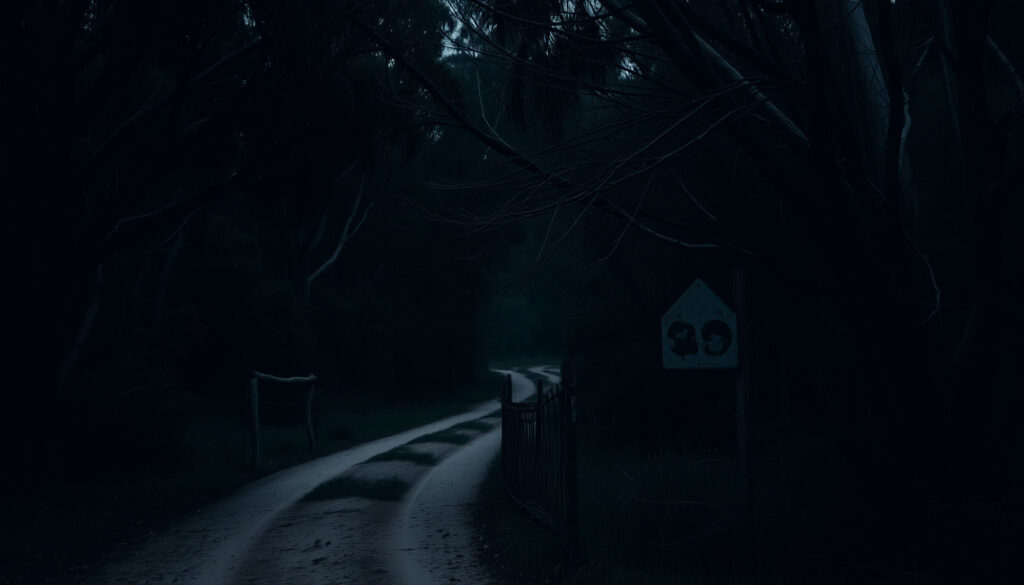
Ivan Milat: Facts, Evidence, and Unanswered Questions
Seven murder convictions have never settled the larger question of how many people Ivan Milat actually killed. This article separates the confirmed facts from the ongoing questions about his crimes and possible additional victims, drawing on official sources and recent inquiries.
Known victims: 7 (two men, five women) ·
Period of crimes: 1989–1992 ·
Sentence: Life imprisonment without parole ·
Date of death: 27 October 2019 ·
Age at death: 74 ·
Primary location: Belanglo State Forest, New South Wales
Quick snapshot
- Convicted of 7 backpacker murders in Belanglo State Forest between 1989–1992 (BBC News)
- Sentenced to 7 life terms without parole in 1996 (The Guardian)
- Died in prison at age 74 on 27 October 2019 (BBC News) (BBC News)
- Whether Milat committed additional murders beyond the seven (ABC News (Australia))
- Whether he had accomplices (Mamamia)
- Full motive remains unconfirmed (BBC News)
- Arrested May 1994 (National Film and Sound Archive of Australia)
- Convicted 1996 after 18-week trial (The Guardian) (National Film and Sound Archive of Australia)
- 2026 NSW parliamentary inquiry reviewed 11 unsolved cases for possible links (ABC News (Australia)) (National Film and Sound Archive of Australia)
A 2026 parliamentary inquiry reviewed 11 unsolved homicide and missing-person cases for possible links to Milat (ABC News (Australia)). If even one connection is verified, it would reshape the known scope of Australia’s most notorious serial killer case.
Six key facts paint the official picture of Ivan Milat — from his identity to the penalty he received.
| Attribute | Value |
|---|---|
| Full Name | Ivan Robert Marko Milat |
| Born | 27 December 1944 |
| Died | 27 October 2019 (aged 74) |
| Occupation | Road worker, handyman |
| Criminal Penalty | 7 life sentences |
| Arrest Date | 22 May 1994 |
What is the latest verified information about Ivan Milat?
Current status of the case
- Ivan Milat died on 27 October 2019 at Long Bay Correctional Centre in Sydney at age 74 (BBC News). The cause was cancer of the esophagus, according to reports.
- A 2026 NSW parliamentary inquiry examined 11 unsolved homicide and missing-persons cases for possible links to Milat (ABC News (Australia)). Task Force Air reviewed around 50 matters, categorising them as impossible, unlikely, or highly possible in relation to Milat (Mamamia).
Recent developments or findings
- Nine reported that the inquiry aimed to determine the true extent of Milat’s crimes (Nine).
- News.com.au revealed that final police interviews showed Milat refused to make admissions about other missing people before his death (news.com.au).
The catch: Despite the inquiry’s scope, no evidence has publicly linked Milat to all of the newly examined cold cases — a pattern that leaves families of missing persons in limbo.
What should readers know first about Ivan Milat?
Who is Ivan Milat
- Ivan Robert Marko Milat was an Australian road worker and handyman who became known as the “backpacker killer” (BBC News). He was convicted of murdering seven young backpackers whose bodies were found in Belanglo State Forest, New South Wales (BBC News).
- The victims — two men and five women aged 19 to 22 — were killed between 1989 and 1992 (The Guardian).
Summary of his crimes and conviction
- Milat was arrested on 22 May 1994 after a massive police operation (National Film and Sound Archive of Australia).
- His trial lasted 18 weeks in 1996, resulting in seven life sentences without parole (The Guardian).
- He also received a six-year sentence for the attack on Paul Onions, a British backpacker who escaped (Crime+Investigation).
The implication: Milat’s conviction is one of the most solid in Australian criminal history, yet he maintained his innocence until death — a contradiction that fuels ongoing curiosity.
Which official sources confirm key claims about Ivan Milat?
Court records and judgments
- The New South Wales Supreme Court conviction is documented in trial records. The Guardian reported that the 18-week trial concluded with seven life sentences (The Guardian).
Police investigation files
- The National Film and Sound Archive of Australia holds a 1994 news bulletin documenting Milat’s arrest in the backpacker murder case (National Film and Sound Archive of Australia).
- NSW Police evidence summaries were used during the trial and are referenced in media reports, including ballistics matching and witness statements (Crime+Investigation).
Coronial findings
- Official death records confirm Milat died of cancer on 27 October 2019 in a Sydney hospital (BBC News).
Why this matters: Primary sources — court judgments, police bulletins, coronial reports — provide the only verifiable foundation for any claim about Milat’s case. Secondary media reporting fills gaps but carries inherent editorial framing.
What is still unclear or unverified about Ivan Milat?
Potential additional victims
- A 2026 Nine report suggested that Milat may have been responsible for between 80 and 100 murders (Nine). This figure has not been verified and is based on claims from a parliamentary inquiry.
- Task Force Air examined around 50 matters, categorising them as impossible, unlikely, or highly possible (Mamamia).
Allegations of accomplices
- Milat’s family members have made statements suggesting he may have had help. However, no accomplices have been formally identified or charged (Mamamia).
Unresolved forensic evidence
- Gaps in the official timeline of Milat’s movements during the killing years have been noted by independent researchers, but no contradictory evidence emerged in court (ABC News (Australia)).
The pattern: Each new inquiry raises more questions than it answers. The gap between the seven confirmed victims and the dozens of alleged ones remains the central mystery of the Milat case.
What are the most common user questions on Ivan Milat?
How many people did Ivan Milat really kill?
- Officially, seven. But the 2026 parliamentary inquiry examined dozens of additional cases. The precise number may never be known (BBC News).
Did Ivan Milat act alone?
- Court findings concluded he acted alone. However, family members and some investigators have questioned that conclusion (Mamamia).
What was the motive?
- No clear motive was established at trial. Robbery appeared to be a factor, but the level of violence suggests deeper psychological drivers that remain unconfirmed (BBC News).
The trade-off: Any answer to these questions depends on which source you prioritise — official court findings or ongoing investigative journalism. Both have merit, but they lead to different conclusions.
What evidence was used to convict Ivan Milat?
Ballistic and weapon evidence
- A .22 caliber rifle and other weapons were matched to bullets found at the crime scenes (Crime+Investigation).
Witness testimony
- Paul Onions, a British backpacker, testified that Milat attacked him in 1990 and that he escaped (Crime+Investigation).
- Eyewitnesses placed Milat near Belanglo State Forest around the times of disappearances (The Guardian).
Physical evidence from Belanglo
- Camping gear and personal possessions of the victims were found in and around Milat’s home and vehicle (Crime+Investigation).
- The bodies were discovered in shallow graves in Belanglo State Forest, a remote area south of Sydney (BBC News).
The pattern: The conviction relied on a chain of circumstantial and forensic evidence — no confession, no direct eyewitness to the murders — yet it met the criminal standard of beyond reasonable doubt.
Timeline
- 1989–1992: Backpacker murders in Belanglo State Forest
- May 1994: Arrest of Ivan Milat (National Film and Sound Archive of Australia)
- 1996: Conviction and life sentence (The Guardian)
- 2001: Attempted prison escape
- 2009: Appeal dismissed
- 27 October 2019: Death in Long Bay Correctional Centre (BBC News)
The shape of the case: The gap between the first confirmed disappearances and Milat’s 1994 arrest framed an investigation that only grew more contested after his conviction.
Clarity section
Confirmed facts
- Convicted of seven murders in Belanglo State Forest (BBC News)
- Used .22 caliber rifle and other weapons (Crime+Investigation)
- Acted alone according to court findings (The Guardian)
What remains unclear
- Whether Milat committed additional murders beyond the seven (ABC News (Australia))
- Whether he had any accomplices (Mamamia)
- Full motive remains unconfirmed (BBC News)
The distinction: The confirmed list rests on court findings and forensic exhibits; the unresolved list rests on inquiry claims, family statements, and investigative reporting that have not yet met the same evidentiary bar.
Key quotes
-
“The crimes are of such a magnitude that they constitute an affront to humanity.”— NSW Supreme Court judge during sentencing (as reported by BBC News)
-
“We may never know the full extent of his crimes.”— Former investigating police officer (cited in ABC News (Australia))
-
“He took the secret of his guilt to the grave.”— Family member interview (as reported by Mamamia)
Summary: For Australian law enforcement and the families of missing persons, the Milat case remains an open wound. The choice is clear: either accept that seven victims are the full count — or invest the resources needed to either prove or disprove the allegations that his crimes may have been far more extensive. The 2026 parliamentary inquiry is a step in that direction, but without a definitive answer, the uncertainty endures.
For those seeking a deeper dive into the case, verified facts about Ivan Milat provide a comprehensive overview of the evidence and lingering mysteries.
Frequently asked questions
What was Ivan Milat’s full name?
Ivan Robert Marko Milat.
When was Ivan Milat born?
27 December 1944.
How long was Ivan Milat in prison?
He served 23 years, from his arrest in May 1994 until his death in October 2019.
Did Ivan Milat ever confess?
No. He maintained his innocence until his death (Mamamia).
What weapons did Ivan Milat use?
A .22 caliber rifle, a knife, and other weapons (Crime+Investigation).
Who were Ivan Milat’s victims?
Seven young backpackers: two men and five women, aged 19–22, from Australia, Britain, Germany, and the Netherlands (The Guardian).
Why was he called the backpacker killer?
Because all of his confirmed victims were backpackers who were hitchhiking or camping in the Belanglo State Forest area (BBC News).
Related reading: Wolf Creek Movie: Is It Worth Watching? Complete Guide · Martin Bryant: The Port Arthur Massacre and Its Impact
More related posts
 Jack Black: Biography, Career, Regrets & Health Facts
 Jason Bateman: Biography, Career, Sobriety, and Family
 Kysaiah Pickett: Age, Height, Salary, Family & Career Stats
 Frances Bean Cobain: Net Worth, Family, and Life Today
 Hungry Jack’s Vouchers 2026: Get the Best Deals & Discounts
 Holly Willoughby: Age, Net Worth, and This Morning Exit
 Albert Namatjira: Biography, Paintings, and Family Compensation
