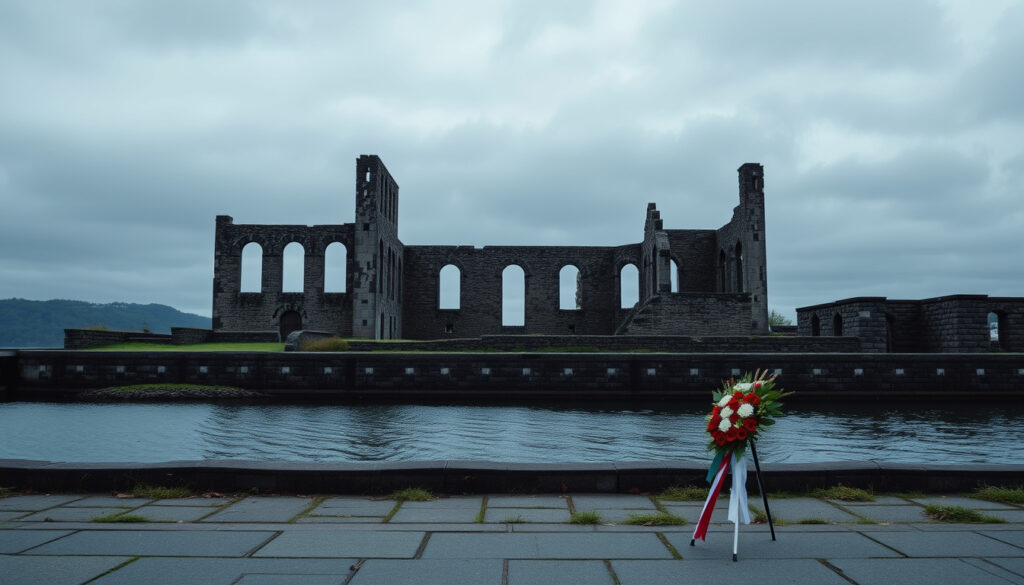
Martin Bryant: The Port Arthur Massacre and Its Impact
Martin Bryant carried out Australia’s deadliest mass shooting at Port Arthur in 1996, killing 35 people and wounding 23 others (BBC News). The policy response reshaped the country’s gun laws and continues to influence global debates on gun control and media ethics.
Born: 7 May 1967 · Victims: 35 killed, 23 injured · Sentence: 35 life sentences without parole · Date of attack: 28–29 April 1996 · Location: Port Arthur, Tasmania, Australia
Quick snapshot
- 35 life sentences (The Independent)
- No parole (The Independent)
- Currently in prison (The Independent)
- Australia’s National Firearms Agreement (The Guardian)
- Ban on semi-automatic weapons (The Guardian)
- Buyback program (The Guardian)
The key facts about Bryant’s life and crime, drawn from official and authoritative sources, are laid out below.
| Attribute | Detail |
|---|---|
| Full name | Martin John Bryant |
| Date of birth | 7 May 1967 |
| Place of birth | Hobart, Tasmania |
| Crime | Port Arthur massacre |
| Victims | 35 killed, 23 injured |
| Sentence | 35 life sentences without parole |
| Current location | Risdon Prison, Hobart |
| Date of attack | 28-29 April 1996 |
What is the latest verified information about Martin Bryant?
Current prison status
- Martin Bryant is serving 35 life sentences at Hobart’s Risdon Prison (The Irish Times).
- He has been in custody continuously since his arrest on 29 April 1996 (The Irish Times).
- No recent parole hearings have been reported or scheduled (NPR).
Recent legal developments
- There have been no new court proceedings or appeals related to Bryant’s conviction in recent years (The Irish Times).
- His sentence is fixed: 35 life sentences without the possibility of parole (NPR).
Public records updates
Official records related to Bryant’s case, including psychological evaluations and police reports, remain sealed or restricted from public access. The coronial inquest into the massacre is a matter of public record, but sensitive materials are withheld (BBC News).
“It was a crime of such magnitude that it called for the strongest possible response from the community and from the law.”
— Justice William Cox, sentencing judge
The implication: Bryant’s legal status has been static for decades, but the policy landscape his crime triggered is anything but static.
What should readers know first about Martin Bryant?
Who is Martin Bryant?
Martin John Bryant is an Australian mass murderer, born on 7 May 1967 in Hobart, Tasmania. He is serving 35 life sentences without parole for the Port Arthur massacre.
The Port Arthur massacre
On 28-29 April 1996, Bryant shot and killed 35 people and wounded 23 others at the Port Arthur historic site in Tasmania. It remains Australia’s deadliest mass shooting (NPR).
Aftermath and sentence
Bryant was arrested the same day and, in 1996, was sentenced to 35 concurrent life sentences without parole. He is currently held in the Wilfred Lopes Centre at Risdon Prison in Hobart.
“Our nation was in shock. But we acted, and we acted decisively.”
— Prime Minister John Howard, 1996, announcing the National Firearms Agreement
Howard’s swift action banned the possession, use, and importation of semi-automatic and automatic rifles (BBC News).
The Port Arthur massacre’s legacy is not Bryant himself, but the policy response that followed. For Australian lawmakers and citizens, the trade-off was clear: stricter gun laws for greater public safety. The buyback program, which cost approximately A$304 million in compensation according to The Irish Times, saw over 650,000 firearms surrendered and destroyed.
The pattern: a single event triggered a national policy shift that is still being refined nearly three decades later.
Which official sources confirm key claims about Martin Bryant?
Government reports
- Tasmanian police reports from 1996 document the immediate response and arrest.
- The coronial inquest into the deaths provides official cause-of-death findings.
- Parliamentary records detail the legislative response, including the National Firearms Agreement.
Court records
- The Supreme Court of Tasmania’s sentencing remarks by Justice William Cox are a key primary source.
- No appeal records are publicly active.
Academic analyses
- The Australian Institute of Criminology has published studies on the massacre and subsequent gun reforms.
- Academic papers in criminology and public policy journals analyse the impact of the reforms.
For researchers and journalists, the primary source trail is solid but includes restricted psychological evaluations and sealed records, meaning certain aspects of Bryant’s motive remain unverifiable from official documents.
The catch: while government and court records confirm the facts of the crime and sentence, they leave many questions about motive and mental state unanswered.
What is still unclear or unverified about Martin Bryant?
Motives
- Bryant’s exact motive for the massacre remains unknown. He has reportedly given conflicting and unreliable statements to psychologists.
- Some speculative accounts suggest resentment or financial motives, but these are not supported by official findings.
Mental health evaluation
- Some reports suggest Bryant had a history of mental health issues, but full psychological evaluations are not publicly available.
- The extent to which mental illness may have played a role is unconfirmed by official sources.
Media speculation
- Conspiracy theories about accomplices or wider plots are unsubstantiated and not supported by evidence.
- Official records, including police interviews and some psychological reports, remain sealed or restricted.
The implication: the factual architecture of the case is solid, but the interpretative gaps remain.
What are the most common user questions on Martin Bryant?
How did he get the weapons?
Bryant used legally obtained firearms (BBC News). He purchased several weapons, including a semi-automatic rifle, from a local dealer in the months before the attack. At the time, Tasmania had relatively relaxed gun laws compared to other Australian states.
What was his childhood like?
Bryant was described by those who knew him as a troubled and isolated child. He reportedly had few friends, struggled academically, and displayed unusual behaviour from a young age. His father died by suicide in 1993, which some accounts suggest worsened his mental state.
Is he still alive?
Yes, Martin Bryant is still alive and currently incarcerated at Risdon Prison in Hobart, Tasmania. Since his conviction, he has remained in custody, and no news of his death has been reported.
The pattern: the basic facts of the crime are clear, but the deeper questions about motive and rehabilitation remain open.
abc.net.au, theguardian.com, independent.co.uk, npr.org, facebook.com, theguardian.com, washingtontimes.com, ibtimes.com, youtube.com
Frequently Asked Questions
What happened to Martin Bryant’s victims?
The 35 victims and their families have been commemorated in memorials. Many survivors and relatives became advocates for stricter gun laws, forming groups such as the National Coalition for Gun Control. The trauma of the event continues to affect the community.
How did the Port Arthur massacre change Australia?
It directly led to the National Firearms Agreement, which banned semi-automatic rifles, established a firearms buyback program that collected over 650,000 weapons, and created stricter licensing and storage laws. These reforms are often cited as a model for other countries.
Was Martin Bryant mentally ill?
Bryant’s mental health has been the subject of speculation, but his full psychological evaluations have not been released publicly. Some reports indicate he had a history of behavioural issues and was described as intellectually disabled, but the official role of mental illness in the crime remains unclear (BBC News).
What is Martin Bryant’s current health condition?
Specific health details are not made public. He remains in custody at Risdon Prison, and there have been no reports of serious illness or medical emergencies (NPR).
What is the official death toll of the Port Arthur massacre?
The official toll is 35 dead and 23 injured. This count includes the bodies found at the site and those who later died in hospital.
Are there any documentaries about Martin Bryant?
Several documentaries have been produced, including “The Port Arthur Massacre: The Story of Martin Bryant” and documentaries focusing on the gun law reforms. They are available on platforms like YouTube and some streaming services.
More related posts
 Andy Byron: CEO Resigns After Coldplay Kiss Cam Scandal
 Dieter Brummer: Death, Cause, and Legacy of Home and Away Star
 Stephen Graham: Dyslexia, Family, and New Netflix Show
 Kai Schreiber: Family, Age, Modeling Career Explained
 JPY to AUD Exchange Rate: Convert Yen to Australian Dollars
 Sean Combs 2025: Legal Case, Pardon Rumors & Updates
 Tony Todd Cause of Death: What Did He Die From
 Seconds to Minutes: Quick Conversion Formula & Examples
