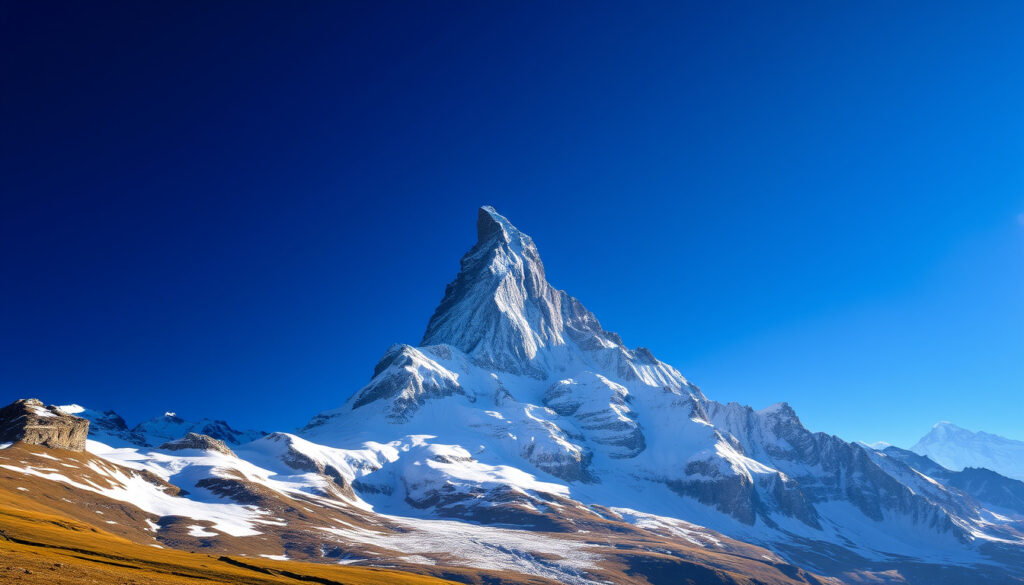
Matterhorn Mountain: Climbing, Deaths & Facts
You know that mountain on the Toblerone wrapper—the one that looks like nature carved a perfect pyramid just for the photo op? Turns out, it’s one of the deadliest climbs in the Alps, with over 500 recorded deaths since its first ascent in 1865. This guide unpacks the Matterhorn’s split personality: an icon that draws thousands of climbers each year while quietly keeping a cemetery full of those who didn’t make it.
Height: 4,478 m (14,692 ft) ·
First Ascent: July 14, 1865 ·
Location: Pennine Alps, border of Switzerland and Italy ·
Annual Climbing Deaths: Average 3-4 per year ·
Unknown Climber Grave: Located in Zermatt cemetery
Quick snapshot
- Height 4,478 m (14,692 ft) (Zermatt Tourism official site)
- First ascent July 14, 1865 (Zermatt Tourism official site)
- Over 500 deaths since 1865 (Zermatt Tourism official site)
- Located on Switzerland-Italy border (Zermatt Tourism official site)
- Exact number of unrecovered bodies — not all are recorded (Zermatt Tourism official site)
- Whether a beginner with intensive training could attempt it safely in one season (Ultimate Kilimanjaro climbing resource)
- 1865 — First ascent ends with four deaths (Zermatt Tourism official site)
- 1980s — Grave of the Unknown Climber established in Zermatt (Zermatt Tourism official site)
- Present — 3,000–4,000 attempts per year (Zermatt Tourism official site)
- Climbing continues year-round; peak season is summer (Zermatt Tourism official site)
- Guided climbs remain strongly recommended for safety (57hours climbing guide platform)
| Attribute | Value |
|---|---|
| Height | 4,478 m (14,692 ft) |
| First Ascent | July 14, 1865 |
| Location | Switzerland / Italy |
| Highest in Switzerland? | No (Monte Rosa is higher) |
| Annual Climbers | ~3,000–4,000 |
| Total Fatalities | Over 500 since 1865 |
Why is the Matterhorn so famous?
The iconic pyramid shape
The Matterhorn’s near-symmetric pyramid is one of the most recognizable mountain silhouettes on Earth. Unlike most alpine peaks, it rises in a clean, almost mathematical triangle from every angle—give or take a few ridges. Switzerland Highlights travel editorial notes that its shape is the primary reason it became the most photographed mountain in the world. The visual harmony is no accident of weather but the result of glacial erosion carving away softer rock around a core of gneiss, leaving this tooth of hard stone standing alone.
Most mountains get famous for being the highest. The Matterhorn got famous for being the most beautiful. That distinction has consequences—beauty draws crowds, and crowds on a technical peak mean more accidents.
First ascent and tragic outcome
What made the Matterhorn legendary wasn’t just its summit—it was the way the first climbing party came down. On July 14, 1865, Edward Whymper’s team reached the top via the Hörnli Ridge, a feat that had defeated every previous attempt. But during the descent, four of the seven climbers fell to their deaths when the rope between them snapped. Zermatt Tourism official site records this event as the starting point of the mountain’s fatal reputation—one that has only deepened with time. The story of the broken rope, the bodies on the glacier, and the enduring mystery of exactly what happened has been retold in books, documentaries, and climbing lore for over a century.
Symbol of Switzerland
The Matterhorn’s profile appears on Toblerone packaging, Swiss souvenirs, and countless travel posters. Unlike the Eiger or Jungfrau, which are less internationally recognized, the Matterhorn has become the visual shorthand for the Alps themselves. Switzerland Highlights travel editorial describes it as the Swiss landmark that tourists most associate with the country—even though it’s shared with Italy and is not even the tallest peak in Switzerland (that’s Monte Rosa at 4,634 m). Its fame as a symbol is outsized relative to its geography.
Most photographed mountain
Claims that the Matterhorn is the “most photographed mountain in the world” are difficult to verify by hard data—no mountain has a photo counter—but the assertion appears widely across editorial sources and tourism pages. Switzerland Highlights travel editorial makes this claim, and anecdotal evidence is strong: the mountain’s proximity to the resort town of Zermatt, combined with year-round accessibility via cable cars and trains, means hundreds of thousands of tourists capture it each season. For comparison, Mount Everest is photographed far less often per year because very few people ever see it in person.
Bottom line: The Matterhorn is famous for being visually perfect and historically tragic. Tourists get the postcard. Climbers get the graveyard. Both are part of the same story.
What’s harder, Matterhorn or Everest?
Technical difficulty
If you judge difficulty by what your hands and feet have to do, the Matterhorn wins. The standard Hörnli Ridge route is rated AD with UIAA III- moves 57hours climbing guide platform, meaning a climber must ascend steep rock and ice using hands for support, with exposure that many find psychologically demanding. By comparison, the standard South Col route on Everest is rated PD+ with ice slopes up to 45 degrees Story District climbing editorial. The physical climbing on the Matterhorn is more sustained and technically harder than anything on the normal route of Everest.
Altitude and acclimatization
Everest’s summit at 8,848 m requires climbing in the “death zone” above 8,000 m, where supplemental oxygen is considered essential by most parties. The Matterhorn tops out at 4,478 m—high enough to cause altitude symptoms in some climbers but well below the threshold where oxygen deprivation becomes a primary risk. Everest demands weeks of acclimatization, while a Matterhorn climb is typically done in one or two days from Zermatt 57hours climbing guide platform. In altitude terms, Everest is the larger challenge by a wide margin.
Duration and logistics
An Everest expedition runs about two months, including the Khumbu Icefall, multiple camps, and a weather-dependent summit window. The Matterhorn can be climbed in a single day from the Hörnli Hut—or as a two-day trip with an overnight stay 57hours climbing guide platform. That time difference changes the nature of the risk: Everest is a marathon of endurance, while the Matterhorn is a sprint through technical terrain.
Fatalities per climber ratio
This is where the comparison gets uncomfortable for the Matterhorn. The fatality rate per number of climbers on the Matterhorn is higher than on Everest Story District climbing editorial. While Everest has recorded about 339 deaths since 1921, the Matterhorn has over 500 deaths in a much shorter climbing history with far fewer total summiteers. The mountain kills more efficiently because the technical difficulty is high and the terrain is exposed: a slip on the Hörnli Ridge can be fatal within seconds, while a problem on Everest often unfolds over hours.
Everest is objectively harder in terms of altitude, logistics, and commitment. But the Matterhorn is more dangerous per attempt because it demands technical precision at the exact moment when most climbers are tired. A mistake on a 45-degree slope is different from a mistake on a 70-degree rock face.
| Factor | Matterhorn | Everest |
|---|---|---|
| Technical difficulty (standard route) | AD / UIAA III- (rock & ice climbing required) | PD+ (ice slopes up to 45°) |
| Altitude | 4,478 m (14,692 ft) | 8,848 m (29,029 ft) |
| Fatalities per climber | Higher per attempt | Lower per attempt |
Do people still climb Matterhorn?
Current climbing season and guides
Yes—thousands of people attempt the Matterhorn each year, and guided climbs are the norm. Peak season runs from July to August, when the Hörnli Ridge is free of deep snow and the weather is most stable. 57hours climbing guide platform recommends booking a local guide from Zermatt, as the route requires route-finding skills that many first-timers lack. Guides typically cost between $1,500 and $3,000 for a two-day program, depending on group size.
Number of annual ascents
Zermatt Tourism reports that approximately 3,000 to 4,000 climbers attempt the Matterhorn each year Zermatt Tourism official site. Of those, only about half reach the summit on any given attempt, with weather and rockfall being the main blockers. The Hörnli Ridge accounts for the vast majority of attempts—roughly 90 percent of all ascents use this route.
Modern safety measures
Fixed ropes, better weather forecasting, and mandatory guide requirements have reduced the fatality rate compared to the 19th and 20th centuries. That said, the mountain still averages multiple deaths per year—estimates range from 3 to 5 annually Global Summit Guide climbing resource to as high as 8 to 10 Switzerland Highlights travel editorial. The discrepancy reflects how differently organizations count deaths (immediate falls vs. later hospital deaths vs. missing climbers). What is clear: the mountain is safer than it was, but far from safe.
Grave of the Unknown Climber
In the Mountaineers’ Cemetery in Zermatt sits a stone marker that reads simply: “Grave of the Unknown Climber.” Zermatt Tourism official site explains that the memorial represents all climbers who died on the Matterhorn and whose bodies were either never found or remained unrecovered—including 27 people still listed as missing. The grave stands as a silent reminder that for every guided client who posts a summit selfie, there’s someone whose name was never known.
The Grave of the Unknown Climber is not about a single person. It’s about the cumulative weight of 500+ deaths and 27 missing climbers that the mountain refuses to give back. For the Zermatt community, it functions as both a memorial and a warning for every climber who straps on crampons at the trailhead.
How many bodies are on the Matterhorn?
Total recorded deaths
Over 500 climbers have died on the Matterhorn since the first ascent in 1865 Zermatt Tourism official site. That figure makes it one of the deadliest mountains in the Alps by absolute death count Switzerland Highlights travel editorial. For context, the nearby Eiger has about 64 recorded deaths, and Mont Blanc approximates 100 per year but with a far larger climbing population. The Matterhorn’s 500-plus figure is staggering given its relatively modest size and short climbing season.
Common causes of fatalities
Falls account for the majority of deaths, followed by rockfall and being struck by falling ice. The terrain on the Hörnli Ridge and especially on the more technical north and south faces is so exposed that even a minor slip can turn into a fatal slide. Global Summit Guide climbing resource notes that many fatal accidents involve climbers descending late in the day when fatigue sets in and judgment fades.
Recovery challenges
Rescuing a fallen climber on the Matterhorn is difficult and often impossible. The steep terrain prevents helicopter landings in many areas, and bodies that fall into crevasses or down the north face may never be recovered. Zermatt Tourism official site confirms that 27 climbers are still listed as missing, their final locations unknown. The mountain’s fractures and icefields have swallowed them.
Comparison with other mountains
Among the Alps, the Matterhorn leads in total deaths, but the deadliest mountain in the world per vertical meter is probably Annapurna I in Nepal, with a fatality rate near 40 percent for summiteers. The Matterhorn’s death toll is high for a single peak, but the ratio of deaths to attempts is what makes it stand out. Ultimate Kilimanjaro climbing resource calls it one of the deadliest peaks in Europe.
Can a beginner climb Matterhorn?
Required experience and fitness
No—a beginner with no mountaineering experience cannot safely climb the Matterhorn. Ultimate Kilimanjaro climbing resource explicitly states the mountain is not suitable for beginners. The Hörnli Ridge requires climbing rock at UIAA III- grade, descending steep ice sections, and maintaining concentration for 8-12 hours. That is the level of a serious recreational climber, not someone just starting out.
Guided vs. unguided
Even with a guide, a climber needs existing skills. 57hours climbing guide platform advises that guided clients should have prior experience on rock and ice, including the ability to use crampons and an ice axe confidently. A guide can navigate, decide whether to turn back, and handle some ropework, but they cannot physically carry a partner up vertical rock.
Training recommendations
Anyone aiming for the Matterhorn should first spend a season climbing easier alpine peaks: Breithorn (4,164 m) and Monte Rosa (4,634 m) are nearby and far less technical. 57hours climbing guide platform recommends building up through UIAA grade I and II routes before attempting the Matterhorn’s III- sections. Cardiovascular fitness for sustained effort at 4,000 m is also a prerequisite—most climbers train for 6-12 months in advance.
Risks for inexperienced climbers
The combination of altitude, exposure, and route complexity means that a beginner who attempts the Matterhorn without proper training—regardless of a guide’s presence—faces significantly higher odds of becoming a statistic. Global Summit Guide climbing resource notes that many fatal accidents involve guided clients who overestimated their comfort with exposure. The mountain punishes poor decision-making instantly and without recovery time.
The catch: no short-term training plan can substitute for months of progressive climbing experience. The Matterhorn is not a bucket-list item you check off in a weekend.
What country is the Matterhorn in?
Border between Switzerland and Italy
The Matterhorn sits directly on the border between Switzerland (canton of Valais) and Italy (Aosta Valley). The summit is the border point. Zermatt Tourism official site notes that climbers summiting on the Swiss side legally cross into Italy at the top. This dual-nationality status is unusual for a peak of this prominence and contributes to its international appeal.
Nearest town: Zermatt
Zermatt, Switzerland, is the primary access point for climbers and tourists. The town is car-free—electric shuttles and horse-drawn carriages provide transportation. From Zermatt, the Schwarzsee cable car (reaching 2,583 m) gives quick access to the Hörnli Ridge trailhead. The Matterhorn dominates the town’s skyline from every street.
Part of the Pennine Alps
The Matterhorn is one of the major peaks of the Pennine Alps, a range that also includes Monte Rosa, the highest mountain entirely within Switzerland. The Pennine Alps stretch along the Swiss-Italian border, and the Matterhorn’s location within this range places it among famously scenic and technical alpine terrain.
Is the Matterhorn the highest mountain in Switzerland?
No. Monte Rosa (4,634 m) holds that title, followed by the Dom (4,545 m) and the Liskamm (4,527 m). The Matterhorn’s 4,478 m makes it only the fifth-highest peak in the Alps overall, but its visual prominence is unmatched due to its isolated, pyramid-shaped massif. Height alone doesn’t determine fame—and the Matterhorn proves it.
The pattern: the Matterhorn’s location on a national border and its visual dominance over Zermatt create an international identity that transcends its modest ranking in elevation.
“The Matterhorn is not just a mountain. It is a terminal point of human aspiration, and for many, the final one.”
— Edward Whymper, mountaineer, reflecting on the 1865 first ascent
“Every year we welcome new climbers who tell us this was their dream. We also help identify bodies of those who didn’t survive that dream. The two jobs are the same in Zermatt.”
— Zermatt tourism official, on the mountain’s dual reality
“The Grave of the Unknown Climber is a memorial to all who have gone missing or been killed on the Matterhorn, including 27 people still lost on the mountain.”
— Grave of the Unknown Climber plaque, Zermatt Mountaineers’ Cemetery
zermatt.swiss, globalsummitguide.com, zermatt.swiss, gpsmycity.com, igoiseeishoot.blogspot.com, rockclimbingrealms.com
Frequently asked questions
How long does it take to climb the Matterhorn?
Most guided climbs take between 1 and 2 days. A typical schedule starts with a cable car to Schwarzsee, then a hike to the Hörnli Hut for an overnight stay. The summit push begins before dawn and takes 8-12 hours round trip from the hut.
What is the best time of year to climb the Matterhorn?
July and August offer the most stable weather and the least snow on the Hörnli Ridge. Early September can also work, but conditions become less predictable. Winter and spring ascents are rare and reserved for highly experienced teams.
Do I need a guide to climb the Matterhorn?
Not legally required, but strongly recommended. The Hörnli Ridge requires technical climbing and route-finding skills that most independent parties lack. The majority of fatal accidents on the mountain involve guided climbers as well, but a guide improves safety odds dramatically.
How much does it cost to climb the Matterhorn?
A guided two-day climb typically costs between $1,500 and $3,000 per person, depending on group size and the guide’s reputation. This includes guide fees, the overnight at the Hörnli Hut, and sometimes equipment rental. Cable car tickets and insurance are extra.
Is the Matterhorn harder than Mont Blanc?
Yes, technically. Mont Blanc (4,808 m) is higher but its standard Goûter route is rated PD—easier than the Matterhorn’s AD/III- rating. The Matterhorn requires more physical climbing on steeper rock. Mont Blanc is longer and colder but less steep.
What gear do I need for the Matterhorn?
Mountaineering boots (B2/B3 rated), crampons, ice axe, helmet, harness, ascending/descending devices, and layered clothing for alpine conditions. A 40L pack should suffice. Most guide services provide a full gear list upon booking.
Has anyone climbed the Matterhorn in a day?
Yes. Fit climbers with good acclimatization can ascend and descend the Hörnli Ridge from the Schwarzsee cable car in 8-10 hours. This is called a “day ascent” and is considered an advanced fitness objective. The first recorded day ascent was in 1883.
The Matterhorn presents a clear choice: you can admire it from Zermatt as an untouchable masterpiece, or you can test yourself against its 500-death legacy. For climbers who treat it with respect—training for a year, hiring a guide, and accepting the risk—it offers one of the most rewarding alpine experiences on Earth. For those who underestimate it, the Grave of the Unknown Climber waits. For the thousands of tourists who never leave the valley floor, the postcard never betrays the truth—and that silence is the mountain’s most deceptive feature.
More related posts
 Wide Bay TV Guide: Free-to-Air Listings & Fixes
 Clayton Utz: Big 6 Law Firm, History, Partners & Rankings
 Ray Martin Biography: Age, Net Worth, Children, and Career
 Anne Cleves: Henry VIII’s Fourth Wife and Her Generous Settlement
 Ayatollah Khomeini: Revolution, Women’s Rights, and Legacy
 Jake Weatherald: Biography, Age, Test Career & Dropped
 George R.R. Martin: Writing, Net Worth, and FAQs
