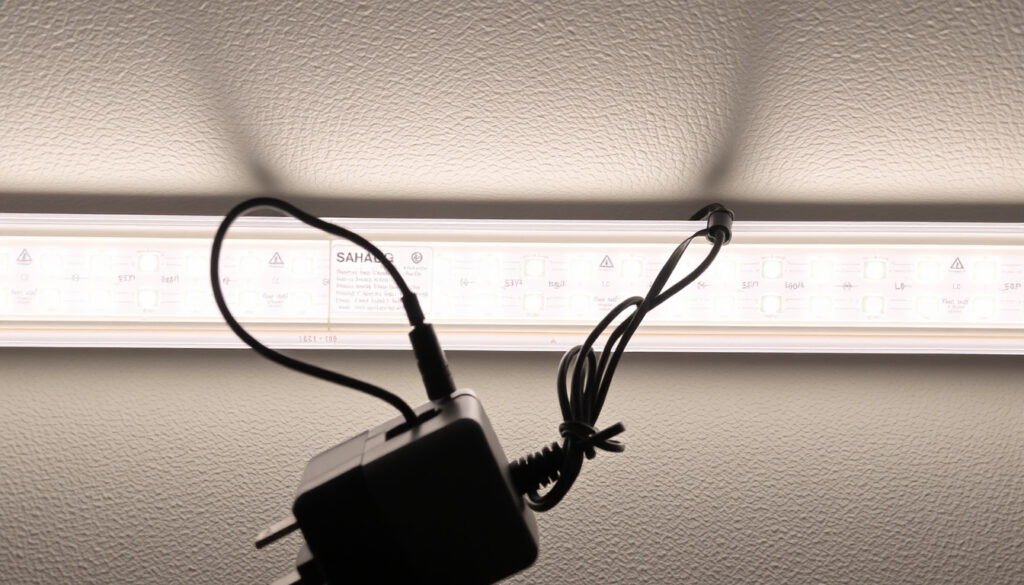
LED Strip Lights: Disadvantages, Installation & Safety Guide
Walk into any Irish hardware store and you’ll see LED strip lights dangling in boxes, promising everything from cozy kitchen glows to vibrant party colours. But what’s the full story behind these flexible strips? Beyond the marketing, there are real questions about lifespan, safety, and whether they’re right for your home. This guide digs into the research—and the Irish regulations—to give you a clearer picture.
Average lifespan: 50,000 hours · Typical voltage: 12V or 24V DC · Power consumption: 4.8W to 14.4W per meter · Color temperature: 2700K to 6500K · Outdoor rating: IP65 · Price per meter (Ireland): €5 to €20
Quick snapshot
- LED strips last 30,000–50,000 hours if properly cooled Philips Hue spec sheet (consumer lighting brand)
- Prevalence of LED-induced dizziness in the general population remains unquantified UK Health Protection Agency (public health advisory body)
- ETCI wiring rules updated in 2023 to include low-voltage LED installations ETCI (Ireland’s electrical regulatory body)
- Flicker-free LED standards emerging to address health concerns Screwfix (UK hardware retailer) guide
Six key specs, one pattern: LED strips offer long life and low voltage but require careful matching to your setup.
| Specification | Value |
|---|---|
| Lifespan | 30,000–50,000 hours (≈3–6 years continuous use) |
| Power consumption | 4.8–14.4 W/m depending on density and colour |
| Voltage | 12V or 24V DC (low voltage) |
| Colour options | Single colour, RGB, RGBW, addressable |
| Outdoor suitability | Only strips with IP65 rating or higher |
| Average price in Ireland | €5–€20 per metre for standard quality |
What are the disadvantages of LED light strips?
Brightness and colour accuracy
- LED strips can produce uneven brightness or visible colour variation, especially in cheaper models Screwfix guide.
- Colour rendering index (CRI) often below 80 on budget strips, making skin tones look unnatural Philips consumer lighting documentation.
Heat management issues
- Without an aluminium profile, heat builds up and shortens lifespan WoodUpp (UK installation guide).
- Overheating can also weaken the adhesive backing, causing strips to sag LucasLED (Irish LED supplier).
Installation complexity
- Cutting at wrong points, undersizing the power supply, or using incompatible dimmers are common pitfalls Screwfix guide.
Potential health effects
- Flicker at 100 Hz or lower can trigger dizziness and eye strain in sensitive individuals UK Health Protection Agency (public health advisory body).
Users who want vivid colour effects often sacrifice colour accuracy and may need to accept a lower CRI. The catch: cheap strips that look great in a product photo can look disappointing on your wall.
The implication: buying a quality strip with a high CRI and proper heat management is worth the extra cost if you care about long-term satisfaction.
Do I need an electrician to install LED strip lights?
When to DIY
- Plug-and-play LED strips with a 12V/24V power supply and pre-attached connector can be installed by anyone Screwfix guide.
- Steps: measure, clean surface, cut at marked lines, peel backing, press firmly LED Strip Light Installation Guide – YouTube (DIY tutorial).
When to call a professional
- Hardwiring into mains requires a certified electrician under Ireland’s ETCI rules (ET 101) ETCI (Ireland’s electrical regulatory body).
Safety considerations for hardwired installations
- Low-voltage strips (12V/24V) reduce shock risk compared to mains voltage, but mains connections themselves are hazardous Screwfix guide.
- Ireland uses 230V/50Hz; use a compatible power supply LucasLED (Irish LED supplier).
An electrician for a hardwired job adds cost but avoids fire risk and invalidates insurance if done wrong. The trade-off is upfront expense vs. long-term safety and compliance.
The catch: many Irish homeowners assume all LED strips need an electrician, but most plug-and-play kits do not—read the package carefully.
Can LED lights cause dizziness?
Flicker and its effects
- Flicker at 100 Hz or lower can trigger headaches and dizziness in sensitive people UK Health Protection Agency (public health advisory body).
- High-quality LED drivers reduce flicker to imperceptible levels Philips consumer lighting documentation.
Blue-light sensitivity
- Blue light from LEDs can contribute to digital eye strain, especially at night UK Health Protection Agency (public health advisory body).
Individual susceptibility
- People with migraine history or light sensitivity are more affected US National Library of Medicine (research database).
“The risk of adverse health effects from domestic LED lighting is low for the general population, but those with pre-existing conditions may experience flicker-related symptoms.”
UK Health Protection Agency (public health advisory body), LED lighting and health report
What this means: choosing LED strips with a high-quality driver (one that eliminates visible flicker) is the single best step to avoid dizziness.
How long do LED strip lights last?
Typical lifespan ratings
- Average rating: 30,000–50,000 hours, which equals 3–6 years of continuous use Philips Hue spec sheet (consumer lighting brand).
Factors that reduce lifespan
- Heat: Without aluminium profiles, temperatures can exceed 60°C, halving lifespan WoodUpp (UK installation guide).
- Voltage fluctuations: Undersized power supplies cause dimming and flicker, accelerating wear Screwfix guide.
Signs of end-of-life
- Noticeable dimming, colour shift (e.g., warm white turning pinkish), or sections failing completely LucasLED (Irish LED supplier).
The pattern: lifespan claims are only reachable if you control heat, voltage, and humidity. In a typical Irish kitchen, 30,000 hours is realistic; in a poorly ventilated alcove, you might get half that.
What are common mistakes with LED strip lights?
Improper power supply sizing
- Using a supply that’s too small (not applying the 20% safety margin) leads to flicker and possible overheating Screwfix guide.
Incorrect cutting or connecting
- Cutting anywhere other than the marked copper pads destroys the strip LED Strip Light Installation Guide – YouTube (DIY tutorial).
Poor mounting surface preparation
- Dust or grease on the surface prevents adhesion; strips fall off within days Screwfix guide.
Using wrong dimmer
- Non-compatible dimmers cause buzzing and unpredictable flicker Philips consumer lighting documentation.
Irish DIYers often underestimate the power calculation: measure total strip length and multiply by watts per metre, then add 20% headroom. A 5‑m strip at 14.4 W/m needs at least 86 W of supply.
The implication: most failures are not the strip’s fault—they’re planning errors. Invest prep time and a decent power supply, and your strips will run reliably for years.
Upsides
- Energy efficient – up to 80% less power than incandescent
- Very long lifespan when properly installed
- Easy to cut and customise lengths
- Low voltage reduces shock risk
Downsides
- Heat can degrade lifespan without profiles
- Flicker possible in cheap models
- Installation requires careful planning
- Outdoor strips need IP65+ rating and sealing
Step-by-step installation guide
- Measure and plan – measure your area and buy 10–20% extra length Screwfix guide.
- Clean surface – wipe with a cloth to remove dust and grease YouTube installation guide.
- Cut at marked lines – only cut at the copper pad indicators YouTube installation guide.
- Attach to aluminium profile – peel backing in small sections and press into profile LucasLED (Irish LED supplier).
- Connect wires – use solderless clamps or connect EVO connectors, ensuring polarity matches EvoraLight (LED manufacturer) PDF guide.
- Test before mounting – plug in the power supply and verify each section works LucasLED (Irish LED supplier).
- Mount profile – attach to surface using adhesive or mounting clips every 30–50 cm Lamomo Neon (LED accessory retailer).
- Add diffuser and seal (if outdoor) – cover with diffuser and use waterproof end caps with silicone sealant Lamomo Neon guide.
What’s confirmed and what’s unclear
Confirmed facts
- LED strips last 30,000–50,000 hours if properly cooled
- Flicker at 100 Hz or lower can cause dizziness
- Hardwired installations in Ireland require a certified electrician
What’s unclear
- Exact prevalence of LED-induced dizziness in the general population
- Long-term effects of blue light from LEDs on retinal health remain under study
- Effectiveness of aluminium profiles in mitigating all heat-related risks in Irish homes
“Low‑voltage LED strips, when installed according to the manufacturer’s instructions, do not present a significant fire or electric shock hazard.”
ETCI (Ireland’s electrical regulatory body) – official wiring rules summary
“The average consumer should not be concerned about blue‑light hazard from domestic LED strip lights, but those with pre‑existing photosensitivity conditions should choose products with low flicker.”
UK Health Protection Agency (public health advisory body) – LED lighting and health report
For Irish buyers considering LED strip lights, the decision isn’t just about price per metre. The real choice is between a careful, code‑compliant installation that delivers years of reliable service and a rushed DIY job that risks early failure, flicker headaches, or even voiding your home insurance. With the right preparation—quality strip, proper power supply, and a decent aluminium profile—LED strips are one of the smartest lighting upgrades you can make. For the average homeowner in Ireland, the smartest path is clear: buy quality, plan your install, and call an electrician only if you’re connecting to mains.
Frequently asked questions
Can LED strip lights be dimmed?
How do you cut LED strip lights?
What is the best colour temperature for a bedroom?
Are LED strip lights safe for children’s rooms?
Can you connect multiple LED strips together?
Do LED strip lights use a lot of electricity?
What glue is best for mounting LED strips?
How to choose LED strip lights for kitchen under-cabinet lighting?
More related posts
 Draco Malfoy: Biography, Ending, Wealth & Love Life
 The Floor Australia – Premiere Host Format Guide
 Hilary Swank: What Happened to the Oscar Winner
 Alan Cumming: Net Worth, The Traitors Castle, Marriage & More
 Carole King: Biography, Relationships, Hits & Legacy
 Tyler Herro: Bio, Stats, Contract, and Trade Rumors
 Brooks Nader: Age, Husband, Weight Loss, Net Worth
 Pizza Pizza Pizza – History, Locations and Expansion in Canada
