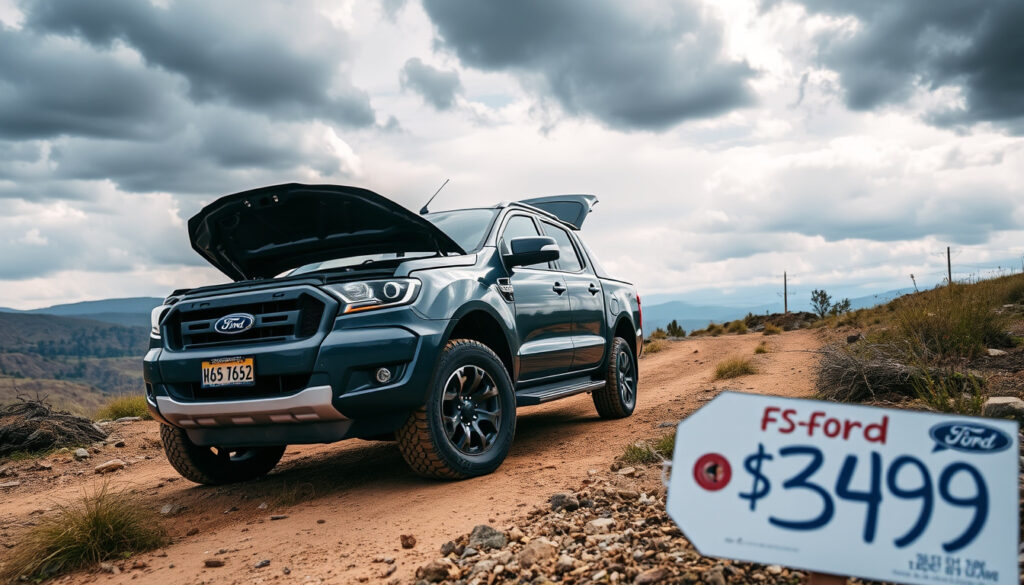
Ford Ranger Weaknesses, Engine Comparisons & Pricing
Anyone shopping for a double-cab pickup in Ireland has probably noticed the same thing: the Ford Ranger is everywhere. It’s also one of the most discussed trucks for reasons beyond its muscular stance — the 2.2 vs 3.2 engine debate, the new PHEV, and a set of model-year quirks worth knowing before you sign, and here’s what official price lists, independent reliability data, and owner reports actually say about the Ranger, from towing capability to the years worth avoiding.
Towing capacity: up to 3,500 kg ·
Engine options: 2.0L, 2.2L, 3.2L ·
Starting price (Ireland): €41,881 ·
Top horsepower: 270 hp (2.3L EcoBoost) ·
Fuel economy: approx. 8.5 L/100 km (diesel)
Quick snapshot
- Tows up to 3,500 kg on core diesel variants, with Irish prices including VAT and VRT (Ford Ireland (official price list))
- Diesel line-up spans 2.0L, 2.2L and 3.2L options (Wikipedia (vehicle reference))
- Irish list prices start around €41,881 (JPMG (Irish Ford dealer))
- Long-term reliability of the newer 2.0L bi-turbo is still emerging, and the 2025 model is rated below average for predicted reliability (Consumer Reports (independent testing))
- Exact failure rates per model year are not published, so buyers depend on owner and recall records (Consumer Reports (independent testing))
- Ford Ireland’s 26.5MY customer price list took effect 14 April 2026, and the Raptor list was updated 29 July 2026 (Ford Ireland official price documents)
- The 2025 model year carries 13 NHTSA recalls, a signal to verify any VIN before buying (Consumer Reports recall data)
- PHEV arrives through Irish dealers from €50,700 ex VAT (Kerry Motor Works (Irish Ford dealer))
- The 3.0L V6 Raptor now heads the performance range, with the diesel line-up still the volume seller in Ireland (Kerry Motor Works (Irish Ford dealer))
The signal: the Ranger’s positives are easy to verify on paper, while its negatives only show up per vehicle. That combination rewards buyers who check specifics rather than brand reputation.
Ford Ranger key facts
Six figures, one outline: the Ranger is a broad-shouldered work truck with car-like manners and a price ladder to match.
| Metric | Value |
|---|---|
| Towing capacity | Up to 3,500 kg |
| Engine options | 2.0L, 2.2L, 3.2L diesel; 2.3L PHEV; 3.0L petrol V6 |
| Starting price (Ireland) | €41,881 (JPMG (Irish Ford dealer)) |
| Maximum horsepower | 270 hp (2.3L EcoBoost, US spec) |
| Wheelbase | 3,220 mm (Wikipedia vehicle reference) |
| Payload capacity | Up to 1,250 kg |
What this means: the Ranger’s headline numbers match the best in the segment — 3,500 kg towing and a 1,250 kg payload cover serious work — while the engine list shows how fast Ford is expanding toward electrification.
What is the weakness of the Ford Ranger?
The short answer: the Ranger’s weak spots are electrical and emissions-related, not structural. The recurring problems cluster around engine sensors, diesel emissions hardware, and transmission programming rather than the chassis or the towing gear.
Common electrical issues
- MAF sensor failures on 2019-2022 Rangers, often flagging a check-engine light and rough idling.
- Mass airflow sensor problems on the current 2.3L EcoBoost, with the same symptoms.
- SYNC infotainment glitches and ADAS sensor malfunctions on current models.
That list comes from CarTipsDaily’s reliability roundup, the most detailed public summary of owner-reported Ranger faults available.
Transmission problems
- Transmission programming issues surfaced on 2019 models, mostly around the 10-speed automatic’s shift logic.
- The 2025 model year accumulated a heavy recall record, which makes checking a specific VIN essential before purchase.
Diesel engine concerns
- AdBlue system faults are a frequent complaint on 2019-2022 diesels — a repair that can be costly.
- Pre-2020 examples are prone to exhaust system corrosion, and older trucks in road-salt regions develop rust issues (CarTipsDaily (owner reliability tracker)).
The pattern: none of these faults is structural. Budget for a thorough inspection of the AdBlue system, MAF sensor and underbody on any used Ranger, and most of the risk drops away.
Which engine is best in a Ford Ranger?
Your answer depends on whether you value proven longevity, modern efficiency, or maximum performance. As a rule of thumb: the 2.2L is the conservative choice, the 2.0L bi-turbo is the balanced daily driver, and the 3.2L is the old workhorse for heavy towing.
2.0L EcoBlue vs 2.2L Duratorq vs 3.2L Duratorq
- The 2.0L EcoBlue is the modern efficiency pick — it underpins the Ranger’s roughly 8.5 L/100 km combined diesel figure, and the bi-turbo tune delivers strong mid-range pull without the 3.2L’s fuel thirst.
- The 2.2L Duratorq is the older, less-stressed workhorse. It gives away power to the other two but carries the longest clean track record in fleet use.
- The 3.2L Duratorq five-cylinder is the torque-heavy pick of the old guard: excellent for towing, noticeably thirstier, and the most likely to show high-mileage niggles.
Which engine is most reliable?
- The 2.2L Duratorq has the strongest informal reputation for low-drama, high-mileage service.
- Consumer Reports’ below-average rating for the 2025 model means the newer 2.0L bi-turbo’s longevity is not yet proven.
- RepairPal-style data puts the Ranger at 4.0 out of 5.0, with average annual repair costs of $615 versus the midsize truck segment’s $548 (CarTipsDaily (repair-cost data)).
Performance differences
- Top petrol output in the wider line-up is 270 hp from the 2.3L EcoBoost used in US-market Rangers.
- The 26.5MY Raptor is now a different animal: a 3.0L EcoBoost V6 petrol with 292 PS and a 10-speed automatic (Ford Ireland (official Raptor price list)).
- The new PHEV splits the difference — a 2.3L petrol plug-in hybrid with 279 BHP, 680 Nm of torque and up to 42 km of electric-only range (Kerry Motor Works (PHEV listing)).
The trade-off: modern efficiency versus proven mileage. On paper the 2.0L bi-turbo wins; in long-term owner reports, the 2.2L is still the one with the quietest reputation.
Which Ford Ranger to stay away from?
No Ranger generation is a blanket disaster, but three pockets of the used market deserve extra caution: early 10-speed models, diesels from the 2019-2022 window, and the 2025 model year on paper.
Model years with known issues
- 2019: transmission programming issues reported, mainly in the 10-speed automatic.
- 2019-2022 diesels: MAF sensor and AdBlue system faults are the most common complaints.
- 2025: below-average predicted reliability rating from Consumer Reports.
Specific recalls
- NHTSA records show 13 recalls for the 2025 Ranger, and the practical step is to run any VIN through the official recall checker before buying (Consumer Reports independent testing).
High-mileage concerns
- Pre-2020 Rangers are prone to exhaust system corrosion, and older trucks in heavy road-salt regions can develop chassis rust.
- Budget for above-average upkeep: the Ranger’s typical $615 annual repair bill sits higher than the midsize segment’s $548.
Thirteen recalls on the 2025 model do not mean every example is a problem — but they mean paperwork is everything. Buy a used Ranger without a verified recall and service history, and you’re gambling on the one unpriced variable that matters most.
Why this matters: the years to avoid are not about bad bones, they’re about expensive surprises. A pre-purchase inspection that checks the AdBlue system, MAF sensor and underbody will filter out most of the risk.
Which is better, Hilux or Ranger?
This is the question every Irish pickup buyer asks, and the honest answer is: it depends on what you’re optimising for. The Hilux is the durability benchmark; the Ranger is the comfort and capability leader.
Off-road capability
- Both trucks are genuinely capable off-road. The Hilux’s reputation is built on extreme, no-excuse toughness in harsh conditions.
- The Ranger counters with better suspension control and, in Raptor form, a wider track and Fox shock absorbers — a real edge in high-speed off-road work.
On-road comfort
- The Ranger is widely regarded as the more car-like double cab on tarmac, with better ride quality and quieter cruising than the Hilux.
- The Hilux trades some on-road polish for a sense of indestructibility — which is exactly why many buyers accept the stiffer ride.
Reliability comparison
- The Hilux carries the stronger long-term reliability reputation, built over decades of hard use across global markets.
- Consumer Reports’ below-average rating for the 2025 Ranger is the strongest recent counter-signal — if reliability is your top priority, that rating matters.
Price and value
- Ranger pricing in Ireland starts around €41,881, and the PHEV pushes past €50,000 ex VAT before options.
- Hilux pricing lands in a similar band, so the real value difference comes down to spec, running costs and warranty, not the sticker.
- For towing, the Ranger’s 3,500 kg capacity is the headline number most buyers compare first.
The implication: this is not a one-winner contest. Tow-heavy and comfort-focused buyers should lean Ranger; extreme-durability and maximum-resale buyers should lean Hilux.
What is the Ford Ranger price in Ireland?
Pricing is where the Ranger becomes genuinely competitive — and where the range’s spread becomes obvious.
New Ford Ranger prices
- JPMG’s Irish listing shows the new Ranger from €43,290, with four-seater pricing from €41,882 and two-seater pricing from €41,390 (JPMG (Irish Ford dealer)).
- Ford Ireland’s official 26.5MY customer price list took effect 14 April 2026, with all prices shown including VAT and VRT in euro.
- The Ranger Raptor runs on its own updated Irish price list, last revised 29 July 2026.
Used Ford Ranger prices
- The 2.2L models are usually the budget entry point.
- The 3.2L holds strong demand with towing buyers, which supports resale values.
- The 2.0L bi-turbo sits in the middle — newer and efficient, but with a shorter reliability track record.
- Pricing varies by year and mileage, and no central Irish index tracks it, so comparing specific ads is part of the process.
Trim levels and pricing
- XL: base work trim with the 2.0L diesel — this is the model that anchors the line-up around €41,881.
- XLT: mid-range trim, available with the 2.0L or 2.2L diesel, plus extra comfort kit.
- Wildtrak: top trim with the 3.2L or 2.0L bi-turbo, leather seats and larger wheels.
- Raptor: performance flagship with the 3.0L V6 petrol, Fox shocks and a wider stance.
For an Irish buyer, the rational default is the 2.0L bi-turbo in XLT or Wildtrak form if you tow regularly — and the PHEV only if your daily loop stays under 42 km. The Raptor is a passion purchase, not a value one.
The same research-first habit that helps Irish buyers compare everything from custom shirts in Ireland to premium sneaker pricing applies here: check the spec, then check the record.
Ford Ranger trims compared
Four trims, one pattern: the upgrade budget buys comfort and performance, not extra towing — the 3,500 kg figure holds across the core diesel range.
| Trim | Engine options | Positioning | Price signal (Ireland) |
|---|---|---|---|
| XL | 2.0L diesel | Base work double cab | From around €41,881 |
| XLT | 2.0L or 2.2L diesel | Mid-range comfort focus | Check current Ford Ireland list |
| Wildtrak | 3.2L or 2.0L bi-turbo | Top trim: leather, larger wheels | Premium over XLT trim |
| Raptor | 3.0L EcoBoost V6 petrol, 292 PS | Off-road performance, Fox shocks | Separate price list, updated 29 July 2026 |
The trade-off: base trims share the same chassis, towing and engine options as the top trims, so your extra money buys comfort and image — real for resale, irrelevant for work.
Ford Ranger specifications
Twelve figures, one story: the Ranger is a serious work truck with car-like manners and a powertrain list that now runs from diesel to plug-in.
| Specification | Value |
|---|---|
| Towing capacity | Up to 3,500 kg |
| Payload capacity | Up to 1,250 kg (Wikipedia vehicle reference) |
| Wheelbase | 3,220 mm |
| Diesel engines | 2.0L EcoBlue, 2.2L Duratorq, 3.2L Duratorq |
| Petrol engines | 2.3L EcoBoost (270 hp), 3.0L V6 Raptor (292 PS) |
| Plug-in hybrid | 2.3L PHEV, 279 BHP, 680 Nm, up to 42 km EV |
| Transmission | 10-speed automatic on key variants |
| Fuel economy (diesel, combined) | approx. 8.5 L/100 km |
| Irish starting price | €41,881 |
| PHEV starting price | €50,700 ex VAT |
| 2025 model recalls | 13 (NHTSA, via Consumer Reports) |
| Price list status | 26.5MY effective 14 April 2026; Raptor updated 29 July 2026 |
What this means: the spec sheet confirms the Ranger’s dual personality — serious towing and payload numbers on one side, and a growing list of petrol and plug-in options on the other.
Pros and cons
Upsides
- Class-leading towing capability: up to 3,500 kg.
- One of the most comfortable double cabs on tarmac.
- Broad powertrain choice: diesel, petrol V6 and PHEV.
- Strong Irish dealer network and parts availability.
Downsides
- Below-average predicted reliability on the 2025 model (Consumer Reports).
- 13 NHTSA recalls on the 2025 model year.
- AdBlue and MAF faults on 2019-2022 diesels.
- Repair costs above the midsize segment average.
Read the two lists together: the Ranger’s weaknesses are concentrated, known and inspectable. That makes it a smarter used buy than a truck with vague but serious problems.
What we know and what’s still unclear
Research confidence on the Ranger is genuinely mixed, so here’s the honest split between verified facts and open questions.
Confirmed facts
- Towing capacity reaches 3,500 kg on core diesel variants (per Ford Ireland’s price list).
- Irish list prices start from around €41,881 (per JPMG’s listing).
- The PHEV is advertised from €50,700 ex VAT in Ireland (per Kerry Motor Works).
- The 2025 model carries 13 NHTSA recalls and a below-average predicted reliability rating (per Consumer Reports).
- MAF, AdBlue, transmission programming and corrosion are the most-reported issues across recent model years (per CarTipsDaily).
Still unclear
- Whether the 2.0L bi-turbo diesel will match the 2.2L’s long-term reliability record.
- Real-world PHEV electric range versus the 42 km claim in everyday Irish driving.
- How the 13 recalls map to specific VINs, build dates and components.
- Whether the 3.0L V6 Raptor’s fuel costs will limit its appeal in the Irish market.
- Ford’s own model-year failure-rate data, which is not publicly broken down by year.
Why this matters: the imbalance is the story. Recalls tell you what Ford has already fixed; the absence of failure-rate data tells you what you cannot yet know — so the service history does the talking.
What the sources say
Ford Ireland’s official price documents confirm the Ranger’s headline capability: up to 3,500 kg of towing across the core diesel line-up, with Irish prices including VAT and VRT.
The New Ranger PHEV pairs a 2.3-litre petrol plug-in hybrid with 279 BHP, 680 Nm of torque and up to 42 km of electric-only range — a first for the nameplate in Ireland.
— Kerry Motor Works (Irish Ford dealer)
Consumer Reports rates the 2025 Ranger’s predicted reliability below average for its model year — the clearest independent caution flag for the nameplate right now.
What these voices add up to: the manufacturer confirms the capability, the dealer network is already selling the electrified future, and the independent testers flag the reliability risk. All three are true at once — which is why the specific vehicle matters more than the badge.
For the Irish double-cab buyer, the decision is clear: buy the Ranger’s proven engines and verify the electronics, or pay a Hilux premium for peace of mind. The 2025 model’s 13 recalls, the 2019-2022 AdBlue and MAF faults, and the 2.0L bi-turbo’s unproven long-term record all argue for checking a specific VIN’s history before any money moves — choose the 2.2L for low drama, the 2.0L bi-turbo for efficiency, and the PHEV only if your daily loop runs under 42 km.
youtube.com, carparts.com, cartipsdaily.com, youtube.com, youtube.com, autocar.co.uk
Frequently asked questions
Is the Ford Ranger good for daily driving?
Yes — the current generation is among the most car-like double cabs on tarmac, and diesel models return roughly 8.5 L/100 km combined. The trade-offs: it’s a big vehicle to park, and running costs climb quickly with the 3.2L or the V6 Raptor.
How long do Ford Ranger engines last?
The 2.2L and 3.2L Duratorq diesels have strong high-mileage reputations in fleet and farm use. The newer 2.0L bi-turbo is efficient, but its long-term record is still being written — which is why many used buyers prefer the older engines.
What is the best Ford Ranger trim level?
For most Irish buyers the XLT is the value pick: it adds real comfort without the Wildtrak premium. Choose the Wildtrak if leather and larger wheels matter, and the Raptor only if you want the 3.0L V6 performance experience.
Does the Ford Ranger have a timing belt or chain?
It depends on the engine. Ford has used both belt and chain systems across the Ranger’s diesel line-up — the 2.0L EcoBlue is belt-driven, while the 3.2L Duratorq uses a chain. Confirm the exact engine’s service schedule before buying used, because replacement intervals and costs differ significantly.
Is the Ford Ranger expensive to maintain?
Above the mid-size segment average, but not dramatically. RepairPal-based data puts the Ranger at $615 per year versus $548 for the segment, and AdBlue or MAF sensor faults are the extra bills to anticipate on 2019-2022 diesels.
What is the resale value of a Ford Ranger?
Strong in Ireland, particularly for 3.2L and Wildtrak examples, because double-cab demand stays high. The caveat: a Ranger with an unverified recall or AdBlue history will sit on the lot, so paperwork drives resale as much as the badge.
Can the Ford Ranger handle towing a boat?
Yes — most diesel Rangers tow up to 3,500 kg, which covers a sizeable trailer boat. Check the specific variant’s rating before hitching up, because PHEV and petrol models may have different figures.
More related posts
 Mary Tyler Moore: Death, Health, and Relationships Facts
 Famous People: Top 10, #1 Most Famous, Rankings & Lists 2025
 Dylan Brown NRL Career, Contract, Age & Personal Life
 Qantas Staff Travel: Benefits, Rules & Booking Guide
 Maddison Inglis: Ranking, Relationships, and Career Highlights
 Jessie Murph: Biography, Age, Height, Net Worth & Songs
 Rutger Hauer: Illness, Death, Best Movies, and Legacy
 Door Knob: Complete Guide to Spelling, Sizes, and Replacement
