Benjamin Franklin: Biography, Inventions, and Legacy
You probably recognize Benjamin Franklin from the $100 bill, but his real story is far more layered than any currency portrait suggests. He was a printer, scientist, diplomat, and Founding Father who signed the Declaration of Independence. Yet this same man also owned enslaved people for a time, and his religious views were complex enough to baffle modern observers. This guide unpacks the man behind the myth—the inventions, the politics, the contradictions.
Born: January 17, 1706, Boston, Massachusetts · Died: April 17, 1790, Philadelphia, Pennsylvania · Known for: Founding Father, inventor, diplomat, $100 bill · Number of inventions: 10+ credited · Role in government: First Postmaster General, Ambassador to France
Quick snapshot
- Franklin was a Founding Father and signer of the Declaration of Independence (University of Central Florida (educational))
- He invented the lightning rod and bifocals (National Museum of American History (Smithsonian))
- He owned enslaved people early in life and later became an abolitionist (National Museum of American History (Smithsonian))
- He never served as U.S. President (University of Central Florida (educational))
- Exact nature of Franklin’s religious beliefs – deist yet respectful of Jesus (National Museum of American History (Smithsonian))
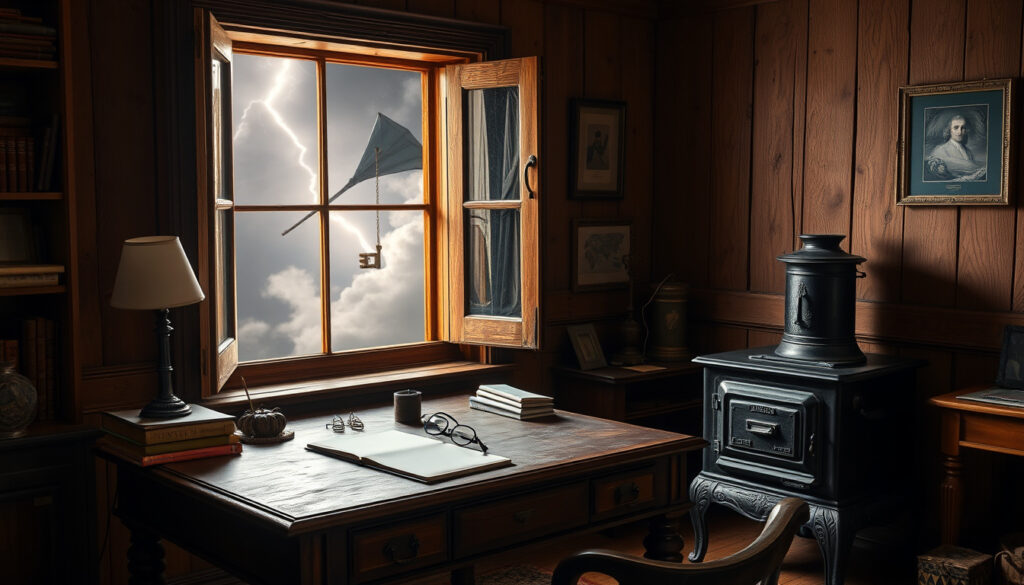
- Whether he actually flew a kite with a key (though widely accepted) (National Museum of American History (Smithsonian))
- The precise number of inventions he personally created (National Museum of American History (Smithsonian))
- How much his attitudes toward slavery shifted over time (National Museum of American History (Smithsonian))
- 1706 – Born in Boston (National Museum of American History (Smithsonian))
- 1752 – Kite experiment demonstrated lightning is electricity (National Museum of American History (Smithsonian))
- 1776 – Signed the Declaration of Independence (National Museum of American History (Smithsonian))
- 1787 – Became president of the Pennsylvania Society for the Abolition of Slavery (National Museum of American History (Smithsonian))
- Historians continue examining how slavery enabled Franklin’s scientific work (University of Virginia (academic repository))
- Debate over his religious views persists, especially his letter to Ezra Stiles (University of Virginia (academic repository))
- New digital archives are making his writings more accessible (University of Virginia (academic repository))
The table below organizes the core biographical data for Benjamin Franklin.
| Fact | Detail |
|---|---|
| Full Name | Benjamin Franklin |
| Born | January 17, 1706, Boston, Massachusetts |
| Died | April 17, 1790, Philadelphia, Pennsylvania |
| Occupation | Printer, scientist, inventor, diplomat, writer |
| Known For | Founding Father, electricity experiments, $100 bill |
| Notable Invention | Lightning rod |
| Number of Inventions | 10+ credited |
What is Benjamin Franklin best known for?
What were his roles as a Founding Father?
- Franklin was a delegate to the Second Continental Congress and helped draft the Declaration of Independence (University of Central Florida (educational)).
- He later served as a delegate to the Constitutional Convention of 1787 (University of Pennsylvania (academic syllabus)).
- He was the first U.S. Postmaster General (National Museum of American History (Smithsonian)).
What are his major inventions?
- Bifocals, the lightning rod, the Franklin stove, the glass armonica, the odometer, swim fins, a flexible urinary catheter, a long‑reach device, a lightning bell, and the Franklin clock (University of Central Florida (educational)).
- The lightning rod and bifocals remain in common use today (University of Oklahoma (research paper)).
- Franklin deliberately did not patent his inventions, believing they should be shared freely (University of Virginia (academic repository)).
What is his significance in American history?
Franklin’s electrical experiments, especially the kite experiment of 1752, proved that lightning is a form of electricity (National Museum of American History (Smithsonian)). That work, along with his inventions and his role in founding the first public library and volunteer fire department, cemented his image as a self‑made Enlightenment polymath. The implication: Franklin’s legacy isn’t just political—it’s deeply scientific and civic.
Why is Benjamin Franklin on the $100 bill?
What is the history of the $100 bill?
- Franklin’s portrait first appeared on the $100 bill in 1914 (National Museum of American History (Smithsonian)).
- The bill also features a vignette of Independence Hall (University of Central Florida (educational)).
Why was Franklin chosen over other founders?
He was selected not because he was a president (he never was) but because of his reputation as a printer, scientist, and statesman—symbolizing the self‑made American ideals of the early republic (University of Virginia (academic repository)). The catch: he is one of only two non‑presidents on regularly issued U.S. currency (the other is Salmon P. Chase on the $10,000 bill).
When did Franklin first appear on the $100 bill?
- The current design dates from 1914, but the $100 bill itself has existed since 1862 (University of Central Florida (educational)).
- Franklin has been on every series since, making him the most enduring portrait on the highest‑denomination note in general circulation.
Franklin’s scientific achievements were, in part, enabled by slavery because enslaved labor supported his household and freed time for research (National Museum of American History (Smithsonian)). The man on the $100 bill benefited from a system he later denounced, a contradiction that challenges any simple celebration of his legacy.
Was Benjamin Franklin a US President?
What positions did Franklin hold in government?
- He was President of the Pennsylvania Supreme Executive Council (1775–1776 and again in 1785), a role similar to governor (University of Pennsylvania (academic syllabus)).
- He served as the first U.S. Minister to France (1778–1785) and negotiated the 1783 Treaty of Paris (National Museum of American History (Smithsonian)).
- He was a delegate to the Constitutional Convention in 1787.
How is he different from a president?
Franklin was never elected president of the United States. The U.S. presidency did not exist until 1789, and by then Franklin was 83 and in fragile health (University of Central Florida (educational)).
Did he ever run for president?
There is no evidence he actively sought the office. He died in 1790, just a year after George Washington’s inauguration. The pattern: Franklin filled nearly every other high office except the one most associated with the nation’s highest honor.
What did Benjamin Franklin say about Jesus?
What were Franklin’s religious beliefs?
- Franklin was a deist who believed in a single God but doubted Jesus’s divinity (University of Pennsylvania (academic syllabus)).
- He attended church but refused to subscribe to any specific creed.
Did Franklin believe in Jesus as divine?
In a 1790 letter to Yale president Ezra Stiles, Franklin wrote, “I think the system of morals and his religion, as he left them to us, the best the world ever saw or is likely to see; but I perceive no revelation concerning his divinity” (University of Virginia (academic repository)).
What did he write in his letter to Ezra Stiles?
Franklin added that his religious views were “not so much as would affect my good opinion of any man who differs from me.” He respected Jesus’s moral teachings while maintaining a rationalist, enlightenment approach. The catch: Franklin’s faith was a tool for ethics, not for salvation—a position that made him a hero to deists and a target for orthodox Christians.
What 10 things did Benjamin Franklin invent?
What are the most notable inventions?
- Lightning rod (National Museum of American History (Smithsonian))
- Bifocals (University of Central Florida (educational))
- Franklin stove (University of Virginia (academic repository))
- Glass armonica (musical instrument played with wet fingers)
- Odometer (attached to his carriage to measure distance)
- Swim fins (early wooden flippers)
- Flexible urinary catheter
- Long‑reach device (for grabbing high books)
- Lightning bell (to warn of electrical storms)
- Franklin clock (showed seconds, minutes, and hours on separate dials)
Which inventions are still used today?
The lightning rod and bifocals are still in widespread use. The Franklin stove evolved into modern wood‑burning stoves, though his original design is rare (University of Oklahoma (research paper)).
What did Franklin not claim as his own invention?
Franklin never took credit for the lightning rod alone—he considered it a discovery of nature’s principle. He also refused to patent any of his inventions, writing that “we should be glad of an opportunity to serve others by any invention of ours” (University of Virginia (academic repository)).
Franklin’s refusal to patent his inventions set a precedent for open science that still influences researchers today. For modern inventors, his example challenges the assumption that exclusive profit is the only driver of innovation.
Timeline of Benjamin Franklin’s Life
- 1706 – Born in Boston, Massachusetts (University of Central Florida (educational))
- 1723 – Moved to Philadelphia
- 1732 – Began publishing Poor Richard’s Almanack (University of Central Florida (educational))
- 1752 – Kite experiment demonstrated lightning is electricity (National Museum of American History (Smithsonian))
- 1776 – Signed the Declaration of Independence
- 1783 – Negotiated the Treaty of Paris (University of Pennsylvania (academic syllabus))
- 1787 – Delegate to the Constitutional Convention
- 1790 – Died in Philadelphia
Clarity: Confirmed vs. Unclear
Confirmed facts
- Franklin was a Founding Father (University of Central Florida (educational))
- He invented the lightning rod (National Museum of American History (Smithsonian))
- He served as ambassador to France (National Museum of American History (Smithsonian))
- He was never U.S. President (University of Central Florida (educational))
- He owned slaves early in life and later became an abolitionist (National Museum of American History (Smithsonian))
What’s unclear
- Exact nature of his religious beliefs – deist but respectful of Jesus (University of Pennsylvania (academic syllabus))
- Whether he actually flew a kite with a key (though widely accepted)
- The precise number of inventions he personally created
- How much his attitudes toward slavery shifted over time (National Museum of American History (Smithsonian))
“A penny saved is a penny earned.”
— Benjamin Franklin, Poor Richard’s Almanack (University of Central Florida (educational))
“I think the system of morals and his religion, as he left them to us, the best the world ever saw or is likely to see; but I perceive no revelation concerning his divinity.”
— Benjamin Franklin, letter to Ezra Stiles, 1790 (University of Virginia (academic repository))
For educators teaching Franklin’s story, the challenge is clear: present the founding scientist, the diplomat, and the slaveholder as one person, or risk whitewashing a complex legacy. The consequence is that any honest portrayal must grapple with Franklin’s contradictions, not just his achievements.
Related reading: Benjamin Franklin biography inventions legacy contradictions · Electric Dr. Franklin and the enslaved people
Frequently asked questions
How did Benjamin Franklin die?
He died on April 17, 1790, in Philadelphia from pleurisy complicated by gout (University of Central Florida (educational)).
Did Benjamin Franklin own slaves?
Yes, he owned enslaved people during the period when he pursued electrical experiments. He never emancipated them, but later became president of the Pennsylvania Abolition Society (National Museum of American History (Smithsonian)).
Who is on the $500 bill?
William McKinley, the 25th president, is on the $500 bill (University of Central Florida (educational)).
How much is a 1963 $100 bill worth today?
A 1963 $100 bill in average circulated condition is worth its face value of $100. Uncirculated specimens may fetch a small premium from collectors.
What are Benjamin Franklin’s most famous quotes?
“A penny saved is a penny earned,” “Well done is better than well said,” and “Tell me and I forget, teach me and I may remember, involve me and I learn” are among his most quoted (University of Central Florida (educational)).
What books did Benjamin Franklin write?
His Autobiography is the most famous, along with Poor Richard’s Almanack and numerous scientific and political pamphlets (University of Virginia (academic repository)).
Where was Benjamin Franklin born?
Boston, Massachusetts, on Milk Street (University of Central Florida (educational)).
What was Benjamin Franklin’s early life like?
He was the 15th of 17 children, apprenticed to his brother as a printer, and ran away to Philadelphia at age 17 (University of Central Florida (educational)).
More related posts
 Helen of Sparta: The Truth Behind the Name and Her Fate
 Mia Farrow: Children, Marriages, Career & Recent Life
 Lucy Letby: Verified Facts and 2026 Legal Update
 Anya Taylor-Joy: Biography, Ethnicity, Husband, and Movies
 The Mercury Tributes – 2025 Tour Dates Tickets Reviews
 Jensen Huang: Age, Net Worth, Wife, and Nvidia Success Story
 Narcissistic Traits: Key Signs, Examples, and How to Respond
 Alexei Popyrin: Father, Languages, Heritage & Dubai
