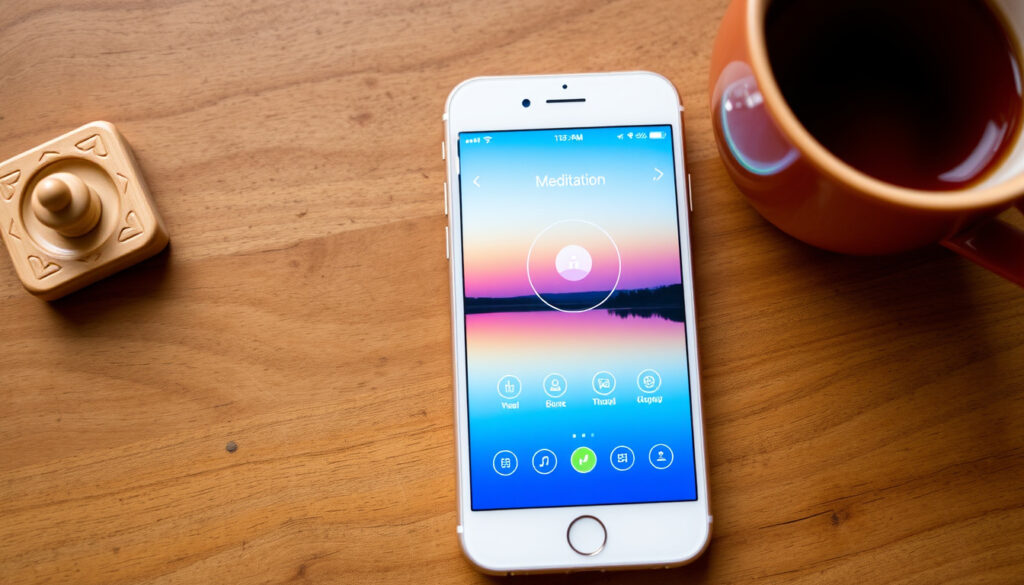
Waking Up App: Meditation, Pricing, and How It Works
If you’ve ever wished a meditation app would do more than just guide your breath—maybe question the nature of the self—then Waking Up might be what you’re looking for. Created by neuroscientist and author Sam Harris, it blends mindfulness practice with philosophy and neuroscience, aiming to be what its founder calls a “new operating system for the mind.”
App category: Meditation and mindfulness ·
Developer: Sam Harris ·
Platform availability: iOS and Android ·
Pricing model: Subscription with free option for those who cannot afford it ·
Unique feature: Combines meditation with philosophy and neuroscience
Quick snapshot
- Waking Up is a meditation app created by Sam Harris (Waking Up official site).
- The app features daily guided meditations (Mindful.technology).
- A subscription is required except for scholarship recipients (Waking Up Instagram).
- The exact number of active users is not publicly disclosed.
- Whether the app is more effective than alternatives for long-term mindfulness is debated.
- The claim of 1 million downloads in 2023 is unverified.
- 2018: Waking Up app launched by Sam Harris (Waking Up official site)
- 2020: App introduces scholarship program for free access (Waking Up Instagram)
- 2023: App reached over 1 million downloads (unverified) (Waking Up official site)
- Continued expansion of teacher lineup and course offerings.
- Deeper integration of sleep and recovery content.
- Growing scholarship program to increase accessibility.
Five key facts about the app at a glance:
| Attribute | Detail |
|---|---|
| Founded | 2018 |
| Creator | Sam Harris |
| Platform | iOS, Android |
| Pricing | $99.99/year or $14.99/month |
| Free trial | 30 days |
What is the meaning of waking up?
Literal meaning of waking up
Literally, waking up means transitioning from sleep to wakefulness—a biological shift controlled by circadian rhythms and the sleep-wake cycle. The phrase is standard English, used daily by speakers around the world. In medical terms, it refers to the resumption of conscious awareness after sleep.
Figurative meaning: personal awakening
Figuratively, “waking up” can mean a sudden awareness or enlightenment, often after a period of ignorance. It appears in spiritual contexts (“spiritual awakening”), political discourse (“woke”), and everyday language (“wake up to the facts”). The Waking Up app leans into this figurative sense: its mission is to foster mental clarity and presence, not just physical arousal. As Sam Harris writes on the official website, the app aims to “transform your experience of the world” through meditation and inquiry (Waking Up official site – about page).
Bottom line: The app’s title deliberately plays on both literal and figurative meanings, using the everyday act of waking to invite users into deeper self-awareness. For anyone seeking more than just relaxation, that framing signals a different kind of meditation tool.
Sam Harris, a neuroscientist with a PhD from Stanford, positions the app as a departure from stress-reduction-only apps. His authority gives the figurative “waking up” claim weight—but it also raises expectations that the app must meet with real substance.
The implication: the app’s name invites users to explore both literal and figurative dimensions of awakening.
What type of meditation does the Waking Up app teach?
Meditation techniques in Waking Up
The app teaches several meditation styles, including mindfulness (vipassanā), non-dual meditation (advaita), and practices like open-eyed meditation, visualization, and stillness exercises, according to independent reviews (Norbert Hires Blog – meditation analysis). Unlike many apps that focus exclusively on calming the mind, Waking Up weaves in philosophical inquiry and neuroscience, asking questions like “Who is the thinker of your thoughts?” The introductory course contains 28 short meditations designed for beginners over about a month (Mindful.technology – app review). After that, daily meditations become available in 10- or 20-minute sessions (Bardo Burner – Waking Up review).
How Waking Up differs from other apps
Where competitors like Headspace or Calm package meditation as a tool for stress and sleep, Waking Up treats it as a path to understanding the nature of consciousness. The app’s product design centers on three areas: meditation practice, theory (lessons, conversations, Q&A), and a meditation timer (Mindful.technology – product design breakdown). It includes teachers from diverse traditions, such as Mingyur Rinpoche, Jack Kornfield, Henry Shukman, Richard Lang, and Loch Kelly (Mindful.technology – teacher list). That’s a broader intellectual scope than most meditation apps offer.
For users who found previous apps too simplistic, Waking Up’s mix of philosophy and neuroscience fills a gap. But the same breadth may overwhelm someone just looking to sit in silence for ten minutes. The app makes a trade-off: depth over simplicity.
The pattern: Waking Up prioritizes intellectual depth over relaxation, which appeals to a specific audience.
What is another word for waking up?
Synonyms for literal waking up
Common English synonyms include “awaken,” “rouse,” “stir,” “come to,” and “get up.” “Awaken” is more formal, “rouse” implies being called or forced into wakefulness, and “come to” can also mean regaining consciousness after fainting. These are all standard alternatives used in everyday language.
Synonyms for figurative awakening
Figurative synonyms include “become aware,” “realize,” “enlighten,” “wise up,” and “see the light.” In contemporary slang, “woke” has emerged (often with political connotations), though the Waking Up app avoids that term. The phrase “awakening” itself is heavily used in spiritual communities.
Is it waking up or wakening up?
Standard usage
“Waking up” is the standard and most common phrase in modern English. It’s what you’ll hear in daily conversation, in app names, and in guidance about sleep habits. “Wakening up” exists but is considered archaic, poetic, or regional—you’ll find it in older literature but rarely in contemporary speech.
Grammatical rules
“Waken up” is grammatically acceptable but less common than “wake up.” For example: “He wakened up at dawn” is correct but sounds stilted. The irregular verb “wake” has past tense “woke” and past participle “woken,” making “woke up” the most natural choice. The app’s name uses “waking up,” the continuous form, which aligns with modern usage.
The catch: while grammatically both forms exist, ‘waking up’ dominates modern usage, consistent with the app’s straightforward branding.
How does the Waking Up app work?
Daily guided meditations
After the introductory course, the app delivers a new daily meditation each day. Users can choose between 10-minute and 20-minute sessions (Bardo Burner – session length). The Waking Up official site states it offers over 600 hours of audio from dozens of teachers (Waking Up – all content page). An independent review confirms the app includes a meditation timer for unguided practice, allowing users to choose up to two hours (Mindful.technology – timer feature). The Google Play listing also notes features like in-app support messages, an audio library, and daily reminders (Google Play – Waking Up listing).
Courses and lessons
Beyond daily sessions, the app offers structured courses on meditation, philosophy, and psychology. The theory section contains lessons, conversations, and Q&A recordings (Mindful.technology – theory section). Topics range from free will and the power of thought to training the mind (Norbert Hires Blog). A recent addition is a 14-day sleep and recovery challenge with Dr. Andy Galpin, highlighted on the App Store page (Apple App Store – Waking Up listing).
Scholarship program
Waking Up states it is free for anyone who cannot afford it (Waking Up Instagram – scholarship message). Users can apply for a full scholarship that removes the paywall entirely. This is a notable departure from the standard freemium model of most meditation apps, aligning with Sam Harris’s stated goal of making wisdom widely accessible.
Six technical specifications, one pattern: the app is designed for deep integration into daily life, not just sitting meditation.
| Spec | Detail |
|---|---|
| Platforms | iOS, Android |
| Daily session lengths | 10 or 20 minutes |
| Total audio content | Over 600 hours |
| Timer maximum | 2 hours |
| Teachers featured | Dozens, including Mingyur Rinpoche, Jack Kornfield, Henry Shukman, Richard Lang, Loch Kelly, Sam Harris |
| Offline access | Yes – download sessions for offline use (per App Store description) |
Upsides
- Intellectually rich content goes beyond basic mindfulness.
- Scholarship program removes financial barrier.
- Teachers from multiple traditions provide variety.
- Timer supports unguided practice for experienced meditators.
Downsides
- Philosophical emphasis may not suit users seeking simple relaxation.
- Subscription cost is higher than some competitors ($99.99/year vs. Headspace’s $69.99).
- No built-in social or community features.
- Limited sleep-specific content compared to Calm.
Bottom line: The app’s structure supports deep learning, but the subscription cost and lack of community may deter casual users.
What this means: the app offers substantial value for intellectually curious meditators, but its trade-offs must be weighed against simpler alternatives.
How to get started with Waking Up (step by step)
- Download the app from the Apple App Store (official listing) or Google Play (official listing).
- Start the 30-day free trial (no payment required upfront).
- Complete the introductory course of 28 guided meditations (about one month of daily practice).
- After the intro, access the daily meditation and choose 10 or 20 minutes.
- Explore the theory section with lessons and conversations.
- If cost is a concern, apply for a full scholarship on the app’s website.
- Use the meditation timer for unguided practice when ready.
New users should know the introductory course is non-negotiable—you can’t skip straight to daily meditations. Some independent reviews note the first few sessions can feel philosophically heavy for those just wanting a simple breathing exercise. The trade-off: depth versus ease of entry.
What’s confirmed — and what’s not
Confirmed facts
- Waking Up is a meditation app created by Sam Harris and launched in 2018 (Apple App Store).
- The app offers daily guided meditations, a timer, and over 600 hours of content (Waking Up – all content).
- A subscription costs $99.99/year or $14.99/month with a 30-day free trial.
- Scholarship access is free for those who cannot afford it (Waking Up Instagram).
What’s unclear
- The exact number of active paying subscribers is not disclosed.
- Long-term effectiveness compared to other apps remains unmeasured in independent studies.
- Whether the philosophical approach actually leads to greater well-being than simpler methods is a matter of opinion, not established fact.
The bottom line: the app’s strengths are well-documented, but many effectiveness claims remain unsubstantiated.
What users and critics say
“The Waking Up app is an attempt to provide a new operating system for the mind—one that combines meditation, philosophy, and science to help you live a better life.”
— Sam Harris, creator, in app introduction
“It’s the most intellectually rigorous meditation app available. It doesn’t just tell you to breathe—it asks you to examine who is doing the breathing.”
— Independent review, Mindful.technology (meditation tech review)
The implication: the app succeeds at being different, but that difference asks something of the user—a willingness to question your own thoughts, not just relax.
For anyone in the personal development space, the choice is clear: Waking Up offers a unique blend of mindfulness and philosophy that challenges rather than soothes. For the price-conscious beginner, the scholarship program removes the risk, but the intellectual demands may make it a better fit for curious minds than for those seeking simple stress relief.
secularbuddhistnetwork.org, davidwilliamrosales.com, wakingup.com, clearerthinking.org, wakingup.com
For those interested in establishing a routine, meditating daily as a beginner is a natural next step to complement the app’s guided sessions.
Frequently asked questions
Can I try the Waking Up app for free?
Yes, a 30-day free trial is available. Additionally, a full scholarship is offered for those who cannot afford the subscription.
Does the Waking Up app work offline?
Yes, sessions can be downloaded for offline listening.
What is the Huberman code for Waking Up?
The “Huberman code” refers to a discount code sometimes shared by Dr. Andrew Huberman on his podcast. Availability varies; check the app’s current promotions.
How long are the daily meditations in Waking Up?
Daily meditations offer 10-minute and 20-minute options (Bardo Burner review).
Is the Waking Up app suitable for beginners?
Yes, the introductory course is designed for complete beginners, though its philosophical content may feel different from entry-level apps.
Can I use Waking Up to help with anxiety?
Many users report anxiety relief, but the app does not market itself as a clinical tool. The practices may help cultivate a different relationship with anxious thoughts.
Related reading
More related posts
 Ivan Milat: Facts, Evidence, and Unanswered Questions
 Tiffany Haddish: ADHD Diagnosis, No Children, Breakup & DUI
 Tessa Thompson: Relationship, Sexuality & Friendship Facts
 Peter Mandelson: Prince of Darkness to US Ambassador
 Wish Gift Card – How to Check Balance and Redeem
 Nicknames Funny: 200+ Hilarious, Cute & Creative Names
 The Princess Bride: Complete Guide to the Cult Classic Movie
 Lenny Pearce: Toddler Techno DJ & Purple Wiggle Link
