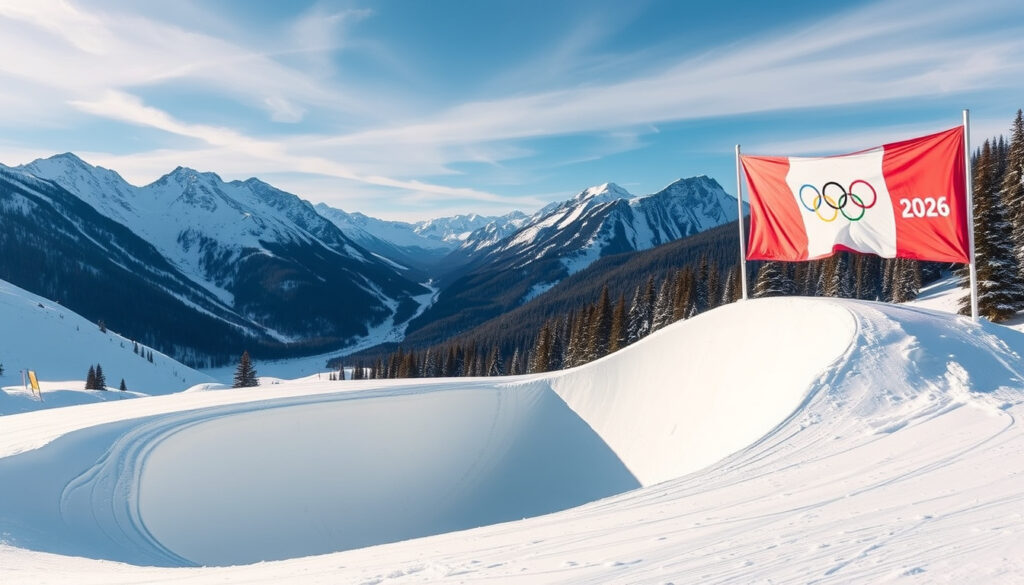
2026 Winter Olympics Snowboarding – Events, Schedule, Qualifications
Snowboarding at the Milano Cortina 2026 Winter Olympics showcased the sport’s continued evolution on the Olympic stage. Eleven events ran from February 5 to 18, 2026, with competitions spanning disciplines from the technical precision of parallel giant slalom to the high-flying aerials of big air. Athletes gathered at Livigno Snow Park in the Valtellina region of Italy, marking the first time all snowboarding events were consolidated at a single Olympic venue.
The Games represented a significant moment for the sport, which has been an Olympic fixture since its debut in Nagano in 1998. Veterans like Chloe Kim competed alongside emerging talents, while new formats such as mixed team events added fresh dimensions to the competition schedule. This comprehensive guide covers the complete event lineup, venue details, qualification pathways, and key storylines heading into the Games.
What Snowboarding Events Are Featured at Milano Cortina 2026?
The Milano Cortina 2026 snowboarding program featured eleven medal events, evenly distributed between men’s and women’s competitions. Each discipline tested different aspects of athletic ability, from the creative expression seen in halfpipe routines to the head-to-head racing dynamics of snowboard cross.
February 5-18, 2026
Livigno Snow Park, Valtellina, Italy
11 medal events across 5 disciplines
Approximately 130 via FIS qualification
Event Categories and Disciplines
Freestyle disciplines dominated the program, reflecting the sport’s modern direction. Halfpipe competitions featured riders executing complex aerial rotations and grabs within the 22-foot-deep channel, while slopestyle courses combined rails, boxes, and jumps to test technical skill and creativity across multiple sections. Big air events centered on single massive kicker features where athletes performed single or double rotation tricks for maximum scoring impact.
The race-oriented disciplines provided sharp contrast. Parallel giant slalom involved two riders descending parallel courses simultaneously, with head-to-head advancement determining winners through combined times. Snowboard cross introduced four-to-six riders racing simultaneously through a course featuring jumps, berms, and technical sections designed to create dramatic pack racing scenarios.
Five core disciplines comprised the 2026 program: halfpipe, slopestyle, big air, parallel giant slalom, and snowboard cross. The mixed team snowboard cross event added a collaborative format to the lineup, bringing national teams together in relay-style competition.
- Men’s and women’s halfpipe featured qualification rounds before finals determined medalists
- Slopestyle courses varied between venues, testing adaptability across different feature designs
- Big air served as the opening discipline, with men’s final on February 7 awarding the first snowboarding gold
- Parallel giant slalom races used alternating red and blue courses with synchronized start times
- Snowboard cross introduced mixed team format, expanding beyond individual competitions
- Qualification rounds preceded finals across most disciplines to manage field sizes
| Category | Details |
|---|---|
| Olympics Host | Milano Cortina, Italy |
| Snowboard Olympic Debut | 1998 Nagano |
| Total Medal Events | 11 events |
| Governing Body | FIS (International Ski Federation) |
| Venues | Livigno Snow Park, Valtellina |
| Qualification Basis | FIS World Cup and World Championship rankings |
Snowboarding Schedule and Venues for 2026 Winter Olympics
Competition Timeline and Key Dates
The snowboarding program began before the official opening ceremonies on February 6, with men’s big air qualification launching the competition on February 5. This early start allowed qualification rounds to proceed without conflicting with the ceremonial elements of the Games. Local times in Italy differed from broadcast schedules in North American markets, requiring viewers to account for significant time zone differences when planning their viewing.
Medal competitions unfolded across fourteen days, with most finals scheduled for evening sessions in Italy. The men’s big air final on February 7 opened the medal count, followed by women’s parallel giant slalom and women’s big air in subsequent days. The middle section of the schedule featured halfpipe and snowboard cross finals, while slopestyle concluded the program with women’s and men’s finals on February 17 and 18 respectively.
| Date | Key Events |
|---|---|
| February 5 | Men’s big air qualification |
| February 7 | Men’s big air final (first medal) |
| February 8 | Women’s and men’s parallel giant slalom |
| February 9 | Women’s big air final |
| February 11 | Women’s and men’s halfpipe qualification |
| February 12 | Men’s snowboard cross, Women’s halfpipe final |
| February 13 | Women’s snowboard cross, Men’s halfpipe final |
| February 15 | Men’s slopestyle, Mixed team snowboard cross |
| February 17 | Women’s slopestyle final |
| February 18 | Men’s slopestyle final (closing event) |
The Livigno Snow Park Venue
Livigno Snow Park in Valtellina served as the dedicated snowboarding venue for Milano Cortina 2026, consolidating all disciplines at one location in northern Italy. The resort’s high altitude and reliable snowfall conditions made it suitable for hosting the range of freestyle and race events. The venue underwent preparation and course construction ahead of the Games to accommodate the diverse requirements of each discipline.
Livigno Snow Park represented a departure from previous Games where snowboarding events were spread across multiple venues. This consolidation created a centralized hub for athletes, media, and spectators while requiring sophisticated course designs to serve both technical and freestyle disciplines.
The broader Games footprint extended beyond Valtellina, with other sports hosted in Milan, Cortina d’Ampezzo, Val di Fiemme, and Anterselva. However, all snowboarding competitions remained concentrated in Livigno, allowing for efficient logistics and consistent conditions across the event schedule. Athletes and teams established base operations in the region to prepare for their respective disciplines.
How to Qualify for Snowboarding at the 2026 Olympics
FIS Qualification System and Quota Allocation
Athletes secured Olympic qualification through the FIS qualification system, which evaluated performance across World Cup events and World Championships in the period leading up to the Games. The International Ski Federation allocated quotas to national federations based on their athletes’ accumulated points, with specific distribution across disciplines determining how many competitors each country could enter in halfpipe, slopestyle, big air, parallel giant slalom, and snowboard cross.
The qualification timeline extended across multiple months, beginning with the Olympic Qualifier Series that started in October 2024. Key World Cup races throughout 2025 provided additional opportunities for athletes to accumulate necessary points. Quotas were finalized following the conclusion of major qualification events, with final athlete start lists published as competitions approached.
National Team Highlights
The United States secured multiple quota spots through its established snowboarding program, with athletes like Chloe Kim and Red Gerard meeting qualification thresholds based on their world rankings and competitive results. Other nations with strong snowboarding traditions, including Japan, Canada, and various European countries, also secured substantial allocations through their performance in international competitions.
Qualification rounds preceding finals in events like big air and halfpipe helped manage field sizes while ensuring the most competitive riders advanced to medal rounds. These qualification phases occurred on separate days from finals, allowing athletes multiple opportunities to post qualifying scores before the pressure of medal competition.
Top Favorites and Predictions for 2026 Olympic Snowboarding
Women’s Contenders
Chloe Kim entered Milano Cortina 2026 as the premier favorite for gold in women’s halfpipe, seeking an unprecedented third consecutive Olympic title in the discipline. At 25 years old and competing in her third Olympics, Kim combined technical excellence with competitive experience that few rivals could match. A recent shoulder injury had affected her preparation, but her track record and competitive mindset positioned her as the athlete to beat.
The women’s field included established medalists and rising competitors from snowboarding powerhouses including the United States, Japan, and China. Technical development in the women’s halfpipe had accelerated in recent seasons, with more complex trick combinations becoming standard at the elite level. This progression made predictions increasingly difficult while raising the overall competitive standard.
Men’s Medal Prospects
American men targeted their first individual gold since the 2018 Pyeongchang Games, where Shaun White claimed victory and Red Gerard secured slopestyle gold. Athletes including Nick Baumgartner, Red Gerard as defending slopestyle champion, and Chase Josey represented the core of Team USA’s medal ambitions across halfpipe, slopestyle, and big air.
The United States had accumulated 35 Olympic snowboarding medals historically, demonstrating sustained dominance across multiple Olympic cycles. However, international competition had intensified, with athletes from Australia, Japan, and European nations increasingly challenging American supremacy in several disciplines. For a deeper dive into the evolving landscape of Australian Super Funds, explore the insights available at Australian Super Fund 2025.
Snowboard cross and parallel giant slalom featured different competitive dynamics where nations including France, Italy, and Australia had established strong programs. The mixed team snowboard cross format added unpredictability, as national teams combined athletes in relay-style competition that tested both individual speed and team coordination.
Key Milestones in the Road to Milano Cortina 2026
The qualification period leading to the 2026 Winter Olympics unfolded across an eighteen-month timeline, with critical dates shaping the competitive landscape. Athletes accumulated results through a structured series of events that determined Olympic eligibility and national quota allocations.
- October 2024: Olympic Qualifier Series commenced, marking the formal opening of the qualification period
- January 2025: Key World Cup races provided high-stakes opportunities for point accumulation
- June 2025: Final quotas confirmed and national team allocations published
- February 2026: Competition schedule commenced with qualification rounds
What We Know and What Remains Uncertain
Several aspects of the Milano Cortina 2026 snowboarding program were confirmed and widely reported across multiple sources. The event lineup, venue selection, and general competition dates aligned across official Olympic sources, Wikipedia, and sports publications. Specific disciplines including big air, halfpipe, slopestyle, snowboard cross, and parallel giant slalom were definitively part of the program.
The eleven medal events, venue location in Livigno, discipline lineup, and general February 2026 timing were confirmed through multiple authoritative sources including FIS official channels and Olympic organizing committees.
| Established Facts | Unconfirmed or Pending |
|---|---|
| 11 medal events confirmed | Exact daily schedule subject to minor adjustments |
| Livigno Snow Park venue confirmed | Final athlete start lists published closer to events |
| February 5-18 competition window | Specific quota numbers per nation (finalized 2025) |
| Discipline lineup confirmed | Potential weather-related schedule modifications |
Evolution and Significance of Olympic Snowboarding
Snowboarding’s Olympic journey began in Nagano 1998, where giant slalom and halfpipe made their debut on the Winter Games stage. The sport’s inclusion represented a significant shift in the Olympic movement, embracing youth culture and alternative sports that had developed outside traditional winter sports structures. The inaugural program was modest compared to the comprehensive lineup that followed in subsequent Games.
The addition of big air in Pyeongchang 2018 expanded the freestyle offerings, while slopestyle joined the program earlier in Sochi 2014. Snowboard cross was introduced in Turin 2006, adding the head-to-head racing dynamic that contrasted with the judged freestyle disciplines. Each Games saw format refinements, judging criteria adjustments, and venue standardizations that professionalized the Olympic competition while maintaining snowboarding’s accessible ethos.
Broadcast and Viewing Information
NBC platforms and Peacock provided comprehensive coverage of all snowboarding events for United States audiences, with broadcast schedules aligned to North American time zones. International viewers accessed competitions through their respective Olympic broadcasting rights holders, with official schedules noting potential device-time adjustments for digital streaming platforms.
Time zone differences between Italy and major viewing markets created scheduling complexity, with some finals scheduled for evening sessions local time while appearing in morning or afternoon slots for American viewers. Official Olympic channels recommended checking broadcast listings for the most current schedule information, as times remained subject to change based on operational requirements.
Summary and Looking Ahead
Milano Cortina 2026 represented a significant chapter in Olympic snowboarding history, with eleven medal events, a dedicated venue in Livigno, and a generation of athletes building toward their competitive peaks. The program continued the sport’s evolution from its 1998 debut while introducing new formats like mixed team competitions that added fresh dimensions to the competition calendar.
Qualification pathways through FIS World Cup rankings ensured that the most deserving athletes reached the Olympic stage, though the unpredictable nature of snowboarding meant that anything could happen once competition began. For viewers planning their Olympic experience, the schedule offered two weeks of diverse snowboarding action spanning technical precision, creative expression, and head-to-head racing across the sport’s multiple disciplines. Check official Olympic channels for the latest updates on schedules, start lists, and broadcast information as the Games approached.
How can I watch snowboarding events at the 2026 Winter Olympics?
Viewers in the United States could access coverage through NBC platforms and Peacock, which provided comprehensive broadcast and streaming options. International audiences accessed events through their regional Olympic broadcasting rights holders. Schedule times varied by location and remained subject to change.
Where are the snowboarding events being held?
All snowboarding competitions took place at Livigno Snow Park in the Valtellina region of northern Italy. This marked the first Games where snowboarding events were consolidated at a single dedicated venue rather than spread across multiple locations.
How many snowboarding events are in the 2026 Olympics?
The Milano Cortina 2026 program featured 11 snowboarding medal events across five disciplines: halfpipe, slopestyle, big air, parallel giant slalom, and snowboard cross. These included individual men’s and women’s competitions plus one mixed team event.
Who are the top favorites for snowboarding medals?
Chloe Kim of the United States was the preeminent favorite for women’s halfpipe, seeking her third consecutive Olympic gold. American men, including slopestyle defending champion Red Gerard, targeted their first individual gold since 2018. International competitors from Japan, Australia, and European nations were expected to challenge across all disciplines.
When do the first snowboarding medals get awarded?
The men’s big air final on February 7, 2026, awarded the first snowboarding gold medal of the Games. Qualification rounds for this event began on February 5, prior to the official opening ceremonies on February 6.
How do athletes qualify for Olympic snowboarding?
Qualification followed FIS (International Ski Federation) rules, with national quotas determined by athlete performance in World Cup events and World Championships. The Olympic Qualifier Series began in October 2024, with final quotas confirmed in mid-2025 before the Games.
More related posts
 Perth Time Now – Current AWST UTC+8 No DST
 Seek Salary Calculator: Estimate Your Take-Home Pay in Australia
 Letters Love Guide: Famous Love Letters and Letters Live
 Rain Spencer: Age, Relationship, Movies, and TV Shows
 Helen of Sparta: The Truth Behind the Name and Her Fate
 AAMI House Insurance Review: Coverage, Claims Australia
 Ryan Kwanten: Biography, Current Projects, and Career in 2025
