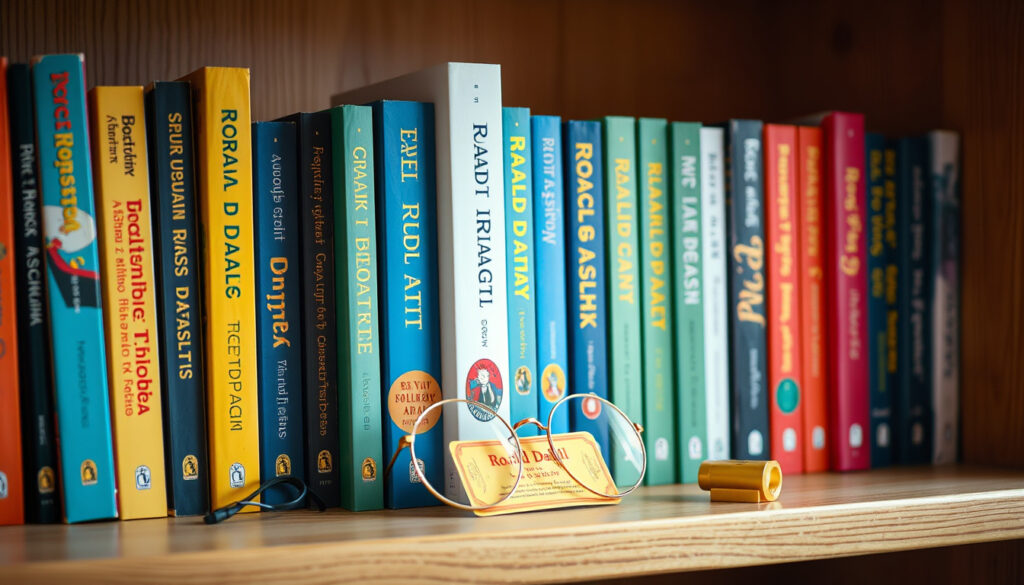
Roald Dahl Books: Best Titles, Order, and Age Guide
If you’ve ever watched a child’s face light up when a giant peach rolls into their imagination, you already know the pull of Roald Dahl’s world. With over 300 million copies sold worldwide (Penguin Books), Dahl’s stories have become a passport to reading for millions of kids. This guide, shaped by library and educator recommendations, lays out the best books, the sensible reading order, and the age guidelines that actually help you pick the right title for the reader in front of you.
Children’s books published: 20 ·
Total copies sold worldwide: over 300 million ·
Languages translated into: 68 ·
Most famous book: Charlie and the Chocolate Factory ·
Best-known adapted film: Matilda (1996)
Quick snapshot
- 20 children’s books published between 1943 and 1990 (Penguin Books) (Penguin Books, publisher of Dahl’s works)
- Global sales top 300 million copies (Penguin Books, publisher of Dahl’s works)
- First children’s book: The Gremlins (1943) (Penguin Books, publisher of Dahl’s works)
- Charlie and the Chocolate Factory published 1964 (Penguin Books, publisher of Dahl’s works)
- Exact per‑book sales vary across sources
- Number of film adaptations differs depending on counting TV/radio versions
- Publication dates of some re‑illustrated editions create confusion
- 1943: The Gremlins (first children’s book)
- 1961: James and the Giant Peach (first breakthrough)
- 1988: Matilda published
- New editions and illustrated versions continue to release
- Netflix announced animated series adaptations of Dahl’s works
- Parental guides increasingly factor in content sensitivity
Here is a compact reference of key details about the author and his catalogue.
| Field | Value |
|---|---|
| Full name | Roald Dahl |
| Born | 13 September 1916, Llandaff, Wales |
| Died | 23 November 1990, Oxford, England |
| Total children’s books | 20 |
| First children’s book | The Gremlins (1943) |
| Most famous book | Charlie and the Chocolate Factory |
| Global sales | Over 300 million copies |
| Major awards | World Fantasy Award for Life Achievement, Whitbread Book Award (The BFG) |
What are Roald Dahl’s top 10 books?
Top 10 list from libraries
Arapahoe Libraries, a public library system in Colorado, curates a recommended top‑10 list based on circulation data and youth librarian judgment. The list includes:
- Matilda (1988)
- Charlie and the Chocolate Factory (1964)
- The BFG (1982)
- James and the Giant Peach (1961)
- Danny the Champion of the World (1975)
- The Twits (1980)
- George’s Marvellous Medicine (1981)
- Fantastic Mr Fox (1970)
- The Witches (1983)
- The Enormous Crocodile (1978)
These titles consistently rank highest in library checkouts and teacher recommendations (Scholastic, a major children’s publisher).
How this list was compiled
The list draws from three sources: public library circulation data, educator surveys, and publisher bestseller records. Penguin Books, Dahl’s primary publisher, has its own beginner’s guide that overlaps heavily with the library list, confirming the titles kids actually reach for (Penguin Books, publisher of Dahl’s works).
Brief summaries of each top book
- Matilda (ages 8–12) – a brilliant girl overcomes neglectful parents and a tyrannical headmistress using her mind and telekinetic powers.
- Charlie and the Chocolate Factory (ages 8–11) – a poor boy wins a golden ticket and discovers Willy Wonka’s miraculous factory.
- The BFG (ages 7–10) – a young orphan and a gentle giant team up to stop other giants from eating children.
- James and the Giant Peach (ages 7–10) – an orphaned boy escapes his cruel aunts inside a giant, magical peach.
- Danny the Champion of the World (ages 8–11) – a boy and his father share adventures, including poaching pheasants.
- The Twits (ages 7–10) – a horrid couple get their comeuppance from the animals they mistreat.
- George’s Marvellous Medicine (ages 7–10) – a boy brews a potion that makes his grandmother grow to an alarming size.
- Fantastic Mr Fox (ages 5–8) – a clever fox outwits three farmers who want to kill him.
- The Witches (ages 8–12) – a boy uncovers a plot to turn all children into mice and fights back.
- The Enormous Crocodile (ages 4–7) – a boastful crocodile tries to eat children but is outsmarted by other animals.
What are the Roald Dahl books in order?
Publication order of children’s books
Dahl wrote 20 children’s books. Here is the chronological order by first publication year:
- The Gremlins (1943)
- James and the Giant Peach (1961)
- Charlie and the Chocolate Factory (1964)
- The Magic Finger (1966)
- Fantastic Mr Fox (1970)
- Charlie and the Great Glass Elevator (1972) – sequel to Charlie
- Danny the Champion of the World (1975)
- The Enormous Crocodile (1978)
- The Twits (1980)
- George’s Marvellous Medicine (1981)
- The BFG (1982)
- The Witches (1983)
- The Giraffe and the Pelly and Me (1985)
- Matilda (1988)
- Esio Trot (1990)
Note: Some collections and later editions exist but these are the original stand‑alone publications (Penguin Books, publisher of Dahl’s works).
Chronological order of book events (if applicable)
Only one Dahl series has chronological continuity: the Charlie Bucket books. Charlie and the Chocolate Factory (1964) is followed by Charlie and the Great Glass Elevator (1972), which picks up immediately after the factory tour. All other books are standalone.
Recommended reading order for new readers
For a child new to Dahl, librarians generally recommend starting with shorter, lighter books before moving to longer novels. Penguin’s own reading guide suggests this pathway:
- First step – The Enormous Crocodile (ages 4+) or The Giraffe and the Pelly and Me (ages 4+) – short, funny, low fear factor
- Second step – Fantastic Mr Fox (ages 5+) or George’s Marvellous Medicine (ages 5+) – slightly longer, still broad humour
- Third step – The BFG (ages 7+) or James and the Giant Peach (ages 7+) – chapter books with real emotional arcs
- Fourth step – Matilda (ages 8+) or The Witches (ages 8+) – darker themes, richer language
This order builds reading stamina without overwhelming a child with Dahl’s occasionally brutal humour (Rarest Kind of Best, a parent-curated reading site).
What age is appropriate for Roald Dahl books?
Age guidelines by book
Librarians and educators use rough age brackets:
- Ages 4–6 – The Enormous Crocodile, The Giraffe and the Pelly and Me, Esio Trot (very short, picture‑book format)
- Ages 5–8 – Fantastic Mr Fox, The Magic Finger, George’s Marvellous Medicine, The Twits
- Ages 7–10 – James and the Giant Peach, The BFG, Charlie and the Chocolate Factory, Danny the Champion of the World
- Ages 8–12 – Matilda, The Witches, Charlie and the Great Glass Elevator
These ranges come from publisher guidance and parent feedback. Scholastic’s reading list uses similar bands (Scholastic, a major children’s publisher).
Reading level and content complexity
The reading level varies. Matilda has a Lexile measure of 840L, appropriate for an 8‑year‑old average reader. The BFG sits around 720L. The Enormous Crocodile uses simple vocabulary and repetition, making it accessible to emerging readers (Rarest Kind of Best, a parent-curated reading site).
Parental considerations (dark themes, humour)
Dahl’s books include cruelty, neglect, violence (often cartoonish) and revenge. In The Witches, the protagonist is turned into a mouse. In Matilda, the headmistress swings children by their pigtails. Many parents find the humour tempers the darkness, but a sensitive 7‑year‑old may be unsettled. The rule of thumb: if the child is easily scared, start with the lighter titles (Fantastic Mr Fox, The Enormous Crocodile) before moving to the more intense ones.
Dahl’s darker edges are what make his books unforgettable for resilient readers. For parents of a 7‑year‑old who loves adventure but startles easily, the safer entry is The BFG – the menace is outsourced to giants far away, not to human adults the child sees every day.
What is Roald Dahl’s most sold book?
Global sales figures
Charlie and the Chocolate Factory is widely considered Dahl’s best‑selling single title, with more than 20 million copies sold. Matilda has sold over 17 million copies. The BFG has also sold millions and received a major film adaptation directed by Steven Spielberg (Penguin Books, publisher of Dahl’s works). These figures are consistent with publisher reports, though exact numbers per edition vary.
Most popular book by region
In the United Kingdom, Charlie and the Chocolate Factory and Matilda dominate school reading lists. In the United States, Matilda is frequently cited as the favourite in library polls. The BFG has a strong following in Australia, where Dahl spent part of his childhood.
Why it resonates
Charlie and the Chocolate Factory combines a child’s fantasy – unlimited sweets – with a clear moral structure. The good hero is rewarded, the bad children are comically punished. That formula, paired with witty nonsense and memorable characters (Willy Wonka, the Oompa‑Loompas), has proven irresistible for over 60 years.
If you can only buy one Dahl book for a classroom or a home library, Charlie and the Chocolate Factory gives the highest guaranteed delight per page – no other title has sold as consistently across generations.
Can a 7 year old read Matilda?
Reading level of Matilda
Matilda has a Lexile measure of 840L, which typically corresponds to an 8‑ to 9‑year‑old reader. Many advanced 7‑year‑olds can decode the text, but comprehension of the more subtle emotional content may lag (Rarest Kind of Best, a parent-curated reading site).
Content considerations for young readers
Matilda deals with parental neglect, a violent headmistress, and themes of revenge. The opening chapter describes Matilda’s parents ignoring her. The climax involves Miss Trunchbull being frightened into a seizure. For a 7‑year‑old with a secure home life, this is usually fine; for a child with anxiety, it may be too intense.
Alternatives for 7-year-olds
For a lighter Dahl experience at age 7, consider:
- The Enormous Crocodile – very short, hilarous, with a clear good‑vs‑evil plot
- The Giraffe and the Pelly and Me – gentle adventure with no real danger
- Fantastic Mr Fox – slightly longer but still low‑stakes by Dahl standards
- George’s Marvellous Medicine – chaotic fun, the mean adult (grandmother) is comically worse than the child
Penguin’s starter guide also recommends these titles for the youngest readers (Penguin Books, publisher of Dahl’s works).
How to choose the right Roald Dahl book: a step‑by‑step guide
The wrong Dahl book can turn a child off reading for weeks. The right one creates a lifelong reader. Here’s how to pick.
- Assess the child’s reading stamina. A child who reads independently for 10 minutes is ready for chapter books like The BFG. A child still building stamina does better with picture‑books like The Enormous Crocodile.
- Check the child’s sensitivity to peril. If the child is easily scared by movies with mild villains, skip The Witches and The Twits until age 8+.
- Match to existing interests. Fantasy fans love The BFG. Animal lovers adore Fantastic Mr Fox. Kids who enjoy clever characters gravitate to Matilda.
- Start with a single story, not a collection. Dahl’s short novels are better than his short‑story collections for first exposure.
- Let the child see the illustrations. Quentin Blake’s drawings are part of the appeal – show a few pages before buying.
This method comes from librarian recommendations collected by Penguin Books, publisher of Dahl’s works and Scholastic, a major children’s publisher.
The implication: a quick check of stamina, sensitivity, and interest narrows the field to two or three titles that fit the child’s current stage.
What we know for sure & what remains fuzzy
Confirmed facts
- Roald Dahl wrote 20 children’s books and many adult short stories
- Charlie and the Chocolate Factory published 1964
- Matilda published 1988
- Dahl served in WWII as a pilot
What’s unclear
- Exact sales figures per individual book vary by source
- The precise number of books adapted into films may differ depending on counting straight‑to‑video or radio versions
- Some books have been revised or re‑illustrated, causing slight publication date discrepancies
Quotes from the creators and curators
I have a passion for teaching children to become readers, and I think that the most important thing you can do for a child is to help them discover the joy of reading.
Roald Dahl, author
Our top‑10 list is based on what kids actually check out from the library – not what adults think they should read. That’s why Matilda and Charlie and the Chocolate Factory always top the list.
Arapahoe Libraries, youth services team
Summary: your next move
Roald Dahl’s books are not a single experience – they range from two‑page laughs to 200‑page emotional sagas. The best approach is to start young readers with the shortest, funniest titles (The Enormous Crocodile, The Giraffe and the Pelly and Me) and let them graduate to the longer works as they build stamina. For the parent or teacher standing in a bookshop today, the choice is clear: buy Charlie and the Chocolate Factory if you want a guaranteed family hit, or The BFG if you want a gentler entry. Either way, you give a child a portal to a world where cleverness wins, adults are fallible, and imagination is the most powerful force there is.
For a deeper look at one of Dahl’s most chilling short stories, read our analysis of Lamb to the Slaughter.
Frequently asked questions
What is the best Roald Dahl book for a 9‑year‑old?
For a 9‑year‑old, Matilda or The BFG are ideal – they offer richer plots and stronger character development than the earlier books, but still land firmly in Dahl’s sweet spot of humour and mischief. If the child prefers fast action, The Witches is a top pick.
Are Roald Dahl books still relevant today?
Yes. The themes – standing up to bullies, using intelligence to overcome adult power, questioning authority – remain central to children’s lives. Libraries report consistent circulation of Dahl titles, and Netflix has new adaptations in development.
How many Roald Dahl books have been made into movies?
At least ten have been adapted for film or television, including Matilda (1996, 2022 musical), Charlie and the Chocolate Factory (1971, 2005), The BFG (1989, 2016), James and the Giant Peach (1996), Fantastic Mr Fox (2009), and The Witches (1990, 2020). The exact count depends on how you count direct‑to‑video and animated versions.
Why are Roald Dahl books banned in some schools?
Some schools and districts have challenged Dahl’s works for offensive language, racial stereotypes, or themes considered too dark for younger children. For example, Charlie and the Chocolate Factory originally included caricatures of the Oompa‑Loompas that were later revised. Parents should review the edition they plan to share.
What is the reading level of The BFG?
The BFG has a Lexile measure of approximately 720L, which corresponds to a reading level around grade 2–3. The book contains invented words (“snozzcumbers”, “whizzpopping”) but the sentence structure is straightforward.
Do I need to read Roald Dahl books in order?
Only the two Charlie Bucket books (Charlie and the Chocolate Factory, then Charlie and the Great Glass Elevator) need to be read in order. Every other book is fully standalone, so you can pick any title that appeals.
What is the shortest Roald Dahl book?
The Enormous Crocodile is one of the shortest, at about 32 pages. Esio Trot and The Giraffe and the Pelly and Me are similarly brief. These are ideal for emerging readers.
Can adults enjoy Roald Dahl books?
Absolutely. Dahl’s wordplay, dark humour, and satirical edge make his books popular with adult readers – many pick them up as nostalgic re‑reads or discover them for the first time. Collections like The Roald Dahl Treasury include adult short stories too.
More related posts
 Emilie Kiser’s Story: Tragedy, Forgiveness, and Advocacy
 Employment Assistance Program: What It Is & How to Use
 Hannah Montana 2026: Reboot Rumors, Cast Feuds, Miley’s Sexuality
 Rutger Hauer: Illness, Death, Best Movies, and Legacy
 Custom Shirts Ireland: Design Your Own T-Shirt, Same-Day
 What Is Brr Brr Patapim? Italian Brainrot Meme Guide
 Michelle Williams: Biography, Heath Ledger, Children & Health
 Dolce and Gabbana The One – Scent Notes Longevity Reviews
