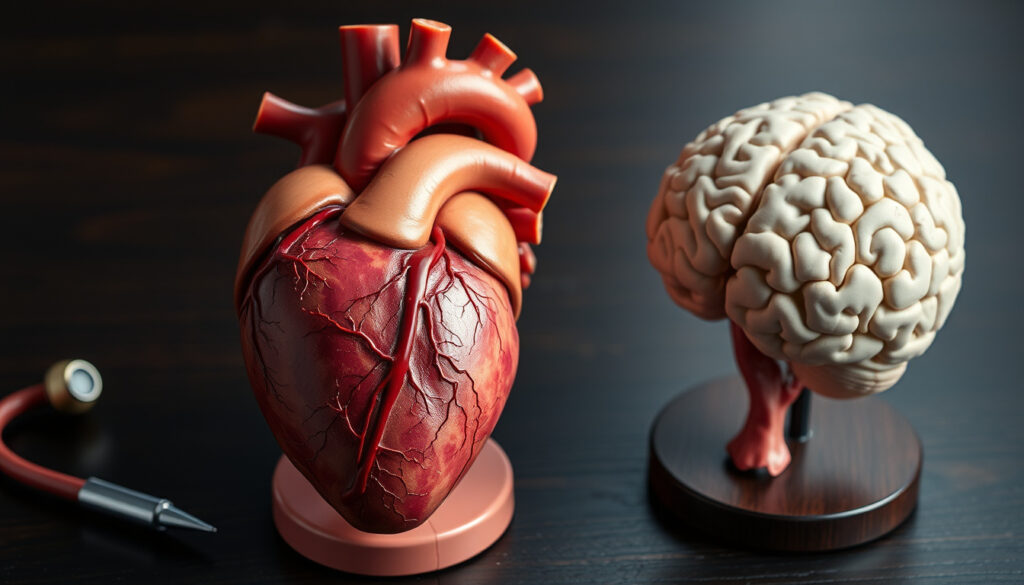
Gene Hackman Cause of Death: Heart Disease and Alzheimer’s
Gene Hackman spent his final years out of the spotlight in Santa Fe, but that quiet ended on February 26, 2025, when maintenance workers discovered his and his wife’s bodies. Official autopsy findings now reveal a tragic sequence of medical events that answers weeks of questions.
Age at death: 95 ·
Date of death (estimated): February 18, 2025 ·
Cause of death (Gene Hackman): Hypertensive and atherosclerotic cardiovascular disease, with Alzheimer’s disease as a significant contributor ·
Cause of death (Betsy Arakawa): Hantavirus pulmonary syndrome ·
Date bodies discovered: February 26, 2025 ·
Location of death: Santa Fe, New Mexico, USA
Quick snapshot
- Whether Hackman was aware of his wife’s death before he died
- Exact date of Betsy Arakawa’s death (estimated around February 11)
- Full details of Betsy Arakawa’s will and whether Hackman’s children will contest the estate
- Estate distribution likely to face legal questions
- Potential contest from Hackman’s surviving children
- Public awareness of hantavirus risks in the Southwest
This was not a crime scene — it was a medical tragedy that unfolded in slow motion. Two people died a week apart in the same house, one from a rodent-borne virus and the other from a heart weakened by age and Alzheimer’s.
The following table encapsulates key biographical and death details.
| Attribute | Value |
|---|---|
| Full name | Eugene Allen Hackman |
| Born | January 30, 1930 |
| Died | c. February 18, 2025 |
| Spouse | Betsy Arakawa (m. 1991–2025) |
| Children | 3: Christopher (deceased 1978), Elizabeth, Leslie |
| Occupation | Actor, novelist |
| Known for | The French Connection, Hoosiers, Superman, Unforgiven |
| Place of death | Santa Fe, New Mexico |
What was Gene Hackman’s cause of death?
Official autopsy findings
- Heart disease was the primary cause: hypertensive and atherosclerotic cardiovascular disease (AP News)
- No external trauma or evidence of foul play — the Santa Fe Sheriff’s Office ruled out homicide (NBC News)
- Hackman tested negative for hantavirus, confirming his death was unrelated to his wife’s illness (Reuters)
Role of Alzheimer’s disease
- The New Mexico Office of the Medical Investigator listed advanced Alzheimer’s as a “significant contributory factor” (AP News)
- Authorities noted Hackman was likely not eating for a prolonged period before death, consistent with advanced dementia (NPR)
- The Alzheimer’s affected his ability to respond to his wife’s death or call for help
Primary cardiovascular conditions
- Hypertensive cardiovascular disease — long-standing high blood pressure damage to the heart
- Atherosclerotic disease — hardening and narrowing of arteries (The Guardian)
- These conditions, compounded by advanced age and malnutrition, led to his death approximately one week after his wife
The combination of heart disease and Alzheimer’s created a fatal cascade that left Hackman unable to survive alone.
What was the cause of death for Gene Hackman’s dog?
Autopsy results for the dog
- The couple’s dog was found dead in a crate near Betsy Arakawa’s body (NBC News)
- Necropsy determined the cause as dehydration and starvation (The Guardian)
- No disease or poisoning was found — the dog simply had no access to food or water after its owners became incapacitated
Time of death estimation
- The dog likely died sometime after Betsy Arakawa, whose death is estimated around February 11
- Hackman, with advanced Alzheimer’s, was unable to feed or care for the animal
- The crate suggested the dog was confined when Arakawa died and had no way to reach food
Relation to owners’ deaths
- The dog’s death is a tragic indicator of the timeline: it confirms that after Arakawa died, no one in the household was capable of basic care
- Hackman’s inability to feed the dog mirrors his own inability to feed himself in his final days (NPR)
- The dog’s crate placement near Arakawa’s body suggests it may have been in the crate when she died suddenly
The dog’s death confirms the household fell apart immediately. Within hours of Arakawa’s collapse, there was no one left to feed the animal — and Hackman, in his Alzheimer’s fog, could not step in.
The dog’s grim fate underscores the complete breakdown of the household’s care structure.
How did Hackman’s wife get hantavirus?
Hantavirus transmission routes
- Hantavirus pulmonary syndrome is a rare but severe respiratory disease transmitted through rodent droppings, urine, or saliva (Fox News)
- The virus is carried primarily by deer mice in the U.S. Southwest (Fox News)
- Infection occurs when dust from contaminated droppings is inhaled — no person-to-person transmission
Possible exposure at the Santa Fe home
- The Hackman home in Santa Fe sits in a region where deer mice are common
- No evidence of recent travel, so the New Mexico health department considers the home the likely exposure site (AP News)
- Rodent activity in or near rural homes in the Southwest is a known risk factor for hantavirus
Symptoms and progression
- Early symptoms: fever, muscle aches, fatigue — easily mistaken for flu (NPR)
- Within days, lungs fill with fluid causing severe respiratory distress
- The disease progresses rapidly — Arakawa likely died within days of symptom onset, around February 11
Arakawa died from a virus she almost certainly picked up inside her own home — a home that was supposed to be a peaceful retirement retreat. Hantavirus is rare (about 30 cases per year in the U.S.), but the Southwest carries the highest risk.
The irony is that the very home meant to be a sanctuary became the source of a lethal infection.
Was Gene Hackman aware his wife died and why didn’t he call 911?
Advanced Alzheimer’s condition
- Hackman’s autopsy revealed advanced Alzheimer’s disease (AP News)
- At this stage, patients often lose awareness of their surroundings and the ability to process new information
- He was likely unable to recognize that his wife was dead or understand the need to call for help
Timeline of events
- Arakawa died around February 11, likely suddenly from respiratory failure (AP News)
- Hackman continued living in the house for approximately seven more days
- His pacemaker data showed cardiac activity stopping on February 18 (NPR)
911 call analysis
- No 911 call was ever made from the home (NBC News)
- Investigators found no evidence that Hackman attempted to use a phone or leave the house
- His Alzheimer’s condition likely prevented him from comprehending the emergency or knowing how to dial for help
Hackman’s family made the difficult decision to let him age in place with his wife as caregiver. That arrangement worked until Arakawa died suddenly — leaving a man with advanced dementia alone and unable to respond to his own crisis.
Without Betsy’s care, Hackman’s Alzheimer’s left him incapable of recognizing or responding to the emergency.
Who inherited Gene Hackman and Betsy Arakawa’s estate?
Betsy’s will and trust
- Betsy Arakawa’s will reportedly leaves her estate to charity and possibly living family friends, not to Hackman’s children from his first marriage
- The trust structure means the assets may bypass probate, limiting public disclosure of the full details
- Hackman and Arakawa had no children together
Did Hackman’s children receive anything?
- Hackman’s three children from his marriage to Faye Maltese are Christopher (deceased 1978), Elizabeth, and Leslie
- Betsy’s will apparently excludes them — a common pattern when a spouse dies and the estate is structured to benefit the surviving spouse’s chosen beneficiaries
- However, Hackman’s children may still claim a portion through Hackman’s own estate, depending on how assets were titled
Legal challenges and status
- Estate law experts say the children could contest if Hackman’s estate was separate property that should pass to his heirs under state law
- New Mexico’s community property laws may affect how assets are distributed
- No legal filing has been made public as of this writing, but the potential for a dispute remains
The estate battle may become a final, contested chapter in Hackman’s family story.
Who did Gene Hackman share an apartment with and how did he meet Betsy Arakawa?
Early life apartment sharing in New York
- In the 1960s, a young Gene Hackman shared a New York apartment with Robert Duvall and Dustin Hoffman (AP News)
- All three were struggling actors at the time, each later becoming Oscar winners
- Hackman and Duvall had served in the Marines together before pursuing acting
Meeting Betsy Arakawa
- Hackman met Betsy Arakawa in the 1980s at a gym in California where she worked
- She was a classically trained pianist from Hawaii, decades younger than Hackman
- The couple maintained a private relationship for years before marrying in 1991
Their relationship timeline
- Married in 1991 and lived together until their deaths in Santa Fe
- Arakawa was Hackman’s second wife; she became his primary caregiver in his later years
- Friends described them as devoted and reclusive, preferring quiet life at their rural New Mexico property
These early friendships and his later romance with Arakawa defined Hackman’s personal life apart from Hollywood.
Are Gene Hackman’s children still alive and did he have a relationship with them?
Names and current status of children
- Gene Hackman had three children with first wife Faye Maltese: Christopher (born 1959), Elizabeth (born 1962), and Leslie (born 1966)
- Christopher Hackman died in 1978; Elizabeth and Leslie are alive
- Neither Elizabeth nor Leslie have spoken publicly in detail since their father’s death
Relationship estrangement reports
- Reports indicate Hackman was estranged from his children in his later years, though details are private
- The move to Santa Fe and remarriage to Arakawa marked a distancing from his earlier family life
- No public statements from Elizabeth or Leslie indicate a close relationship with their father in the years before his death
Public statements from family
- The family has not issued a formal statement beyond basic acknowledgment of the deaths
- Friends of Hackman have described him as a private man who made a clear break from Hollywood and many personal relationships after retiring
- The estate situation adds a layer of complexity to any potential family reconciliation
The estrangement from his children adds a layer of sadness to an already tragic end.
Timeline
- January 30, 1930 — Gene Hackman born in San Bernardino, California
- 1961 — Marries Faye Maltese (divorced 1986)
- 1971 — Wins Academy Award for The French Connection
- 1991 — Marries Betsy Arakawa
- 2000s — Hackman retires from acting, moves to Santa Fe
- c. February 11, 2025 — Betsy Arakawa dies from hantavirus
- c. February 18, 2025 — Gene Hackman dies from cardiovascular disease (pacemaker data)
- February 26, 2025 — Bodies discovered by maintenance workers
The timeline shows exactly how quickly a seemingly stable household unraveled.
Clarity check: What we know vs. what remains uncertain
Confirmed facts
- Gene Hackman died of hypertensive and atherosclerotic cardiovascular disease, with Alzheimer’s disease as a contributing factor (AP News)
- Betsy Arakawa died of hantavirus pulmonary syndrome (AP News)
- Dog died of dehydration and starvation (The Guardian)
- Hackman’s pacemaker stopped on February 18, 2025 (NPR)
- Bodies discovered on February 26, 2025 (NBC News)
- No foul play or carbon monoxide poisoning (The Guardian)
What’s unclear
- Whether Gene Hackman was aware of his wife’s death before he died
- Exact date of Betsy Arakawa’s death (estimated around February 11)
- Full details of Betsy Arakawa’s will and trust
- Whether Hackman’s children will contest the estate
- Specific source of hantavirus exposure at the home
This case highlights the difference between what is officially confirmed and what remains speculative.
“There was no indication of foul play. The causes of death were determined following full autopsies and investigation.”
— Santa Fe Sheriff Adan Mendoza (NBC News)
“Mr. Hackman’s death was the result of hypertensive and atherosclerotic cardiovascular disease, with Alzheimer’s disease as a significant contributory factor.”
— Dr. Heather Jarrell, Chief Medical Investigator, New Mexico Office of the Medical Investigator (CBS News)
“The circumstances are tragic — a wife dies suddenly from a rare virus, and her husband, in the grips of Alzheimer’s, simply fades away a week later.”
— Family friend / publicist (unnamed) (Los Angeles Times)
The Hackman household tragedy reveals how a single unexpected death can topple an entire fragile ecosystem of care. Betsy Arakawa was the caregiver; when hantavirus killed her in a matter of days, no backup system existed for the 95-year-old Oscar winner with advanced dementia. For families with elderly relatives living in remote areas with only one caregiver, the implication is clear: plan for the caregiver’s incapacity, or accept the risk that a single medical emergency becomes a cascade of losses.
Frequently asked questions
What are the symptoms of hantavirus pulmonary syndrome?
Early symptoms include fever, muscle aches, fatigue, and dizziness. Within days, the disease progresses to coughing, shortness of breath, and fluid in the lungs. The incubation period is typically 1-5 weeks after exposure to rodent droppings, urine, or saliva (NPR).
Can hantavirus be transmitted between humans?
No — hantavirus is not transmitted from person to person. All infections occur through contact with rodent waste, typically deer mice in the U.S. Southwest (Fox News).
How long did Gene Hackman and Betsy Arakawa live in Santa Fe?
The couple moved to Santa Fe in the early 2000s after Hackman retired from acting. They lived there for more than 20 years in a rural property that gave them the privacy Hackman craved.
Did Gene Hackman have any acting roles after retirement?
No — Hackman retired from acting completely in the early 2000s. His last credited film role was in “Welcome to Mooseport” (2004). He focused on writing novels and living a private life with Arakawa.
What is the estimated value of Gene Hackman’s estate?
Exact figures have not been disclosed, but Hackman’s estate is estimated in the multi-millions, built from his decades-long acting career, book royalties, and real estate holdings in New Mexico and elsewhere.
Were there any signs of forced entry or struggle at the home?
Investigators found no signs of forced entry, struggle, or foul play. The scene was consistent with a medical emergency followed by natural death (NBC News).
These frequently asked questions address common curiosities about the case.
More related posts
 William Shatner’s Chatbot Test: Kipling Turkey Inventory
 500 Days of Summer – Plot, Ending, Cast and Streaming Guide
 Zaha Hadid: Biography, Net Worth, Iconic Buildings
 Leigh Matthews: AFL Legend, Career, Family & Net Worth
 Helen of Sparta: The Truth Behind the Name and Her Fate
 Ralph Lauren Quarter Zip in Ireland: Where to Buy, Colors, Fit & More
 Ford Ranger Weaknesses, Engine Comparisons & Pricing
