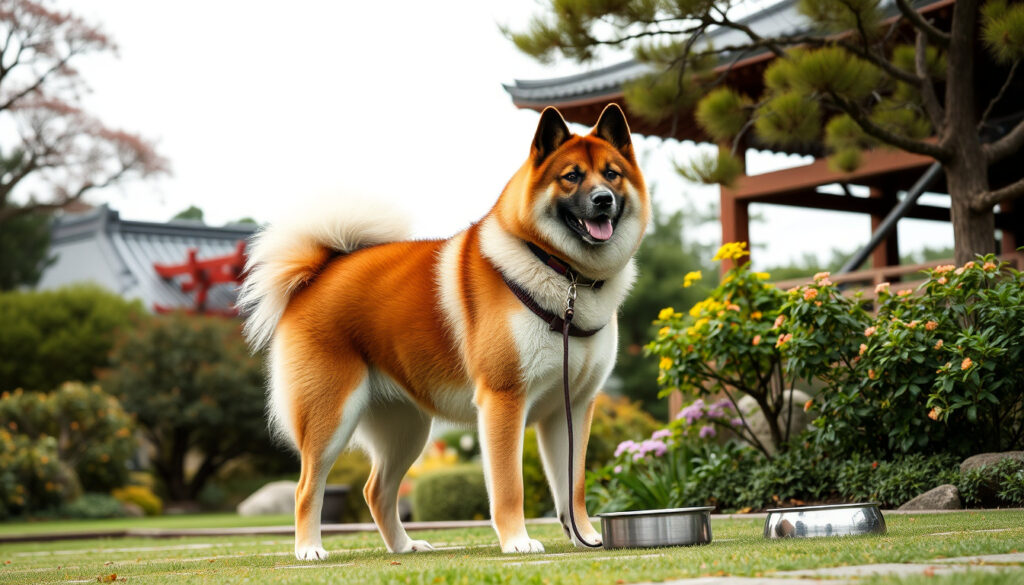
Akita Dog: Lifespan, Temperament, Diet, and Training Guide
Anyone who has watched an Akita trot through a park with that calm, almost regal confidence usually ends up with two questions: what is it like to live with one, and what does it actually cost to feed and care for a dog that size? This guide walks through the breed’s real temperament, lifespan, dietary restrictions, and price range using veterinary and breed-club sources rather than social-media impressions — so by the end, you will know whether an Akita fits your household or whether you should keep admiring it from a distance.
Average Lifespan: 10 to 12 years ·
Typical Price Range: $1,000 – $3,000 USD ·
Height at Shoulder: 24 to 28 inches ·
Weight: 70 to 130 pounds
Quick snapshot
- Akitas are large, muscular, double-coated working dogs from Japan (American Kennel Club)
- Reported lifespan is commonly about 10 to 14 years (Akita Club of America)
- Chocolate, grapes, onions, and garlic are toxic to dogs (ASPCA)
- Akitas require early socialization and experienced handling (Akita Club of America)
- Exact average price varies by breeder, location, and bloodline
- Best commercial food brand remains subjective and dog-dependent
- Long-term health effects of Akita Husky mixes are not well documented
- Modern Akita lineage traces to early 20th-century Japan (Encyclopaedia Britannica)
- Breed recognition in the US followed World War II (Encyclopaedia Britannica)
- Check breeder health screenings for hip and elbow dysplasia before buying
- Plan a structured socialization and training budget for the first year
| Origin | Japan (Akita Prefecture) |
| Lifespan | 10–12 years (commonly reported 10–14) |
| Weight | 70–130 lbs (male larger) |
| Height | 24–28 inches |
| Coat type | Thick double coat |
| Colors | Red, white, brindle, black |
| Good with children | Not recommended for young children due to size and temperament |
What is the average lifespan of an American Akita male?
One pattern stands out across breed-club data: the American Akita male lives roughly a decade to a dozen years, with the Akita Club of America putting the commonly reported range at about 10 to 14 years. A UK study reported an average life expectancy of 11.4 years, compared with 12.7 years for purebred dogs overall in that study, though that figure comes from a pooled dataset of mixed sources.
What factors affect an Akita’s lifespan?
- Genetics: hip and elbow dysplasia, congenital eye conditions, thyroid disorders, and autoimmune disease are known breed predispositions (Akita Club of America)
- Weight management: hip dysplasia can cause progressive arthritis and reduced mobility when excess weight adds joint strain (Royal Canin)
- Diet quality: large-breed-specific nutrition helps control growth rate in puppies (Encyclopaedia Britannica)
- Emergency awareness: bloat (gastric dilatation-volvulus) is a life-threatening emergency requiring immediate vet care (Encyclopaedia Britannica)
How to extend your Akita’s life?
Bloat prevention starts with feeding habits: several smaller meals rather than one large meal may help reduce risk, and vigorous exercise around mealtimes should be avoided (Royal Canin). Beyond that, the Akita Club of America notes the breed has a moderate exercise requirement and does well with a substantial daily walk or jog — keeping weight in check without overstressing joints.
A male American Akita’s lifespan hinges less on breed averages and more on what you control: joint health screening, meal structure, and daily exercise discipline.
Why are Akita dogs so expensive?
Two market forces collide: the Akita remains a relatively rare breed in the US, and ethical breeding is costly. The typical price range of $1,000 to $3,000 USD reflects that scarcity, but the purchase price is only a fraction of the real cost.
Initial purchase price vs ongoing costs
Responsible breeders screen for hip and elbow dysplasia, eye conditions, and thyroid disorders — the breed’s known problem areas (Akita Club of America) — and those health tests are not cheap. A large double-coated dog also brings recurring expenses: high-quality food, professional grooming during heavy shedding seasons, and a fence sturdy enough to contain a 100-pound dog with a guarding instinct.
Are Akitas worth the investment?
What you are paying for, if you choose a reputable breeder, is predictability: known lineage health history, early socialization, and registration paperwork. The American Kennel Club describes the breed as dignified, dignified, courageous, loyal, alert, and protective — traits that come with a management burden. For a first-time owner, the expense is not just monetary.
A $1,200 puppy with from-poor-health-lines parents can generate $5,000 in vet bills through hip dysplasia and bloat emergencies — the upfront price is the least reliable predictor of lifetime cost.
The trade-off: paying a premium to a breeder who health-tests is cheaper than paying a discount at the dog’s first orthopedic surgery. The pattern in veterinary cost data is consistent.
Is an Akita Husky mix a good dog?
That depends on who is asking. An Akita Husky mix inherits the full intensity of two stubborn, high-prey-drive working breeds — one Japanese guard dog, one Arctic sled dog — which means experienced handling is not optional.
Temperament of an Akita Husky mix
- Akitas have a strong prey drive associated with their hunting background (Akita Club of America)
- The breed can show intolerance toward other dogs, particularly dogs of the same sex (Akita Club of America)
- Huskies add an independent streak and high escape-artist tendency
Training needs
The Akita Club of America explicitly warns the breed is independent and can be challenging for first-time owners. A Husky cross adds a second independence layer. Early and extensive socialization is recommended because of the Akita’s guarding instinct and reserve with strangers — with a Husky mix, that socialization window closes just as fast but the stakes are higher because the dog is larger and faster.
Comparison with purebred Akita
If predictability matters, the purebred wins. With an Akita Husky mix, you cannot know whether the puppy inherits the Husky’s talkative nature or the Akita’s quiet aloofness — the Akita Club of America notes pure Akitas are generally quiet and not usually nuisance barkers, a trait a Husky cross may or may not keep.
Mixed-breed buyers should budget for a professional trainer from day one, because a 90-pound dog that inherited both breeds’ stubbornness will not respond to gentle suggestions.
The pattern: an Akita Husky mix compounds the challenges of both parent breeds, making experienced ownership even more critical than with a purebred.
What can Akitas not eat?
Akita dietary restrictions follow the same rules as any dog, but the stakes are higher because of the breed’s size and its tendency toward sensitive stomachs and bloat.
Toxic foods for dogs
- Chocolate and caffeine: toxic to dogs of all breeds (ASPCA)
- Grapes and raisins: can cause kidney failure
- Onions, garlic, and chives: damage red blood cells
- Xylitol (artificial sweetener): causes rapid insulin release and dangerous blood sugar drops
Fruits to avoid
Grapes and raisins are the most dangerous fruit for dogs — even small amounts can trigger acute kidney injury. Macadamia nuts are another common toxin. The ASPCA Animal Poison Control maintains a searchable list, and every Akita owner should bookmark it before bringing a puppy home.
Human foods safe for Akitas
Plain boiled chicken, white rice, and pumpkin are generally safe for an upset stomach. Strawberries are safe in moderation, and plain boiled or scrambled eggs provide protein — but skip the butter and seasoning. McDonald’s fries are not toxic, but the salt and fat content make them a poor choice for a breed already prone to weight gain.
Akita owners often worry more about exotic toxins than the real killer: a too-large single meal that triggers bloat. Several smaller meals matter as much as avoiding chocolate.
The implication: dietary management for an Akita is less about memorizing poison lists and more about meal structure and portion discipline.
What’s the best food for Akitas?
There is no single best brand, but there is a best formula pattern: high-protein, moderate-fat, large-breed-specific, with joint health support. The Encyclopaedia Britannica notes large-breed Akita puppies should be fed an appropriately formulated large-breed puppy diet to help control growth rate.
Commercial dog food recommendations
- Look for named animal protein (chicken, beef, fish) as the first ingredient
- Avoid corn, wheat, and unnamed meat by-products as primary fillers
- Choose large-breed formulas with controlled calcium for growing puppies
Raw or cooked diet?
Raw diets have passionate advocates, but the veterinary consensus warns about bacterial contamination and nutritional imbalance. A safer middle path: high-quality commercial food as the base, with cooked lean proteins and vegetables as toppers. Whatever you choose, transition gradually to avoid the sensitive stomach Akitas are known for.
Nutritional needs specific to Akitas
Joint health formulas matter because hip and elbow dysplasia are breed predispositions. Glucosamine and chondroitin supplements can help, but only after a veterinarian confirms the dog is not already showing signs of arthritis. The Royal Canin breed profile advises individualizing diet quantity — every Akita’s metabolism differs enough that feeding charts are starting points, not rules.
Feeding a 120-pound guard dog the cheapest grocery-store kibble is like running a diesel truck on gasoline: the engine will still run, but the repair bills will come early.
The pattern: the best food for an Akita is whichever large-breed formula you can feed consistently in controlled portions — the brand matters less than the meal structure.
Are Akita dogs dangerous?
The honest answer: the Akita is a guard breed with a strong guarding instinct, and that instinct requires management — not suppression. The Akita Club of America states the breed has a natural guarding instinct and generally does not require specialized guard-dog training. That means the default setting is protective.
Akita aggression causes
- Same-sex dog intolerance is a documented breed trait (Akita Club of America)
- Prey drive from hunting background makes small animals risky
- Reserve toward strangers can escalate without early socialization
Proper socialization and training
Early and extensive socialization is recommended because of the Akita’s guarding instinct and reserve with strangers. This is not a breed you can socialize at a comfortable pace — the critical window is the first 16 weeks, and the Akita Club of America recommends daily exposure to new people, places, and neutral dogs.
Are Akitas good family dogs?
For the right family, yes. Akitas commonly form close bonds with their families while remaining aloof or reserved with strangers, according to Encyclopaedia Britannica. They are loyal and affectionate with their people. But households with toddlers or frequent visitors should think twice: a 100-pound dog with a guarding instinct does not tolerate rough play or unexpected grabs.
Families get a deeply loyal protector; visitors get a dog that will stand between them and your child. The trait that makes Akitas dangerous is the same trait that makes them exceptional family guardians.
What this means: Akita aggression is predictable, not random. Same-sex dog intolerance, stranger reserve, and prey drive are documented breed traits, not training failures. The owners who struggle are the ones who adopted an Akita expecting a golden retriever.
Akita vs Shiba Inu comparison
One fast-growing comparison, two very different jobs: the Akita is a 100-pound guard dog, the Shiba Inu is a 23-pound companion. Both come from Japan, both are independent, but their care burdens are not remotely similar.
Three breed profiles, one pattern: the larger the dog, the bigger the financial and physical commitment.
| Trait | Akita | Shiba Inu |
|---|---|---|
| Weight | 70–130 lbs (Encyclopaedia Britannica) | 17–23 lbs |
| Exercise need | About 1 hour daily (Encyclopaedia Britannica) | 30–45 minutes |
| Good for first-time owners | Not recommended (Akita Club of America) | Challenging but manageable |
| Guard instinct | Natural and strong (Akita Club of America) | Alert but not a guard dog |
Why this matters: apartment dwellers and first-timers who want a Japanese breed should almost always choose the Shiba. The Akita needs a house with a yard, an experienced handler, and a realistic budget for food and vet care.
Akita breed specifications
Two official standards, one key difference: the American Akita is heavier and more bear-headed, while the Japanese Akitainu is lighter and fox-faced.
| Height (female) | 24–26 inches (Akita Club of America) |
| Height (male) | 26–28 inches |
| Weight (female) | Approximately 70–100 pounds |
| Weight (male) | Approximately 100–130 pounds |
| Coat | Thick double coat with plush undercoat |
| Colors | Red, white, brindle, black |
| Lifespan | Commonly 10–14 years (Akita Club of America) |
| Recognized by | American Kennel Club |
The catch: those weight ranges are for American Akitas, which run significantly heavier than their Japanese relatives. A buyer looking for a Japanese Akitainu should expect a leaner, lighter dog.
Pros and cons of owning an Akita
Upsides
- Deeply loyal to family (American Kennel Club)
- Natural guard dog without extra training (Akita Club of America)
- Quiet — not a nuisance barker
- Clean, fastidious grooming habits
Downsides
- Not recommended for first-time owners (Akita Club of America)
- Same-sex dog aggression is common
- High prey drive toward small animals
- Heavy seasonal shedding with a double coat
- Prone to hip dysplasia, bloat, and thyroid issues
The pattern: Akita ownership rewards experienced dog owners who want a protector and can provide structure. It punishes impulse adopters who want an easy first dog.
Comparing Akita to other large breeds
One comparison that shoppers often ask about: Akita vs. Husky. The Akita Club of America describes the Akita as independent, quiet, and naturally protective; the Siberian Husky is friendlier, more talkative, and has no guarding instinct. Both need experienced owners, but for different reasons — the Akita because of territorial guarding, the Husky because of escape artistry and endless energy.
Feeding guidelines for Akitas
The safest feeding pattern for this breed: give several smaller meals rather than one large meal, and avoid vigorous exercise around mealtimes to reduce bloat risk (Royal Canin). Stick to high-protein, moderate-fat food with joint support, and keep treats under 10% of daily calories.
The best food for an Akita is a large-breed formula fed in two or three smaller portions — the brand matters less than the meal structure and the quality of the protein source.
The implication: feeding an Akita is less about finding the perfect brand and more about establishing a bloat-safe routine from day one.
Training and exercise requirements
Akitas need about one hour of daily exercise, according to Encyclopaedia Britannica, and they do well with a substantial daily walk or jog. Training should be firm, consistent, and positive — this breed does not respond to harsh corrections.
- Start obedience training the day the puppy comes home
- Socialize extensively before 16 weeks
- Avoid off-leash areas — prey drive and same-sex intolerance make risk too high
The pattern: consistency and early structure matter more than volume of exercise for this breed.
What is currently known about Akitas
Confirmed facts
- Akita lifespan is commonly reported at 10–14 years (Akita Club of America)
- Chocolate, grapes, onions, garlic, and xylitol are toxic to dogs (ASPCA)
- Akitas require experienced training and early socialization (Akita Club of America)
- The breed is predisposed to hip dysplasia, thyroid disorders, and autoimmune disease
What is unclear
- Exact average price varies too widely by breeder to quote a fixed number
- Best commercial food brand is subjective and dog-dependent
- Long-term health effects of Akita Husky mixed breeding are not documented in studies
The pattern: the confirmed facts carry stronger source backing than the unclear items, which remain speculative and owner-dependent.
Quotes from the experts
“The Akita is a large, muscular, double-coated working breed of Japanese origin — dignified, courageous, loyal, alert, and protective.”
American Kennel Club (breed standard authority)
“The breed is independent and can be challenging for first-time owners. Early and extensive socialization is recommended because of the Akita’s guarding instinct and reserve with strangers.”
Akita Club of America (national breed club)
“Akitas commonly form close bonds with their families while remaining aloof or reserved with strangers.”
Encyclopaedia Britannica (reference publisher)
“Several smaller meals rather than one large meal may help reduce bloat risk, and vigorous exercise around mealtimes should be avoided.”
Royal Canin (veterinary nutrition brand)
Summary
The Akita is not a first dog and not a casual purchase — it is a 130-pound guardian with a documented guarding instinct, a strong prey drive, and a list of health predispositions that require proactive management. For the experienced owner who can provide structured training, early socialization, and a bloat-aware feeding plan, the reward is a loyal and protective companion. For the first-time owner or the family with small children, the choice is clear: start with a more forgiving breed like the Shiba Inu, or invest heavily in professional training and a fenced yard before the puppy arrives. If you want one anyway, read our Pit Bull Guide: Temperament, Legal Status & Rescue Facts for a sense of what guardianship breeds demand — the Akita shares more with those dogs than with a golden retriever.
Related reading: Pit Bull Guide: Temperament, Legal Status & Rescue Facts
Frequently asked questions
Do Akitas shed a lot?
Yes. The Akita has a thick double coat and sheds heavily, especially during seasonal coat blows in spring and fall. Daily brushing during shedding season is recommended to manage the loose undercoat.
Are Akitas good with other dogs?
Generally no. The Akita Club of America notes the breed can show intolerance toward other dogs, particularly dogs of the same sex. Same-sex aggression is a documented breed trait, so Akitas are often best kept as the only dog in the household.
How often should I groom an Akita?
Brush at least twice a week, and daily during heavy shedding seasons. Bathing is only needed every few months — the double coat naturally repels dirt. Akitas are generally clean dogs with minimal odor.
Can Akitas live in apartments?
It is not recommended. Akitas are large, territorial dogs that need space and a securely fenced yard. They can adapt to apartment life with extensive exercise, but the guarding instinct and size make a house with a yard a safer, more comfortable fit.
What is the history of the Akita breed?
The Akita originated in the Akita Prefecture of Japan, where it was used for hunting and guarding. The breed’s modern lineage traces to early 20th-century Japan, and it was recognized in the United States after World War II when returning servicemen brought dogs home.
How much exercise does an Akita need?
About one hour of daily exercise, according to Encyclopaedia Britannica. The Akita does well with a substantial daily walk or jog. More important than duration is consistency — Akitas need regular, structured exercise to burn off physical and mental energy.
For prospective Akita owners, the decision boils down to experience and environment: if you have trained guardian breeds before and have a secure yard, the Akita can be a remarkable companion. If you are starting fresh, the specific choice is clear — get a Shiba Inu or a Labrador first, or bring in a professional trainer before the Akita puppy arrives.
More related posts
 Jessica Sergis: Partner, Salary, Net Worth, and Biography
 Oprah Winfrey Biography: Age, Net Worth, Children, Health
 Eugene Levy: Ethnicity, Family, Eyebrows, Schitt’s Creek
 John Cusack: Career, Personal Life & Controversies
 Annie Potts Biography: Accident, Career & Smoking Rumors
 Brad Garrett: Height, Sobriety, Family & Ray Romano Friendship
 Tony Soprano Character Psychology: The Sad Clown
 Tatum O’Neal: Stardom, Struggle, and Family Estrangement
