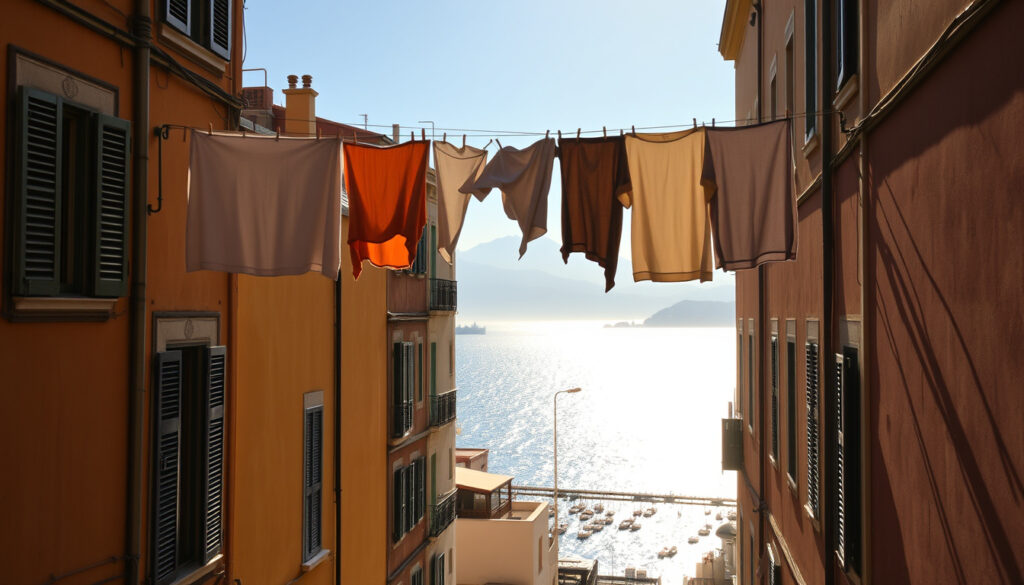
My Brilliant Friend: Book, TV Series, Summary & Reviews
There’s something quietly devastating about watching two people orbit each other for decades—one always reaching, the other always pulling away. Elena Ferrante’s My Brilliant Friend captures that push-pull with a precision that readers either find gripping or overwhelming. If you’ve been weighing whether to pick up the book or stream the HBO series, the good news is that both versions reward the investment in their own distinct ways.
Author: Elena Ferrante · Publication Year: 2012 · Series Volumes: First of four · TV Run: 2018–2024 · Network: HBO
Quick snapshot
- NYT ranked it the No. 1 book of the century (UC Berkeley News)
- HBO’s first foreign language series ever (The Amherst Student)
- Four planned miniseries, with the final season debuting September 9 (Time Magazine)
- Elena Ferrante’s real identity remains a private matter (Electric Literature)
- Whether the HBO series fully captures Lila’s psychological volatility (Electric Literature)
- How the omitted page 1 identity hint reshapes the narrative’s subtext (Electric Literature)
- Characters born in 1944, spanning 60 years in the novels
- Key fireworks scene set on New Year’s Eve 1959
- Final season set in the politically volatile 1980s
- The final 10-episode season brings the Naples saga to its conclusion
- Readers can expect the story to reach the characters’ middle age
- Academic interest continues to grow, with UC Berkeley offering dedicated courses
The table below consolidates essential publication and production data for quick reference.
| Detail | Value |
|---|---|
| Original Title | L’amica geniale |
| Translator | Ann Goldstein |
| Genre | Literary fiction |
| Episodes (Seasons 1–3) | 32+ |
| Protagonists’ Birth Year | 1944 |
| Series Premiere | November 18, 2018 |
| Story Spans | 60 years |
| NYT Ranking | No. 1 book of the century |
What is My Brilliant Friend book about?
My Brilliant Friend is the first installment in Elena Ferrante’s Neapolitan Quartet, a four-novel saga that traces the lives of two women—Elena Greco and Raffaella Cerullo—from their childhood in a poor Naples neighborhood in 1944 through six decades of friendship, rivalry, and upheaval. The novel is written as a letter Elena sends to a man who has disappeared, explaining who her “brilliant friend” Lila was and why their relationship shaped everything about her.
The novel works as both an intimate portrait of female friendship and a broader indictment of the patriarchal structures that constrain women’s choices in postwar Italy.
Plot overview
Elena, whom everyone calls Lenù, narrates her lifelong obsession with Lila. Both girls are academically gifted, but only Lenù’s family supports her continued education after elementary school. Lila’s brilliance is unmistakable—she can decode text in seconds, draw perspective with raw intuition—but her family pulls her from school and marries her off by adolescence. The novel follows Lenù as she competes academically with Lila’s shadow, eventually becoming a published author, while Lila navigates a suffocating marriage and neighborhood politics that turn violent.
Main characters Elena and Lila
Lenù is the narrator: tall, fair, and diligent, she represents the “good girl” who plays by the rules to escape poverty. Lila is tiny, dark-haired, and feral in her intensity—unpredictable and magnetic in ways that make the other characters (and readers) uneasy. Time Magazine notes the deliberate contrast between them, a physical manifestation of their opposing approaches to ambition and survival.
Setting in Naples
The neighborhood in which Elena and Lila grow up is portrayed as a world defined by gendered violence, poverty, and social rigidity. UC Berkeley News describes the novels as exploring a “violent, patriarchal social environment” that shapes both women’s fates, even as their individual choices pull them in different directions.
The implication: Ferrante uses the specific geography and social codes of postwar Naples as both backdrop and character, making the setting inseparable from the friendship’s dynamics.
Bottom line: Readers drawn to psychological nuance find the density rewarding; those seeking plot momentum often bounce off the first third. Electric Literature notes fans were both excited and trepidatious when HBO announced the adaptation.
Is My Brilliant Friend a hard read?
The honest answer depends on what you’re looking for. My Brilliant Friend is not a difficult text in the sense of dense academic prose—Ferrante’s sentences are clear, even when the subject matter is emotionally turbulent. But the novel’s length, its nonlinear emotional rhythms, and its refusal to resolve tidy moral judgments can feel overwhelming to readers expecting a conventional coming-of-age story.
Reader reports consistently split: those drawn to psychological nuance find the density rewarding; those seeking plot momentum often bounce off the first third.
Writing style
Ferrante writes in a deceptively simple first-person voice. Elena’s observations are precise but never clinical—she feels things intensely and then filters those feelings through the lens of a woman looking back at younger versions of herself. This temporal layering is seamless, never heavy-handed, but it does require readers to track two emotional timelines at once: the child’s experience and the adult’s reflection.
Length and complexity
The first novel runs approximately 330 pages in English translation, but Electric Literature notes that concerns about fidelity arose early because “the book is long and sprawling,” raising questions about whether a television adaptation could preserve what makes the novel work. The translation by Ann Goldstein (Ferrante’s longtime translator) is widely praised for maintaining the Italian-inflected rhythm of Elena’s voice without making the English feel stilted.
Reader accessibility
The New York Times’ ranking of My Brilliant Friend as the No. 1 book of the century (per UC Berkeley News) reflects broad cultural impact, not universal readability. The novel is emotionally intense in ways that some readers find immersive and others find exhausting. Reveries under the sign of Austen specifically notes that Season 1 of the HBO adaptation was reviewed alongside the novel in terms of social repression themes, suggesting the content itself—the weight of what happens to Lila and Elena—is as challenging as any formal complexity.
Is My Brilliant Friend worth watching?
For readers of the books, the HBO adaptation is a revelation in ways that go beyond visual fidelity. For viewers coming in cold, the series offers one of the most immersive portrayals of childhood and adolescence on television—one that doesn’t flinch from the uncomfortable realities that shape Elena and Lila’s trajectories.
Book readers may find the series’ pace faster and its ambiguities flatter; viewers may discover the books fill in psychological depth the screen version only hints at.
TV adaptation quality
HBO’s My Brilliant Friend is, remarkably, the network’s first foreign language series—The Amherst Student confirms this landmark status. Director Saverio Costanzo and producers including Jennifer Schuur translated the novel’s layered interiority into a visual medium that Time Magazine describes as effective, particularly in capturing the “dissolving margins” moment of Lila’s panic attack during the 1959 fireworks scene.
Cast and production
The series uses both child and adult actors across its multi-season arc, with the young actresses playing Elena and Lila receiving particular praise for capturing the characters’ essential tension. The production design recreates a mid-century Naples neighborhood that feels lived-in and specific—The Amherst Student calls the adaptation “beautiful,” which carries weight coming from a reviewer who read the source material closely.
Book vs. series differences
The most significant divergence is linguistic: the books are written in standard Italian, while the series uses authentic Neapolitan dialect—a choice The Amherst Student identifies as an improvement over the source material. The books’ dialogue exists in a somewhat idealized Italian that characters in the neighborhood would not actually speak. On screen, the dialect grounds the story in its specific place and time in ways the novel’s register cannot.
Another notable omission: Mary Tabor Substack points out that the series omits a key identity hint from page 1 of the first novel—interpreted by some readers as suggesting Elena and Lila are, psychologically, the same person. The series’ decision to drop this thread removes one layer of ambiguity that many readers found central to the books’ appeal.
Is My Brilliant Friend a queer story?
The question itself is worth examining. My Brilliant Friend does not present an explicitly queer narrative in the contemporary sense—no declared identities, no romantic physicality between Elena and Lila. But the relationship between the two women has been read by critics and readers as queer in its emotional architecture: obsessive, consuming, defined by rivalry that blurs into something resembling desire, and structured by a society that leaves little room for women to name what they feel.
Themes of intimacy
Elena’s narration is suffused with desire—not for Lila’s body specifically, but for her mind, her intensity, her unearned confidence. Elena competes with Lila academically, then romantically, then professionally, always measuring her own worth against someone she simultaneously admires and envies. Time Magazine notes that the novels were “greeted in the U.S. as European cousins to female friendship tales like Girls and Broad City”—comparisons that recognize the specifically female register of intense, fraught intimacy that American viewers might read as queer-coded.
Interpretations of the relationship
Critical discourse has split into roughly two camps. One reads Elena and Lila’s bond as a profound platonic friendship, noting that Ferrante never signals any physical attraction. The other argues that the relationship’s emotional logic—in which Elena’s selfhood is constituted through Lila’s gaze, and Lila’s choices are made partly in response to Elena’s trajectory—is structurally queer regardless of explicit sexual content. The absence of language to name female-female intensity in postwar Naples is, for this reading, part of the tragedy.
Author intent
Elena Ferrante, whose real identity remains private, has not publicly addressed queer readings of the novel. This silence is, in itself, a kind of interpretive freedom—the books invite readings that the author does not foreclose. Whether readers experience the novel as queer or as an intense female friendship, both readings are supported by the text’s emotional specificity.
Does Lila have a mental illness in My Brilliant Friend?
Lila Cerullo is brilliant, volatile, and increasingly unpredictable as the first novel progresses. She experiences episodes that modern readers may recognize as dissociation, panic attacks, and emotional dysregulation. The text does not frame these as a clinical diagnosis—Ferrante never names a condition—but the behavior is present, documented, and central to understanding Lila’s character arc.
Lila’s character traits
From childhood, Lila is the girl who knows too much, sees too clearly, and cannot modulate her responses to social situations. She is feral in the truest sense: governed by instincts that her neighborhood’s rules cannot accommodate. Her intelligence is not academic (she leaves school early) but social and aesthetic—she understands systems, patterns, and power in ways that terrify the adults around her.
Psychological analyses
The fireworks scene on New Year’s Eve 1959 functions as Lila’s first major documented episode. During the display, she experiences what Time Magazine describes as “dissolving margins”—a panic attack in which her sense of boundaries (moral, physical, psychological) collapses. Lila herself names this experience as an “implosion of her moral universe.” This is not clinical language, but the phenomenology maps onto dissociative episodes described in psychological literature.
Evidence from text
Throughout the novel, Lila’s behavior oscillates between extreme competence (she is, literally, a genius in several domains) and extreme dysregulation (her responses to stress are disproportionate, her judgment erratic). Elena narrates these shifts with fascination and anxiety, never pathologizing them—because the novel’s world lacks the vocabulary to do so. There is no therapist, no diagnosis, no treatment. Lila’s volatility is experienced by the other characters as moral failing or personal wickedness.
The implication: readers with clinical frameworks will see Lila’s episodes as symptoms. Readers with literary frameworks will see them as the response of a brilliant mind trapped in an environment that cannot tolerate either brilliance or female autonomy.
Upsides
- My Brilliant Friend offers unmatched psychological depth in literary fiction
- The HBO adaptation brings Ferrante’s Naples to vivid, authentic life
- Both versions reward rereading/viewing with new insights
- Protagonists feel like real women, not archetypes
Downsides
- The novel’s length and emotional density can overwhelm
- The HBO series omits key ambiguities from the books
- Lila’s mental state remains clinically undefined, which frustrates some readers
- The series requires commitment: four seasons, foreign language
“My Brilliant Friend,” HBO’s first foreign language series, is a beautiful adaptation of Elena Ferrante’s beloved ‘Neapolitan Novels.’
— Kaelyn Milby, The Amherst Student reviewer
The novels are greeted in the U.S. as European cousins to female friendship tales like Girls and Broad City.
— Electric Literature review
My Brilliant Friend by the pseudonymous Italian author Elena Ferrante, is the New York Times’ No. 1 book of the century—a fact that underscores how thoroughly the novel has resonated with readers across languages and cultures. For anyone deciding between book and screen, the calculus is this: readers who want psychological interiority and moral ambiguity should start with the novel; viewers who want immersive visual storytelling and authentic dialect should start with the HBO series. Neither is a shortcut to the other.
Related reading: A Real Pain plot and reviews
Frequently asked questions
Who are Elena and Lila in My Brilliant Friend?
Elena Greco (Lenù) and Raffaella Cerullo (Lila) are the novel’s two protagonists: friends since childhood in a poor Naples neighborhood, their lifelong relationship forms the spine of Ferrante’s Neapolitan Quartet. Elena narrates the story as an adult reflecting on their shared history.
How many books are in the Neapolitan Novels?
The full Neapolitan Quartet consists of four novels published between 2012 and 2015. My Brilliant Friend is the first volume, followed by The Story of a New Name, Those Who Leave and Those Who Stay, and The Lying Life of Adults.
Where was My Brilliant Friend HBO series filmed?
The HBO series was filmed in Italy, with production designed to recreate a mid-century Naples neighborhood. The use of authentic Neapolitan dialect was a deliberate creative choice that The Amherst Student identifies as a key improvement over the source material’s standard Italian.
How does My Brilliant Friend end?
The first novel ends with the two women in their twenties, their friendship frayed but not broken. Lila has disappeared after a period of erratic behavior, and Elena—now a published author—decides to write their story. The subsequent novels follow the characters into middle age and beyond.
What awards has My Brilliant Friend won?
The novel itself has earned the Neapolitan Quartet widespread acclaim, including the New York Times’ ranking as the No. 1 book of the century. The HBO series has received multiple Emmy nominations and critical praise for its performances, production design, and fidelity to the source material.
What are the main differences between the book and HBO series?
The most significant differences involve language (series uses Neapolitan dialect), narrative ambiguity (the series omits the books’ page 1 identity hint), and visual storytelling (the series translates interior emotions like Lila’s “dissolving margins” into visual effects). The series is faithful to the books’ structure and often its dialogue, but makes deliberate choices about what to simplify.
What is My Brilliant Friend’s age rating?
The HBO series is rated TV-MA, reflecting mature themes including violence, sexual content, and intense emotional conflict appropriate for adult viewers. The novel, written for adult readers, contains similar material but in literary rather than visual form.
More related posts
 Big W Castletown – Hours, Address, Phone and Services
 Nico Tortorella: Polyamory, Tattoos & Microdrama 2026
 Morgan Wallen: Biography, Controversies & Personal Life
 Outlander Season 7: Where to Watch, Episode Count & Season 8
 Leighton Meester: Biography and Net Worth
 Aileen Wuornos: Verified Facts, Timeline, and Unanswered Questions
 Angela Bishop: Husband, Weight Loss & Career Updates
 Jonathan Taylor Thomas: Where Is the ‘Home Improvement’ Star Now
