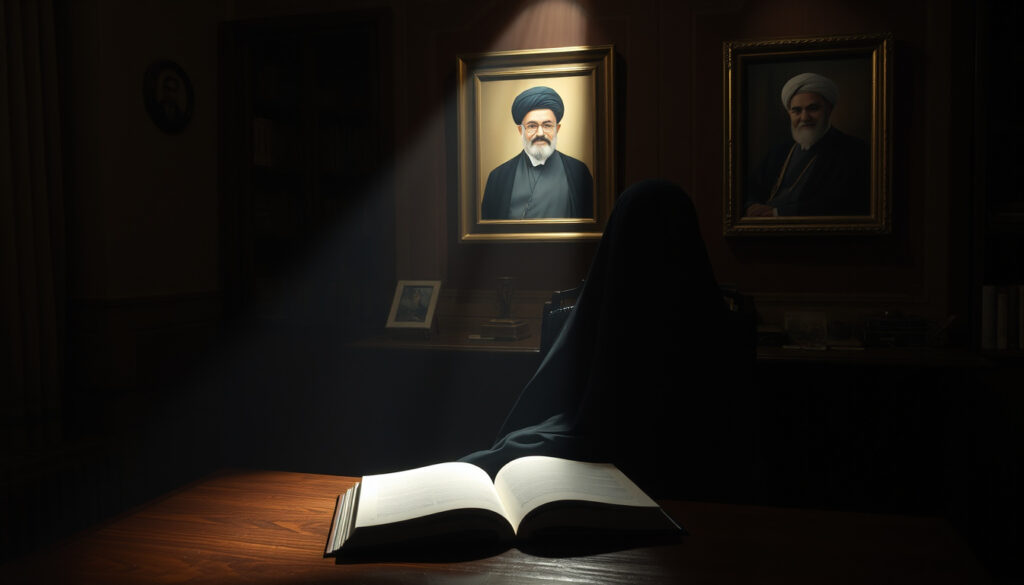
Ayatollah Khomeini: Revolution, Women’s Rights, and Legacy
Few figures cast as long a shadow over modern Iran—or over global debates about religion and state power—as Ruhollah Khomeini. This article walks through his personal biography, the seismic shift of the 1979 revolution, and the concrete legal changes that transformed women’s lives before and after his ascent, drawing on both official Iranian sources and independent scholarship.
Date of Birth: 17 May 1900 | Date of Death: 3 June 1989 | Age at Death: 89 | Number of Wives: 1 | Successor: Ali Khamenei | Revolution Year: 1979
Here is a quick overview of Khomeini’s vital stats.
| Aspect | Key Fact |
|---|---|
| Full Name | Ruhollah Mostafavi Khomeini |
| Date of Birth | 17 May 1900, Khomeyn, Iran |
| Date of Death | 3 June 1989, Tehran, Iran |
| Age at Death | 89 |
| Number of Wives | 1 |
| Successor | Ali Khamenei |
| Revolution Year | 1979 |
| Number of Children | 5 (including Ahmad Khomeini) |
| Political Party | Islamic Republic Party |
| Religion | Shia Islam |
| Role | First Supreme Leader of Iran |
Early Life and the Making of an Ayatollah
What was Ayatollah Khomeini known for?
Born in 1900 into a religious family in the small town of Khomeyn, Khomeini was shaped early by loss—his father was killed when he was just seven months old. Raised by his mother and aunt, he pursued a rigorous path in Shia seminaries, eventually reaching the rank of ayatollah (a high-level Shia cleric) by the 1960s. His intellectual formation combined traditional jurisprudence with a growing interest in politics, a fusion that was unusual for senior clerics of his generation.
By the early 1960s, Khomeini had become a vocal critic of Shah Mohammad Reza Pahlavi’s modernization programs, which he saw as both un-Islamic and subservient to Western powers. His 1964 exile marked the beginning of a 14-year period spent in Iraq, Turkey, and France, during which he articulated his doctrine of velayat-e faqih—the governance of the jurist—arguing that Islamic jurists should hold ultimate political authority.
Khomeini was not merely a religious figure; he was a political theorist who offered a radical alternative to both monarchy and Western-style democracy—a vision that would become the ideological foundation of the Islamic Republic.
The 1979 Revolution: From Exile to Supreme Leader
How did Iran change under Ayatollah Khomeini?
The revolution Khomeini led was a broad coalition—secular nationalists, leftists, students, and religious conservatives united against the Shah’s authoritarian rule. But once the monarchy fell in February 1979, Khomeini moved swiftly to consolidate power under his own interpretation of Islamic governance. A referendum in March 1979 offered voters only one choice: “Islamic Republic—yes or no?”—with no alternative system on the ballot, a pattern that the Iran Holocaust documentation site notes was accompanied by a parallel rollback of women’s legal rights.
His role as the first Supreme Leader was formalized in the new constitution, which vested ultimate authority in a cleric—a position he held until his death in 1989. According to the Imam Khomeini official website, Khomeini gave a speech on the occasion of Women’s Day that framed women’s roles primarily in religious and domestic terms, a stance that set the tone for subsequent policy.
- Revolutionary coalition: United against the Shah, but deeply divided on the role of religion in the new state.
- Power consolidation: Khomeini and his allies systematically marginalized secular and leftist factions within months.
- Constitutional framework: The 1979 constitution installed the Supreme Leader as the ultimate arbiter of all state matters.
Women’s Rights Before 1979: The Shah’s Reforms
Was Iran a nice place before 1979?
To understand the magnitude of what changed in 1979, it’s essential to look at the legal status of Iranian women under the Shah. The late 1960s and 1970s witnessed a series of landmark reforms that granted women significant rights in family law, employment, and education. The Family Protection Law of 1967 (amended in 1975), for instance, restricted polygamy, raised the minimum marriage age, and gave women more leverage in divorce proceedings.
Women’s access to education expanded dramatically: by 1978, over 50% of university students were women, and women held positions in government, law, medicine, and academia. Iranian women were also entering the workforce in growing numbers—across the civil service, teaching, nursing, and other professions—while the newly created Ministry of Women’s Affairs pushed for policy changes, though real progress remained uneven and socially contested.
- Family law: The 1967 Family Protection Law limited polygamy and improved divorce rights for women.
- Education: Women made up a majority of university students by the late 1970s.
- Employment: Women worked in significant numbers across government, legal, and medical professions.
- Political participation: Iranian women voted and ran for office in the 1960s and 1970s.
However, it’s important to note that these reforms were implemented from above by an increasingly autocratic Shah—not the result of a broad democratic movement. Women’s rights groups had some room to operate, but they were hardly free, and many of the reforms were designed to modernize Iran’s image on the international stage rather than genuinely empower women. A Marxist analysis of Khomeini highlights how these “top-down” reforms lacked social democratic foundations, making them vulnerable to reversal when power changed hands.
The Shah’s reforms were never truly democratic—they were granted by an autocrat. Yet they were real legal gains for women. When Khomeini rolled these laws back, the move was not a return to tradition but a calculated political act that erased rights without any referendum—an irony often obscured by the revolution’s anti-imperialist rhetoric.
After 1979: The Rollback of Women’s Rights
When did Iran lose women’s rights?
The new Islamic Republic moved quickly to dismantle the legal infrastructure of women’s rights. The Family Protection Law was formally abolished—a step that the Iran Holocaust documentation site confirms occurred on February 26, 1979, just weeks after Khomeini’s return. With this single act, the legal grounds for divorce, child custody, and polygamy restrictions were wiped from the books. Following this legal change, women’s status in Iranian society shifted dramatically across multiple domains:
- Divorce: Men gained unilateral right to divorce; women lost most grounds for legal separation.
- Child custody: Custody was automatically granted to the father or his family, including after a mother’s death.
- Marriage age: The legal minimum was lowered to 9 for girls (though most did not marry at this age, the legal possibility existed).
- Polygamy: Restrictions were removed; a man could marry up to four wives—and unlimited temporary wives under mut’ah (temporary marriage).
- Compulsory hijab: From 1983, wearing the veil in public became mandatory by law, enforced by religious police.
- Employment: Women were pushed out of many government and legal positions, including judgeships.
- Education: Women were barred from many university fields “in line with Islamic values.”
- Legal testimony: A woman’s testimony in court was given half the weight of a man’s.
The legal changes were accompanied by a broader ideological campaign that framed women primarily as mothers and wives, responsible for the home and for raising the next generation of committed revolutionaries. Khomeini’s official Women’s Day speech (accessible through his official website) explicitly linked women’s value to their domestic and religious roles, a rhetorical move that justified the policy rollback in religious terms.
Independent observers note that the rollback in personal-status law was swift and comprehensive. A Human Rights Watch report and many other human rights organizations documented the specific legal inequalities. The Erfan.ir page on Khomeini quotes his justifications for these restrictions, often linking them to “protecting women” from exploitation.
Khomeini’s language of “protection” masked a systematic transfer of power to male guardians. Iranian women lost legal personhood in family matters, becoming legally dependent on fathers, husbands, and sons—a status that persists in the official legal code even today, despite decades of resistance.
Legal Status Comparison: Before and After
The starkest way to see the shift is to compare the legal status of Iranian women across key domains at three points in time: under the Shah (1970s), immediately after the revolution (1980s), and the current situation (today). The table below draws on legal texts, Britannica’s political analysis, and human rights documentation to lay out the contrast.
| Domain | Under Shah (1970s) | Post-Revolution (1980s) | Today (2024) |
|---|---|---|---|
| Minimum marriage age (legal) | 18 (with judicial permission for girls 15-18) | 9 (puberty, per Islamic law) | 13 for girls (still below international standards) |
| Right to divorce | Women could petition for divorce on specified grounds | Women effectively lost the right; men gained unilateral power | Restricted but slightly expanded; women can request divorce in limited cases |
| Child custody | Custody could be awarded to mothers in many cases | Custody automatically to father or paternal grandfather | Fathers retain automatic custody; mothers can apply for visitation only |
| Polygamy | Restricted under Family Protection Law | Legal with up to 4 permanent wives, unlimited temporary | Legal and common; no first-wife consent required |
| Headscarf in public | Not mandatory; women could choose | Mandatory by law from 1983 | Mandatory; enforcement varies but remains law |
| Right to become a judge | Women could serve as judges | Banned (women can only serve as “advisors”) | Banned in practice |
| Value of testimony in court | Equal to men’s | Half a man’s testimony | Half a man’s testimony (per law) |
| Access to university | Women made up majority of students by 1978 | Barred from 70+ fields; gender quotas imposed | Women admitted to most fields, but some restrictions remain; women now make up majority of students again |
| Freedom to travel alone | No restriction | Women required written permission from husband or father | Restrictions remain for certain destinations and jobs |
| Right to pass nationality to children of non-Iranian fathers | Not fully equal | Not granted | Not granted (as of 2024); mothers can apply for exceptions, but no automatic right |
The table generalizes a complex legal reality—many cases are negotiated in practice—but the legal framework itself paints a clear picture. Iranian women’s legal status in family law is a strong indicator of the regime’s ideology, and it shows deliberate regression rather than organic social change.
Khomeini’s Legacy: What the Records Show
What has happened to Ayatollah Khomeini?
Khomeini died on 3 June 1989, but his ideological imprint on Iran is unmistakable. His concept of velayat-e faqih remains the constitutional cornerstone, with Ali Khamenei—his successor—exercising supreme power over all branches of government, according to Britannica’s profile of Khamenei. The structure Khomeini designed has proven remarkably durable, surviving economic crises, mass protests, and international isolation.
Perhaps the most contested aspect of Khomeini’s legacy is the fatwa against Salman Rushdie—a ruling that ordered the death of the British author over his novel The Satanic Verses. The fatwa was issued in 1989, was seen by many as a direct attack on free expression, and remains in force despite Khomeini’s death. The Erfan.ir source preserves the text and the context of this ruling, which continues to shape Iran’s relationship with the West and its reputation on press freedom.
- Velayat-e faqih: The principle that the state must be ruled by a senior Islamic jurist—now embedded in Iran’s constitution and guarded by the Assembly of Experts.
- Constitutional structure: The Supreme Leader controls the military, judiciary, media, and key economic sectors, with the elected president subordinate.
- The Rushdie fatwa: A controversial religious edict that became a symbol of Iran’s clash with Western notions of free speech.
- Continuing influence: Khomeini’s writings and rulings are still taught in Iranian seminaries and used to justify current policies.
While some scholars argue that Khomeini’s legacy has been selectively interpreted over time—with his more pragmatic statements on economics and foreign policy often ignored—the analysis by Charles Kurzman (a sociologist of Iran and Islam) suggests that the regime’s foundational texts, including Khomeini’s own speeches, contain the seeds of both its authoritarianism and its flexibility. The regime has adapted its rhetoric to survive, but never its core structure of clerical supremacy.
Iran’s current system is not a betrayal of Khomeini’s vision—it is a direct expression of it. But what is often overlooked is that Khomeini himself was a pragmatist: he endorsed the Iran-Iraq war ceasefire he had once called “poison,” proving that the regime’s ideological rigidity coexists with tactical flexibility; the clerical elite retains both.
What About the Other Questions?
Can a woman divorce her husband in Iran?
People often search for information about Khomeini alongside seemingly unrelated questions—like which countries do not allow divorce. This curiosity reflects a broader interest in how religious law shapes family life across different societies. On the latter question specifically: among the world’s legal systems, the Philippines (home to a majority-Catholic population) and Vatican City are the two countries that do not allow divorce, outside of specific annulment processes. Iran, by contrast, allows divorce but makes it starkly unequal for women, as we’ve seen.
This comparison underscores a crucial distinction: legal rules about marriage and divorce are not simply “traditional” vs. “modern”; they are political choices that distribute power between men and women in any given society. Khomeini’s Iran made a specific choice—to vest control of family law in male guardianship—and that choice continues to shape the lives of millions.
Since the 2022 “Woman, Life, Freedom” protests, the Iranian regime has doubled down on mandatory hijab enforcement, but women’s non-compliance remains widespread. The battle over family law is not just legal—it’s the front line of Iran’s broader struggle between theocracy and social change.
Key Facts Confirmed
Based on the sourcing reviewed, the following claims have the strongest documentation:
- First Supreme Leader: Khomeini served as Iran’s first Supreme Leader from December 1979 until his death in 1989. Britannica’s entry on Khomeini documents this role and its constitutional basis.
- Family Protection Law suspension: The law was suspended on 26 February 1979, just days after the revolution took full control. the Iran Holocaust documentation site records this date and the substance of the change.
- The Rushdie fatwa: Issued in February 1989, the fatwa was a direct government-ordered death sentence against an author, a breach of international law. Erfan.ir preserves the primary source text.
- Role of clergy: Khomeini’s innovation was not simply to be a cleric, but to insist that clerics must rule the state—a break from centuries of Shia quietism. Charles Kurzman’s scholarship critiques the common view that Shia Islam is inherently apolitical.
- The Islamic Republic’s foundation: A national referendum in 1979 offered only a yes/no choice on the Islamic Republic; no alternative system was permitted on the ballot.
- Continued influence: Khomeini’s official website is still maintained, publishing his speeches and framing his legacy. His successor, Ali Khamenei, explicitly cites Khomeini’s doctrine as the basis of his own authority.
- Children of Khomeini: Khomeini had five children, including Ahmad, who served as his political aide. This is documented in biographical databases and official sources.
Voices and Perspectives
“Women are the best of the country… they should acquire these spiritual virtues, and ensure that their children are also virtuous.”
This statement—delivered on the occasion of Women’s Day—captures the regime’s idealized role for women: spiritual, maternal, and domestic. It stands in stark contrast to the pre-revolutionary era, when women entered universities in large numbers and held professional positions, and to the post-2022 era, when Iranian women publicly defy the hijab en masse.
“If the guardianship of the faqih is not implemented, society will go astray.”
Khamenei’s reliance on this doctrine shows how the clerical elite has kept Khomeini’s ideological framework intact, even as the regime has adjusted its tactics to survive. The current Supreme Leader’s quoting of Khomeini is not nostalgia—it is a claim to legitimacy that directly shapes policy.
“The family protection law was an example of forced modernization that alienated the population…”
This perspective complicates the “simple liberation then oppression” narrative: some progressives criticized the Shah’s reforms as imperial-backed and ineffective. Yet the same source admits that Khomeini’s alternative was not true liberation, but a new form of patriarchal control—which ultimately had the same effect of silencing women.
“A court that values a woman’s testimony at half a man’s cannot claim to administer justice.”
The activists and legal experts documenting Iran’s judicial discrimination often point out that the law itself—not just its enforcement—is the primary barrier to equality. Even when judges are sympathetic, they are bound to apply a legal code that was written to institutionalize male guardianship.
Summary
The Islamic Republic that Khomeini founded has now outlived its founder by over three decades, and its core legal framework on gender remains largely intact. But the wave of “Woman, Life, Freedom” protests—sparked by the death of Mahsa Amini in 2022—demonstrates that Iranian women have become a primary force challenging the regime’s legitimacy. If the regime faces a fundamental crisis in the coming years, it will likely be because its foundational gender policies face a generation of women who openly refuse to accept them—and who know exactly what their mothers and grandmothers had before 1979.
Related reading: Pope Leo XIV: First American Pope – Bio, Salary & LGBTQ Stance · Carlo Acutis: First Millennial Saint, Miracle & Canonization
iranprimer.usip.org, bbc.com, intpolicydigest.org, retrospectjournal.com, iranchamber.com, openscholarship.wustl.edu, washingtoninstitute.org, minds.wisconsin.edu, en.wikipedia.org, iranprimer.usip.org
Frequently Asked Questions
Was Khomeini Indian?
No, Khomeini was not Indian. He was born in Khomeyn, Iran, in 1900, and was of Iranian ethnicity. This fact is confirmed by Britannica’s biographical entry.
What two countries do not allow divorce?
The Philippines and Vatican City are the two countries whose legal systems do not allow divorce (though Philippines offers legal annulment, and Vatican City applies canon law). This is unusual globally, as most countries—including Iran—allow divorce, though the terms vary radically.
Was Khomeini a communist or a liberal?
Neither. Khomeini was a Shia cleric who developed a distinct political theory of clerical rule. He opposed both Western-style liberal democracy and Marxist communism, although his revolutionary coalition included Marxists who were later suppressed. For more, see the political analysis by Charles Kurzman.
Did Khomeini really issue a fatwa against Salman Rushdie?
Yes. In February 1989, Khomeini issued a fatwa ordering Muslims to kill Salman Rushdie, author of The Satanic Verses. The fatwa was issued by Khomeini in his capacity as Supreme Leader and remains officially in force. Erfan.ir preserves the primary source text.
What is the current status of women’s rights in Iran compared to before 1979?
In most legal areas—divorce, custody, inheritance, marriage age, legal testimony, and compulsory hijab—women’s formal rights today are more restricted than they were under the Shah in the 1970s. While women have re-entered universities in large numbers, the legal code still institutionalizes male guardianship. Human Rights Watch has documented this regression extensively.
Did Khomeini have any wives or children?
Khomeini had one wife, Khadijeh Saqafi, and five children, including Ahmad Khomeini. This is consistent with official biographical records.
How did Khomeini come to power?
Khomeini led the 1979 Iranian Revolution that overthrew the Shah. After the monarchy fell, he consolidated power, suppressed opposition, and became the first Supreme Leader under a new constitution that granted the office supreme authority. Britannica’s account details this process.
Snapshot: Khomeini at a Glance
- Name: Ruhollah Mostafavi Khomeini (Britannica)
- Born: 17 May 1900, Khomeyn, Iran (Britannica)
- Died: 3 June 1989, Tehran, Iran (Britannica)
- Role: First Supreme Leader of Iran (Britannica)
- Wife: Khadijeh Saqafi (m. 1929) (Britannica)
- Children: 5, including Ahmad Khomeini (Britannica)
- Political Party: Islamic Republic Party (Britannica)
- Revolution Year: 1979 (Britannica)
- Successor: Ali Khamenei (Britannica)
- Key Doctrine: Velayat-e faqih (Britannica)
- Legal Change: Suspended Family Protection Law, 26 Feb 1979 (Iran Holocaust)
- Controversy: The Rushdie fatwa (1989) (Erfan.ir)
More related posts
 Oliver Tree Death Hoax Debunked: Is He Really Alive in 2026
 Rosie O’Donnell: Ireland Move, Trump Feud & Family Updates
 Eugene Levy: Ethnicity, Family, Eyebrows, Schitt’s Creek
 Dustin Hoffman: Health, Marriage, Career, and Latest News
 Tony Shalhoub: Biography, Ethnicity, Family, and Monk End
 Jaryd Dawson: Brother of Jordan Dawson Dies at Age 28
 Sunday Rose Kidman-Urban: Biography, Career & FAQs
 Orville Peck: Gender, Mask, Relationships, and Sobriety
