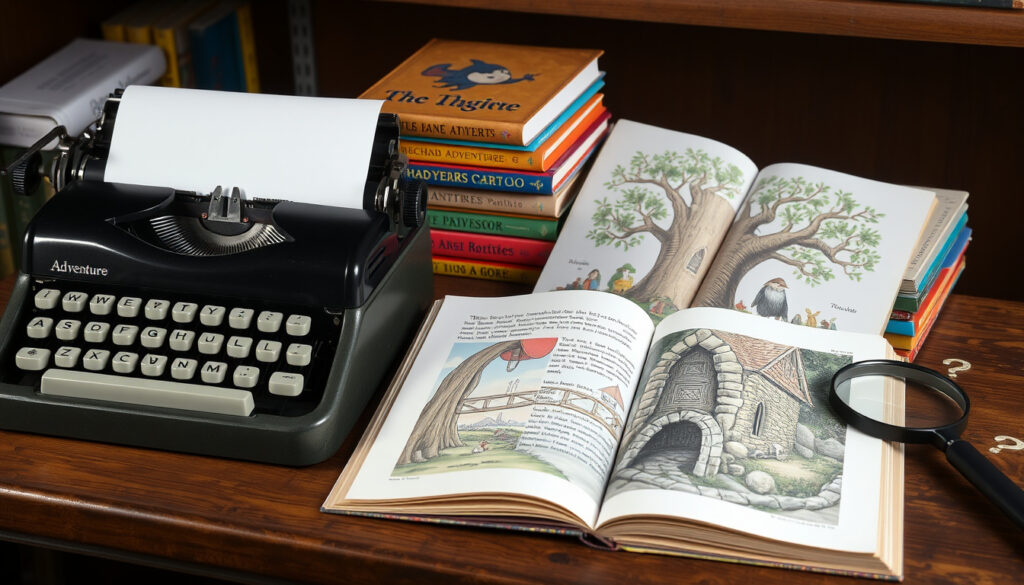
Enid Blyton: Biography, Famous Books and Controversies
Few children’s authors have sparked as much love and controversy as Enid Blyton. Her books have sold over 500 million copies worldwide, yet her personal life and social attitudes have drawn sharp criticism.
Born: 11 August 1897 · Died: 28 November 1968 · Books sold: Over 500 million · Number of books: Over 800 · Notable series: Famous Five, Secret Seven, Malory Towers
Quick snapshot
- Born 11 August 1897 in East Dulwich, London (Encyclopædia Britannica)
- Died 28 November 1968 in Hampstead, London (Encyclopædia Britannica)
- Wrote over 800 books; sold over 500 million copies (Hachette UK)
- Exact last words — reported as “I’m going to sleep now” by her daughter, but not independently confirmed
- Details of her treatment of her children — diaries show guilt, but accounts vary
- Exact number of books due to pseudonymous works and ghostwriter rumours
- 1942: First Famous Five book published (Britannica)
- 1960s: Libraries began banning her books (British Sociological Association)
- 2020s: New TV adaptations and continued popularity (Britannica)
- Ongoing editorial revisions to remove offensive language (Hachette UK)
- New screen adaptations for global streaming platforms (Hachette UK)
- Continued debate over how to present her legacy to new generations (Hachette UK)
Six key facts, one pattern: Blyton’s life was a stark contrast between phenomenal commercial success and personal turmoil.
The table below captures the essential biographical data about the author.
| Label | Value |
|---|---|
| Full name | Enid Mary Blyton |
| Born | 11 August 1897, East Dulwich, London |
| Died | 28 November 1968, Hampstead, London |
| Occupation | Children’s writer |
| Notable works | Famous Five, Secret Seven, Malory Towers, The Faraway Tree |
| Controversies | Accusations of racism, sexism, and neglect of her children |
The implication: her career and personal life form a study in contrasts that continues to fascinate readers.
What is Enid Blyton’s most famous book?
Which book is considered her masterpiece?
- The Famous Five series, starting with Five on a Treasure Island (1942), is her most recognised work (Encyclopædia Britannica).
- Other iconic series include Secret Seven (1949) and Malory Towers (completed 1953).
- Her books have been translated into more than 90 languages and remain in print worldwide (Hachette UK).
How many copies did the Famous Five sell?
- Exact sales figures for the series are not publicly broken out, but combined with her other works the total surpasses 500 million copies globally.
The pattern: a single series launched a reading empire that endures decades after the author’s death.
Blyton’s Famous Five remains the entry point for millions of children, yet the series also carries the racial and class stereotypes that have made her a target of modern criticism.
How did Enid Blyton treat her children?
Did she neglect her daughters?
- Blyton had a strained relationship with her two daughters, often prioritising her writing over family time (Encyclopedia.com).
- Her daughter Gillian later described her as distant and emotionally cold.
- Diaries reveal Blyton felt guilt about not being more present, but she rarely changed her routine.
What do her diaries reveal about her parenting?
- Her personal writings show a woman torn between ambition and maternal duty, but ultimately she chose her writing career.
What this means: the same drive that produced 800 books also left her children feeling neglected.
For readers, this complicates the adoring image of the “friendly author” that her publisher promoted.
What was Enid Blyton accused of?
Racism and xenophobia in her books
- The English Heritage official heritage body notes that her work was criticised for “formulaic plots, simple language, social snobbery, racism, and sexism.”
- In 1960, Macmillan refused to publish The Mystery That Never Was because of its “faint but unattractive touch of old-fashioned xenophobia” (English Heritage).
- Specific titles such as The Little Black Doll were singled out for racial stereotypes (Britannica).
Sexism and classism
- A British Sociological Association review lists objections to “snobbery, class prejudice, xenophobia, racism, gender stereotyping, and literary inadequacy.”
- Schools, libraries, and bookshops refused to stock her books because of concerns about their effects on children’s reading standards and attitudes (BSA review).
Banning from libraries
- From the 1960s onward, many libraries in the UK and elsewhere restricted or removed her books (Wikipedia).
- The BBC reportedly refused to broadcast her stories from the 1930s until the 1950s, deeming them lacking in literary merit (English Heritage).
The catch: the institutions that once banned her books now sell them as cultural touchstones.
Blyton’s books were banned by the very institutions that later championed her as a cultural icon. The gap between her commercial success and intellectual criticism has rarely been wider.
What were Enid Blyton’s last words?
What did she say before dying?
- According to her daughter, her last words were “I’m going to sleep now.” This account is not independently verified, and the exact phrasing remains uncertain.
Where did she die and what was the cause?
- She died on 28 November 1968 in a nursing home in Hampstead, London (Britannica).
- She had suffered from Alzheimer’s disease in her final years (Britannica).
The implication: even her final moments remain a subject of uncertainty, much like her legacy.
What is Enid Blyton’s most famous quote?
What are some of her well-known sayings?
- “I’m so glad I live in a world where there are Octobers” — often cited as her most beloved line (English Heritage).
- “The best way to treat obstacles is to use them as stepping-stones.”
- She famously dismissed adult critics, saying the opinion of anyone over 12 did not interest her (English Heritage).
The pattern: her quotes reveal a writer who valued childhood imagination over adult approval.
Timeline: Enid Blyton’s life and legacy
- 11 August 1897 — Born in East Dulwich, London
- 1922 — First book Child Whispers published
- 1942 — First Famous Five book Five on a Treasure Island published
- 1949 — First Secret Seven book published
- 1953 — Malory Towers series completed
- 28 November 1968 — Died after years of Alzheimer’s disease
- 1960s-1970s — Libraries begin banning her books
- 1990s-2000s — Modern editions with edited language
- 2020s — New TV adaptations and continued popularity
What’s confirmed and what’s unclear
Confirmed facts
- Born 11 August 1897, died 28 November 1968 (Britannica)
- Wrote over 800 books (Hachette UK)
- Books sold over 500 million copies (Hachette UK)
- Accused of racism, sexism, and xenophobia by multiple sources (English Heritage)
- Alzheimer’s disease in final years (Britannica)
What’s unclear
- Exact last words (reported but unverified)
- Precise number of books due to pseudonyms and ghostwriter rumours
- Full extent of her children’s neglect — accounts conflict
- Whether all ghostwriter accusations were false (she won a libel case in 1955)
Quotes and perspectives
“I’m so glad I live in a world where there are Octobers.”
— Enid Blyton, diary entry
“The best way to treat obstacles is to use them as stepping-stones.”
— Enid Blyton, letter
“The opinion of anyone over 12 did not interest her.”
— English Heritage, on Blyton’s response to critics
“Elitist, sexist, racist and xenophobic.”
— DW, summarising the criticism of Blyton’s books
The legacy of Enid Blyton is a story of opposites: a woman who gave millions of children their first taste of adventure, while also embodying the prejudices of her time. For parents, teachers, and publishers today, the choice is clear: present her work with honest context rather than risk passing on the very stereotypes that led to the bans.
scribd.com, dw.com, gl.wikipedia.org, leonardoenglish.com, biographs.org, histclo.com
Frequently asked questions
What was Enid Blyton’s first book?
Her first book was Child Whispers (1922), a collection of poems.
Are Enid Blyton books still popular today?
Yes. They continue to sell millions of copies annually and have been adapted for television and film in the 2020s.
Why were Enid Blyton books banned?
Libraries and schools banned them due to concerns over racism, sexism, class bias, and literary quality. The bans peaked in the 1960s and 1970s.
How many languages have Enid Blyton books been translated into?
Over 90 languages, according to her publisher.
Did Enid Blyton have a happy childhood?
No. Her father left the family when she was a child, and she had a strained relationship with her mother.
What is the reading level of Enid Blyton books?
They are typically aimed at children aged 7–12, with a controlled vocabulary and simple sentence structures.
Which Enid Blyton series is best for beginners?
The Secret Seven series is shorter and simpler than the Famous Five, making it a good starting point for early readers.
More related posts
 Annie Wersching: Cause of Death, The Rookie Role, Legacy
 Sophie Wilde: Biography, Age, Height, Movies, Awards
 Cast of the Twilight Saga – Full Guide to Actors and Roles
 Jaime Chapman: NRLW Star, TV Debut & Online Abuse
 Drew McIntyre: Wife, Suspension, Net Worth & Return
 Mary Reibey: From Horse Thief to $20 Note Businesswoman
 Lake Burley Griffin: Walks, Boating, Swimming & History
 Black Opium Perfume – Notes, Longevity and Reviews
